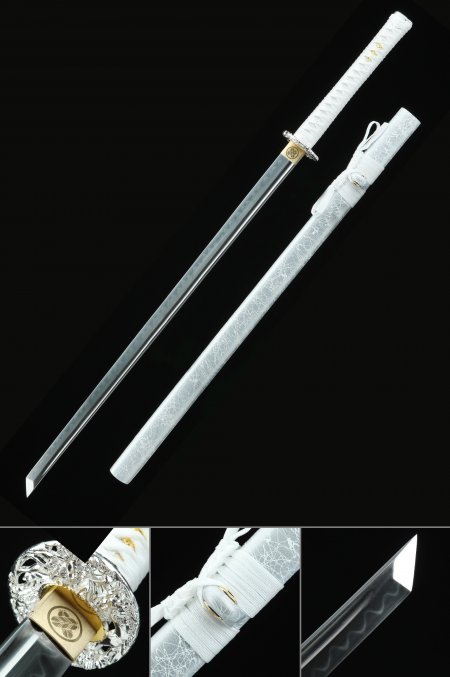
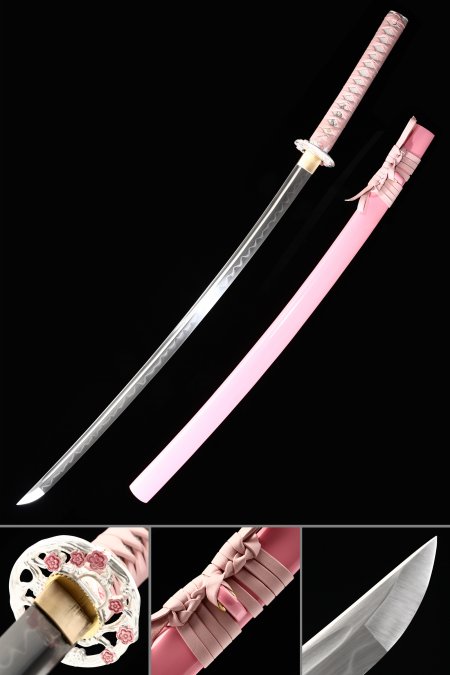
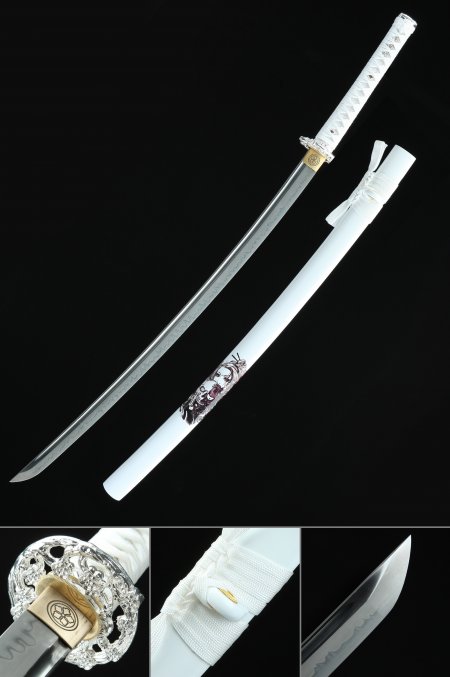
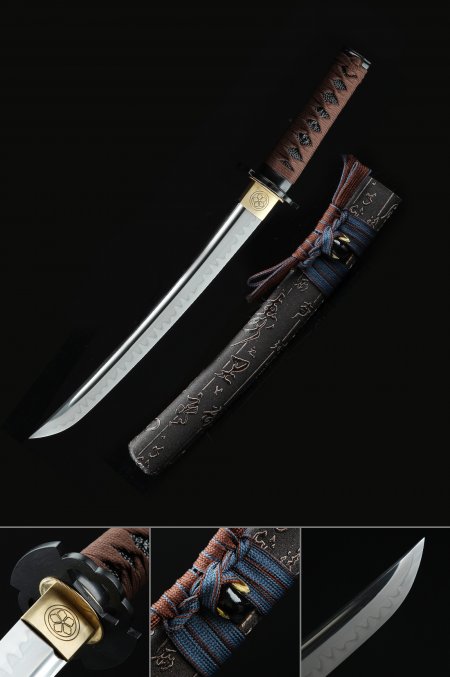
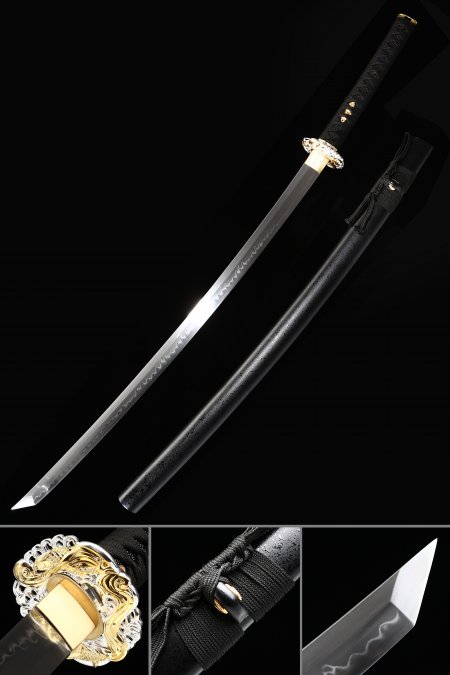
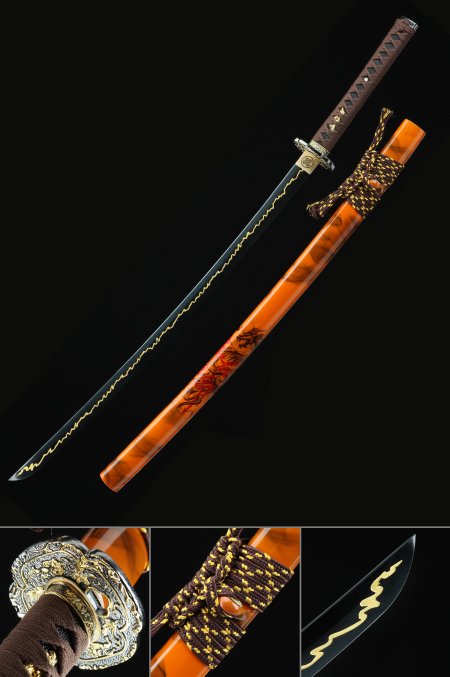
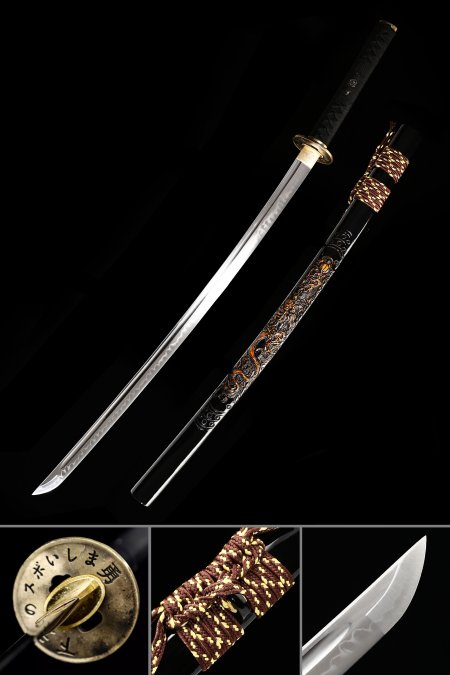
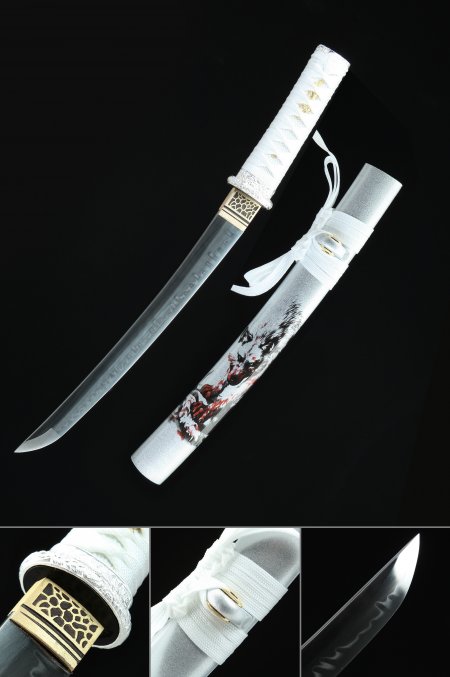
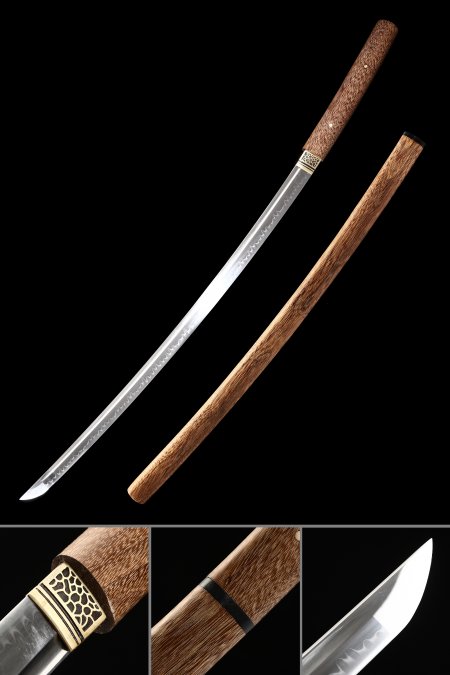
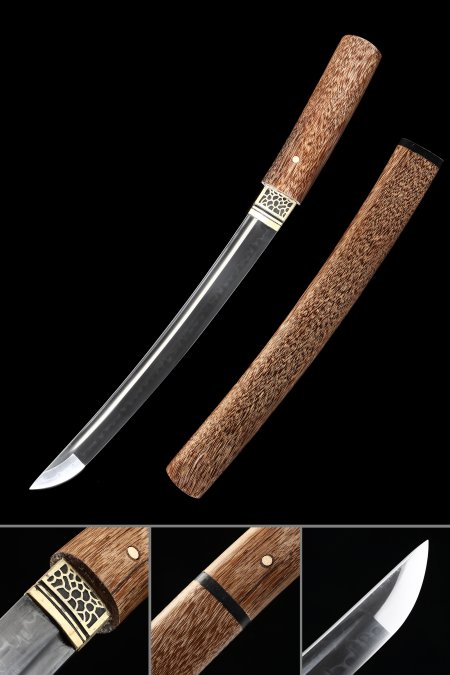
A geometric hamon is a deliberate, pattern-based temper line along the blade edge, produced through clay tempering during the forging process. The smith applies a clay mixture in a shaped pattern — angular, chevron, or stepped designs rather than the flowing natural forms of traditional nie or notare hamon — before the blade is heated and quenched in water. Where clay is present, the steel cools slowly and remains comparatively soft; where clay is absent along the edge, rapid cooling produces a hard martensitic zone. The boundary between these zones is the hamon. On T10 high-carbon steel, this line is particularly crisp and visible. Geometric hamon designs have become popular in contemporary collectible blades for their modern, graphic quality while still employing an authentically traditional heat treatment technique.