How does T10 clay-tempered steel differ from 1060 carbon steel in these katanas?
Updated Mar 2026
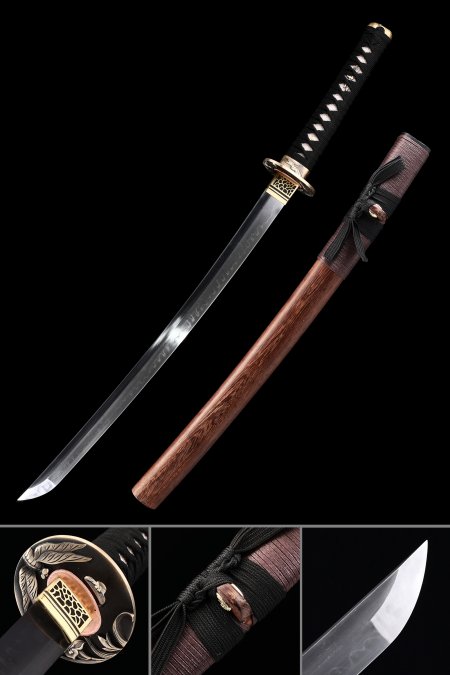
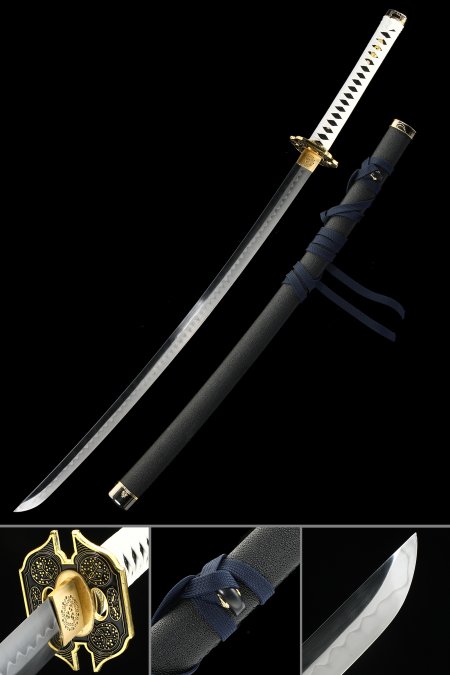
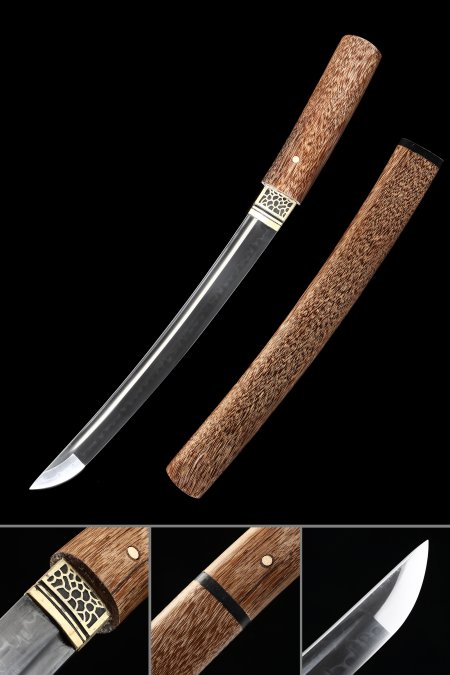
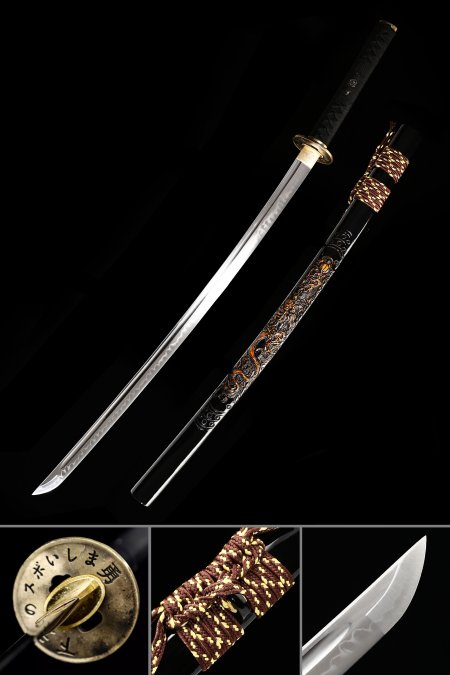
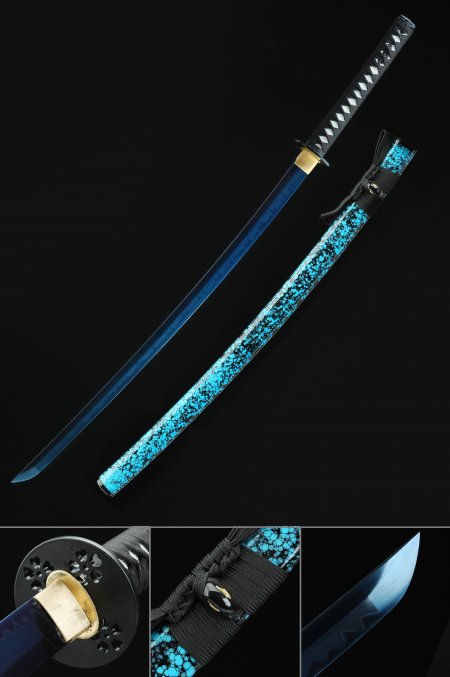
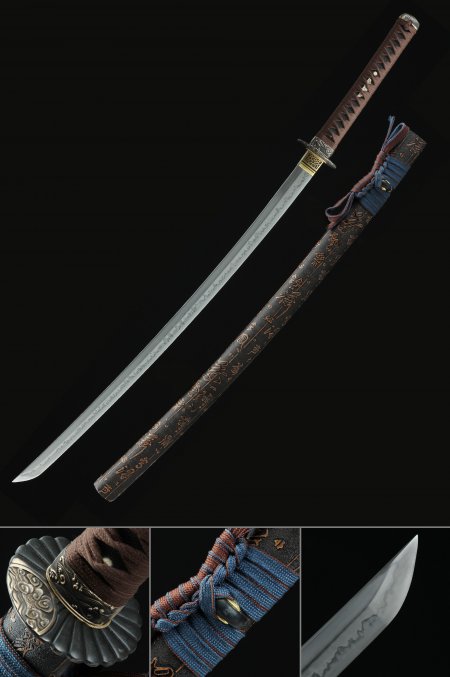
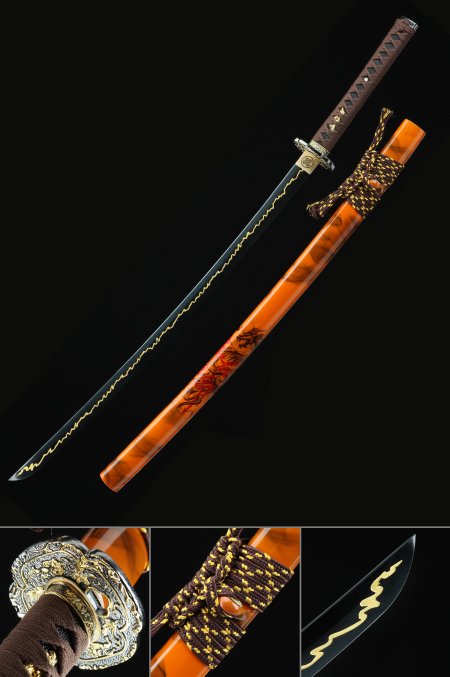
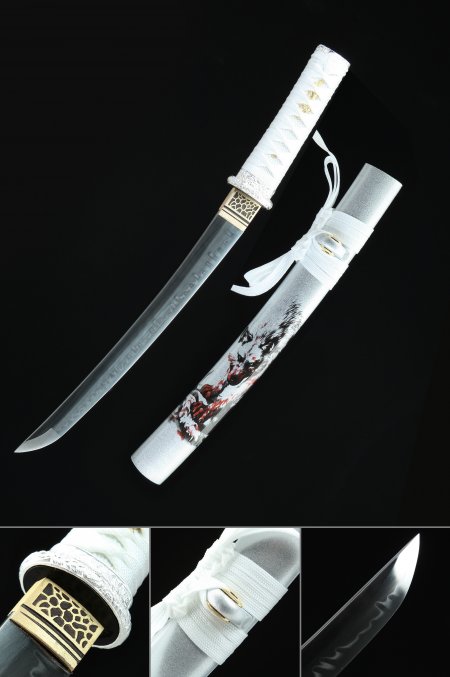
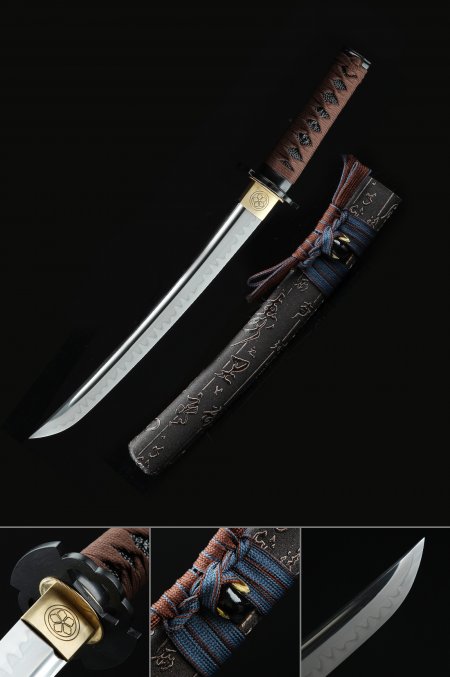
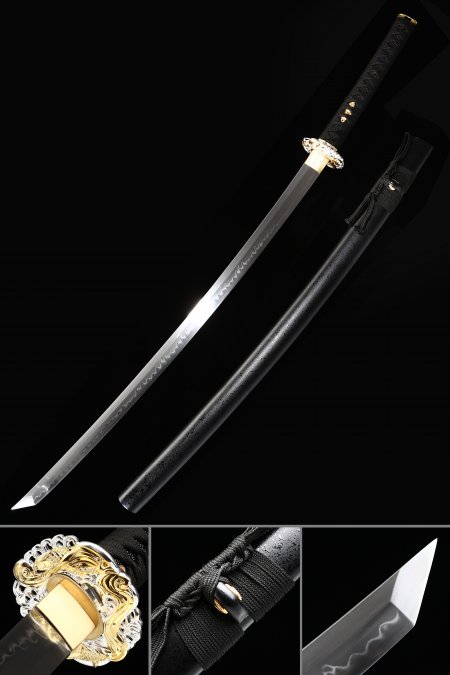
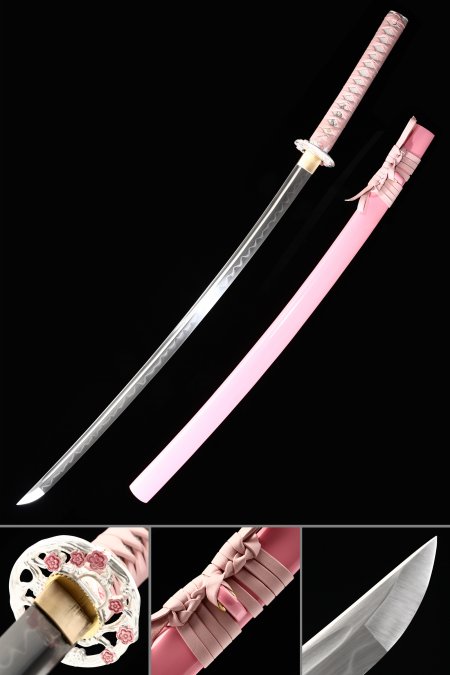
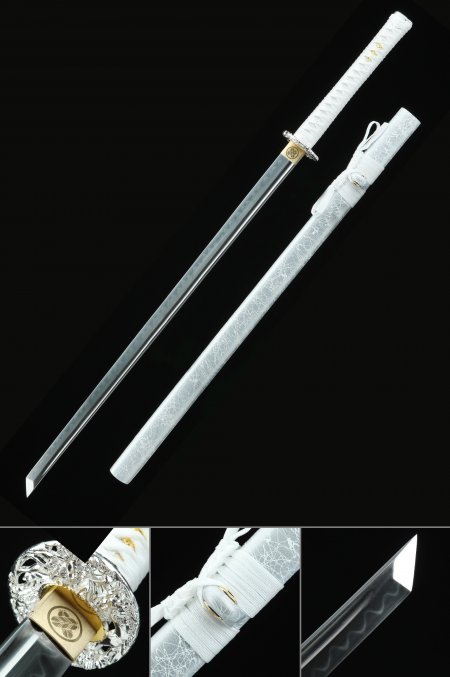
T10 tool steel contains a small percentage of tungsten alongside its high carbon content, which increases surface hardness and wear resistance compared to standard high-carbon grades. The more visually significant difference for collectors, however, is in the clay-tempering process: a clay slurry is applied along the spine before quenching, causing the edge and spine to cool at different rates. This differential hardening produces the hamon - a visible temper line running along the blade length - that is one of the most prized aesthetic features in traditional Japanese sword craft. A 1060 carbon steel blade, by contrast, offers a consistent hardness throughout, a cleaner surface finish, and typically a more uniform color response to blue patination treatments. Neither is superior across the board; the choice comes down to whether you prioritize the hamon's visual complexity or a cleaner, more modern blade aesthetic.