What makes a hamidashi different from a standard tanto?
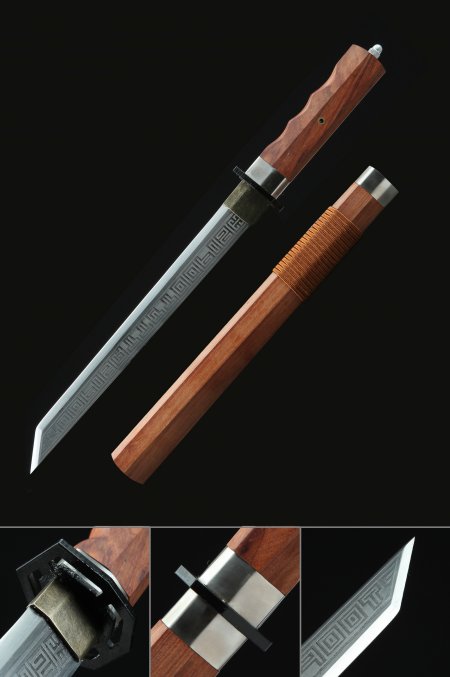
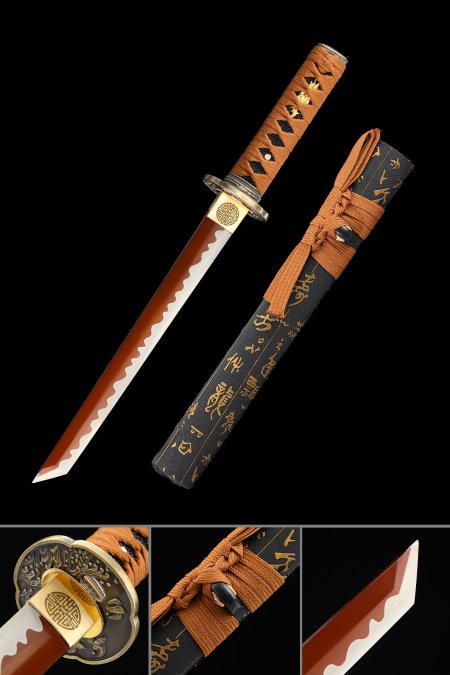
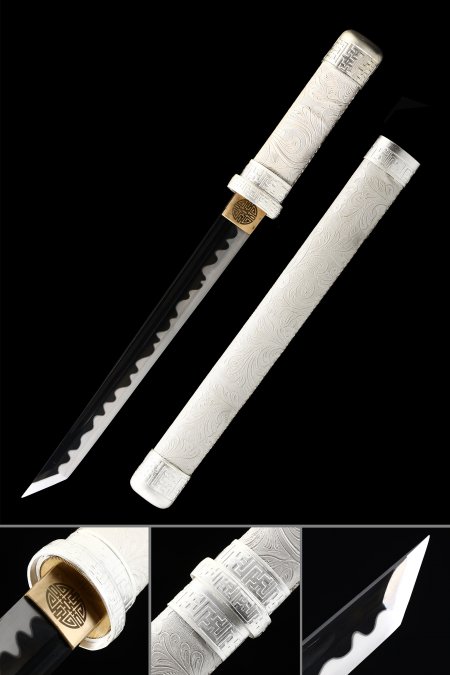
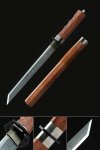
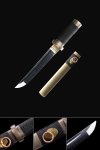
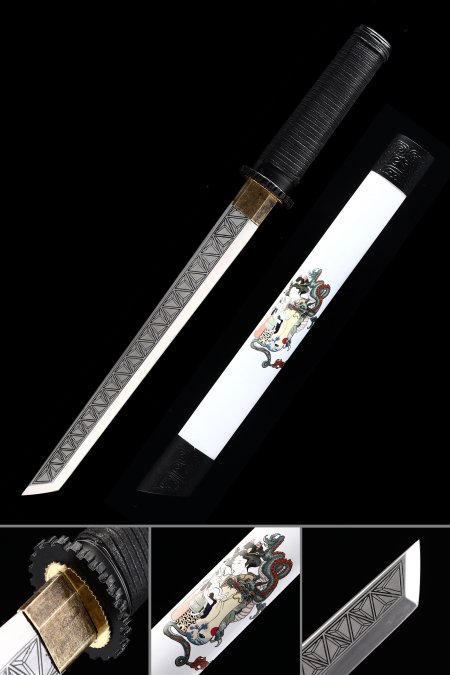
A hamidashi tanto features a small, partially exposed tsuba that sits flush with or slightly proud of the habaki collar — much smaller than a standard full tsuba. On a conventional tanto, the guard is either absent (aikuchi style) or full-sized. The hamidashi guard is typically oval or shaped, just large enough to provide a visual transition between the handle and blade without the full formal presence of a daisho-style fitting. Historically, this made the hamidashi popular as a subtle, refined alternative to the plainer aikuchi, often carried by samurai in court or civilian settings where an overtly large guard would appear aggressive. For collectors, this small tsuba is the defining detail that separates hamidashi pieces from other tanto variants and adds significant visual interest to the transition zone between tsuka and saya.
What is a geometric hamon and how is it created?
A geometric hamon is a deliberate, pattern-based temper line along the blade edge, produced through clay tempering during the forging process. The smith applies a clay mixture in a shaped pattern — angular, chevron, or stepped designs rather than the flowing natural forms of traditional nie or notare hamon — before the blade is heated and quenched in water. Where clay is present, the steel cools slowly and remains comparatively soft; where clay is absent along the edge, rapid cooling produces a hard martensitic zone. The boundary between these zones is the hamon. On T10 high-carbon steel, this line is particularly crisp and visible. Geometric hamon designs have become popular in contemporary collectible blades for their modern, graphic quality while still employing an authentically traditional heat treatment technique.
How does T10 clay-tempered steel compare to Damascus in a tanto?
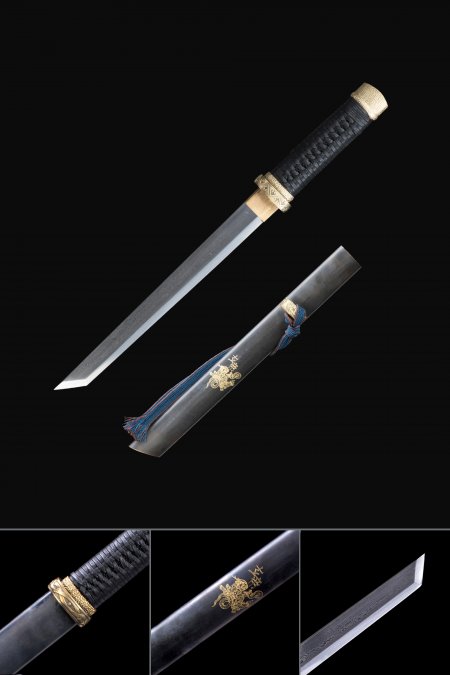
T10 and Damascus steel represent two distinct approaches to blade metallurgy and aesthetics. T10 is a high-carbon tool steel with a small tungsten content that improves wear resistance. When clay tempered, it undergoes differential hardening that creates a genuine hamon and produces a blade with a hard edge and tougher spine — a characteristic prized in traditional Japanese blade construction. Damascus steel is produced by forge-welding multiple steel layers and folding them repeatedly, resulting in the distinctive banded or watered surface pattern. Damascus is valued for its visual complexity and the craftsmanship involved in its creation. For collectors, T10 clay-tempered pieces offer a direct connection to classical Japanese forging technique, while Damascus tanto showcase surface artistry and the labor-intensive process of pattern welding. Both are serious collector materials with distinct display appeal.
How should I care for a tanto with a dark or black blade finish?
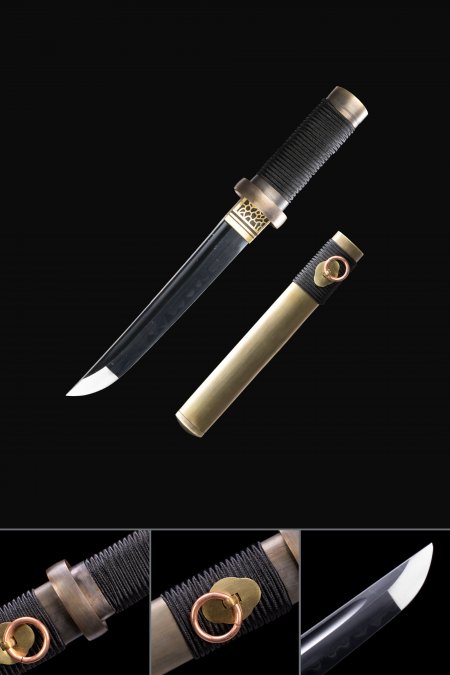
Dark and black blade finishes — including the treated manganese steel found in several pieces in this collection — require slightly different care than polished bare steel. Avoid wiping with dry cloths, which can create micro-scratches in the surface coating. Instead, use a soft, lint-free cloth lightly dampened with choji oil or mineral oil to gently clean and protect the surface. Keep the blade in its saya when not on display, as prolonged air exposure combined with humidity can affect the finish over time. For wall-mounted or shadowbox displays, position the piece away from direct sunlight and high-humidity areas such as bathrooms or exterior-facing walls. Do not use steel polish or abrasive compounds on treated dark blades, as these will strip the finish and alter the blade's appearance permanently.
Are geometric tsuba hamidashi pieces suitable as display gifts?
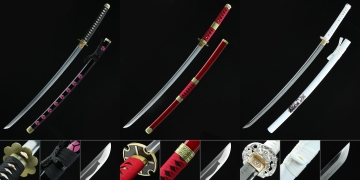
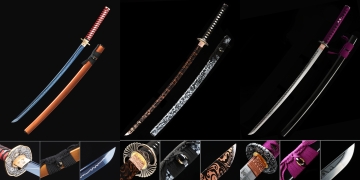
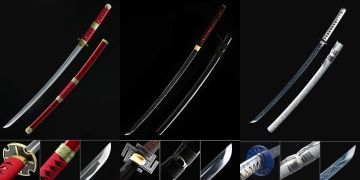
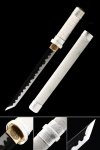
Yes — the combination of compact tanto proportions, distinctive tsuba detailing, and visually striking saya finishes makes geometric hamidashi pieces particularly well-suited as display gifts for collectors interested in Japanese blade history and aesthetics. The smaller form factor compared to a katana makes them easier to display in a home office, study, or living space without requiring a full sword stand. Pieces with contrasting elements — such as a copper tsuba against a gray copper-finished saya, or a white lacquer dragon-art scabbard paired with patterned engravings — photograph and present well as gifts. For gifting purposes, consider pairing a tanto with a dedicated display stand or presentation box to complete the presentation. These collectibles are intended for display only and carry no functional use classification.