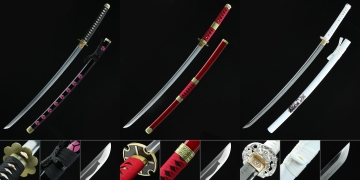
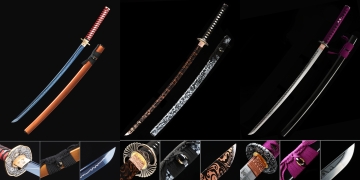
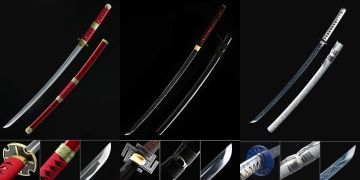
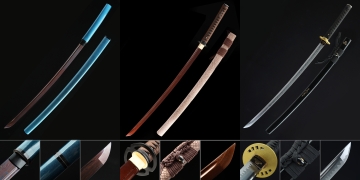
What makes a tanto a hamidashi rather than a standard tanto?
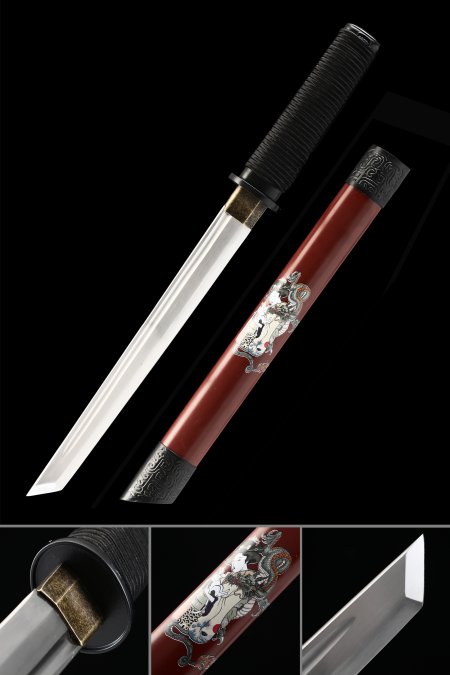
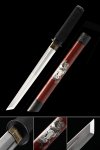
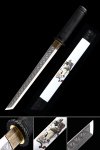
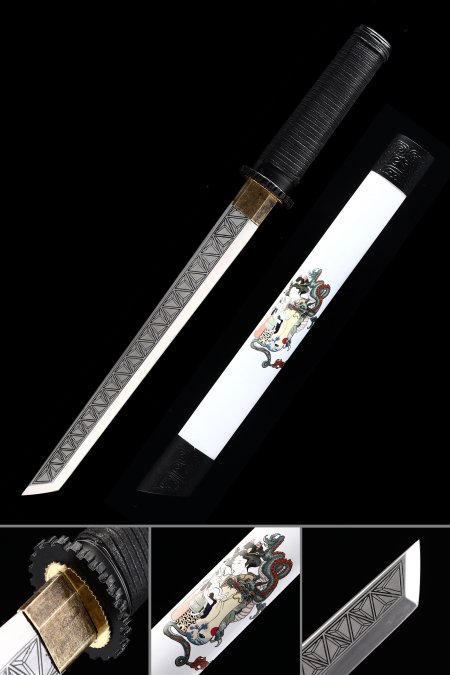
The defining feature is the tsuba size and its relationship to the habaki, or blade collar. A standard tanto typically has a full-sized round or shaped guard that extends clearly beyond the handle diameter. A hamidashi uses an extremely small tsuba—often just a few millimeters larger than the habaki itself—so it sits nearly flush with the handle. This gives the overall mounting a sleek, uninterrupted silhouette from tip to pommel. On display, the effect is one of deliberate minimalism, and it places all the visual emphasis on the quality of the blade finish, the ito wrap pattern, and the material of the small guard itself. Bronze tsuba on hamidashi are particularly effective because the warm metal color provides just enough contrast against the handle wrap to define the transition point without overpowering the composition.
How does bronze differ from iron or copper for tsuba fittings?
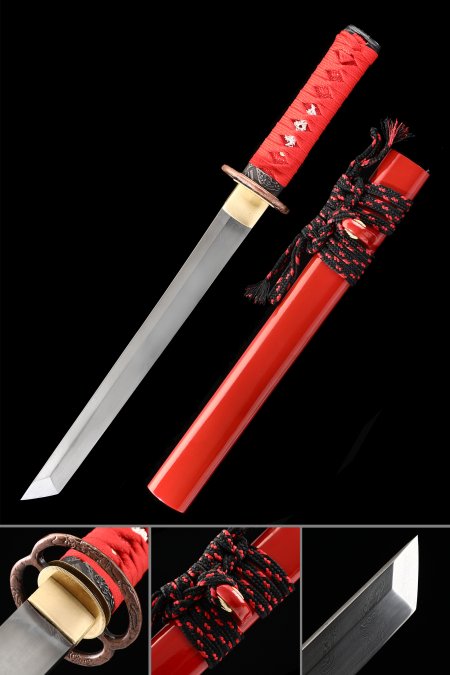
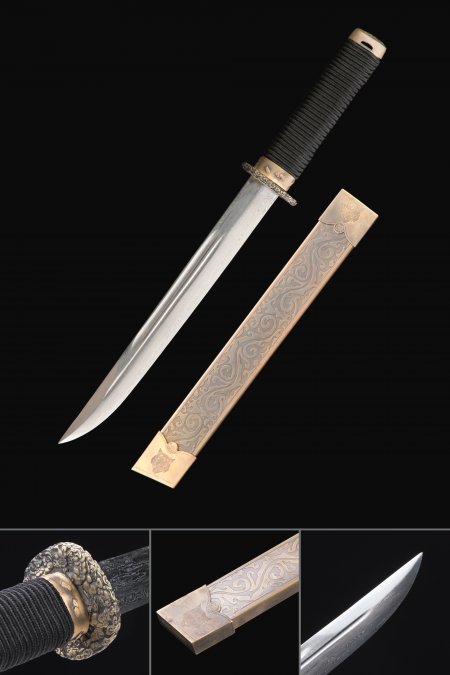
Iron tsuba, the most historically common type, develop a dark rust patina that was often deliberately induced through chemical treatments. Copper tsuba are softer and show a greenish oxidation over time. Bronze sits between those two: it is harder than copper, more resistant to corrosion than iron, and develops a rich amber-to-brown patina that many collectors find more visually harmonious with lacquered saya and silk or cotton ito wraps. On collector-grade pieces, bronze fittings are often cast rather than stamped, which allows for crisper relief detail in motifs like chrysanthemums, scrollwork, or geometric patterns. That casting sharpness holds up well over decades of display without the green bloom that copper can develop in humid environments.
Is Damascus steel or manganese steel better for a display tanto?
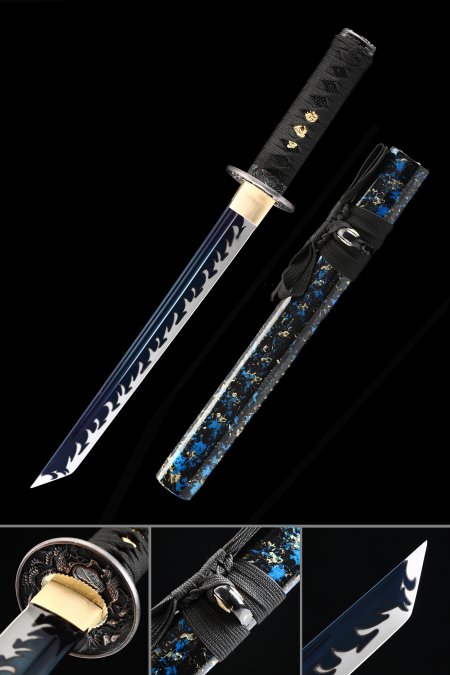
The answer depends on what you want the blade to communicate visually. Damascus steel—formed by layering and forge-welding different steel types—produces flowing banded or ladder patterns across the blade flat that make each piece unique. No two Damascus blades share the exact same surface pattern, which appeals to collectors who want a one-of-a-kind display piece. High manganese steel, by contrast, presents a cleaner, more uniform surface that serves as an ideal canvas for engraved decorations: geometric patterns, flame motifs, or inscription-style artwork show more clearly on a consistent steel background than on the visually busy surface of Damascus. For pure pattern drama, Damascus leads; for decorated blade art, manganese steel is the stronger choice.
How should I care for the bronze tsuba on a display tanto?
Bronze naturally oxidizes when exposed to skin oils, humidity, and air, shifting from bright gold-tone toward deeper amber and brown over time. Many collectors allow this patina to develop naturally as it adds character and a sense of age. If you prefer to slow the process, handle the tsuba with clean cotton gloves and apply a very thin coat of Renaissance Wax or a similar microcrystalline wax every six to twelve months. Avoid abrasive polishes, which will strip the patina unevenly and scratch cast relief details. Store the tanto horizontally or on a display stand in a room with stable humidity—ideally 45 to 55 percent relative humidity—to prevent both accelerated oxidation on the bronze and warping of the lacquered saya.
What display stand or setting suits a hamidashi tanto best?
Because the hamidashi is compact—typically under 30 cm in overall length—it works well both as a standalone piece on a single-tier tanto stand and as the lower element in a multi-tier katana-wakizashi-tanto grouping. When displayed alone, a dark wood stand with simple joinery lets the bronze fittings and lacquer color carry the visual weight without competition. In a grouped arrangement, position the hamidashi on the lowest tier so its small tsuba reads as a deliberate design choice rather than an afterthought. Color-coordinate the stand finish with the saya: ebonized wood pairs naturally with black or blue-black lacquer, while lighter wood tones complement red lacquer saya and the warm hue of bronze hardware.