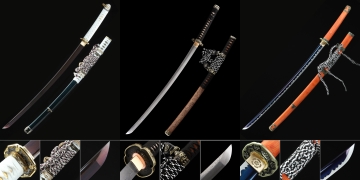
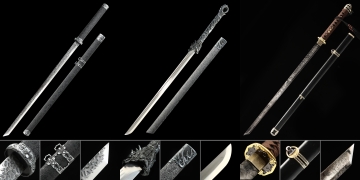
What makes 1090 carbon steel a good choice for display katana?
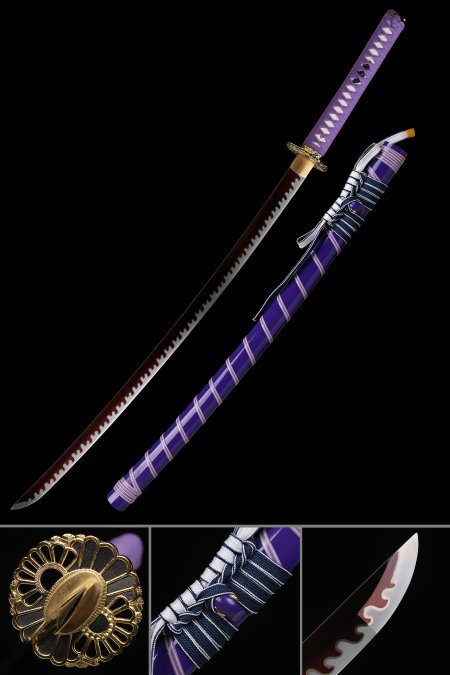
1090 high-carbon steel contains approximately 0.90% carbon, which places it in a sweet spot for differential heat treatment. When a swordsmith applies clay along the spine before quenching, the varying cooling rates create a distinct hamon — the temper line visible along the edge. Compared to 1095, the slightly lower carbon content makes 1090 a touch more forgiving during the quench, reducing the risk of warping while still producing a well-defined, photogenic hamon. For display collectors, this translates to a blade with a striking visual detail that is genuinely a product of the forging process, not an acid-etched imitation.
How does the dragon engraving on the blade get applied?
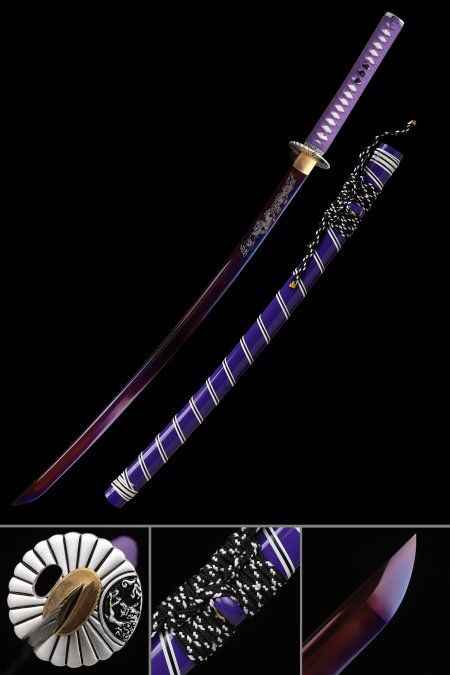
The dragon motif on engraved blades in this collection is produced through horimono, a traditional Japanese blade carving technique. A skilled craftsman uses hand chisels or rotary burins to cut the design directly into the polished steel flat, working with the grain of the metal to achieve clean definition. This is distinct from laser etching or chemical engraving — the relief has physical depth you can feel with a fingernail. Horimono dragons are among the most historically common blade decorations in Japanese sword craft, carrying layered symbolism associated with strength, wisdom, and elemental water. For a display piece, the engraving catches light differently at each viewing angle, adding a kinetic quality to the decoration.
What does the purple saya finish mean in Japanese sword tradition?
In the Heian and Muromachi periods of Japanese history, purple dye — derived from gromwell root — was extraordinarily expensive and its use was formally restricted to court nobility and high-ranking officials. Sword furniture finished in purple therefore carried immediate social signaling about status and refinement. While modern lacquer techniques make the color far more accessible, the historical resonance remains embedded in the aesthetic. A purple-lacquered saya on a display katana is a direct reference to that tradition of elevated presentation, and it pairs particularly well with white or silver accent wrapping because the contrast echoes the formal color pairings found in surviving Heian-period court artifacts.
How should I store and maintain a 1090 carbon steel katana long-term?
Carbon steel is reactive to moisture and will develop rust if left unprotected. For long-term display, apply a thin layer of choji oil — a light mineral oil traditionally used in Japanese sword maintenance — to the blade every two to three months using a soft cotton cloth. Wipe away any excess before re-sheathing the blade in the saya, as pooled oil can soften the wooden liner over time. Store the piece in an environment with relative humidity between 40–60%. Avoid displaying near exterior walls in humid climates. If you notice the slightest orange tinting on the steel, remove it promptly with uchiko powder and a fresh oil application before it progresses deeper into the surface.
Is the Obanai replica based on a specific fictional design?
The Obanai-inspired katana in this collection draws its color palette and overall aesthetic from the iconic sword associated with Obanai Iguro, a character from the widely recognized manga and anime series Demon Slayer. The defining visual feature of that design is the dark reddish hamon that contrasts dramatically against a purple-lacquered saya. This collection piece reinterprets those elements through actual 1090 carbon steel differential hardening, meaning the dark crimson hamon line is a genuine result of the quenching process rather than a surface-applied finish. For collectors who value both fictional design heritage and authentic craft process, it bridges pop-culture aesthetics with traditional swordsmithing technique.