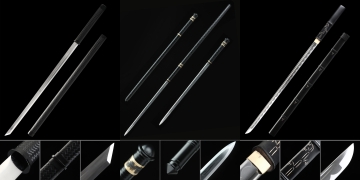
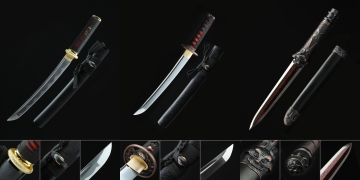
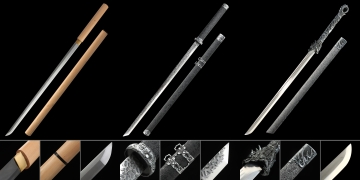
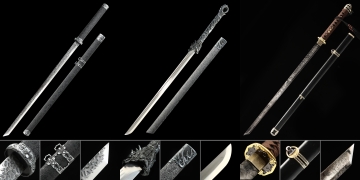
What makes 1090 carbon steel stand out for katana collecting?
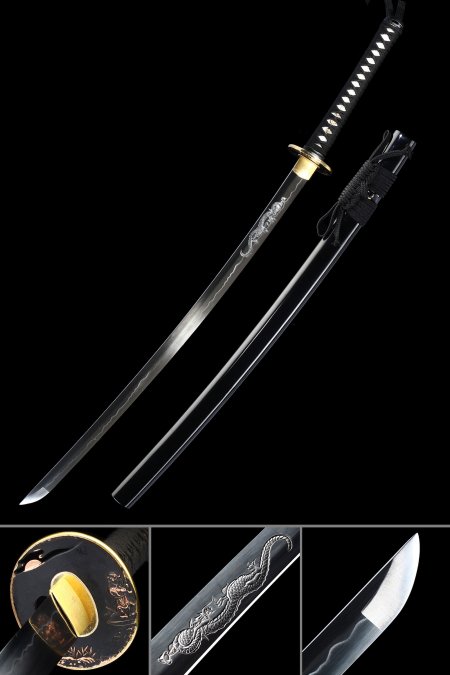
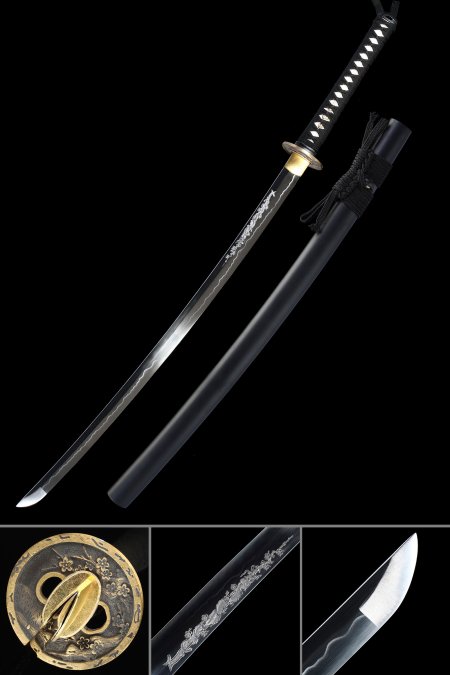
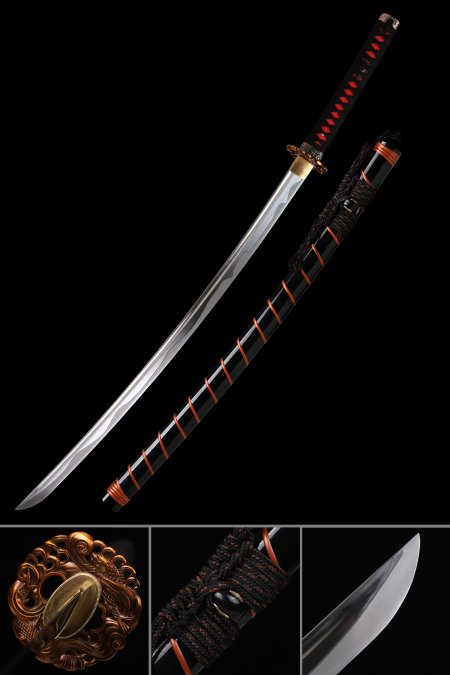
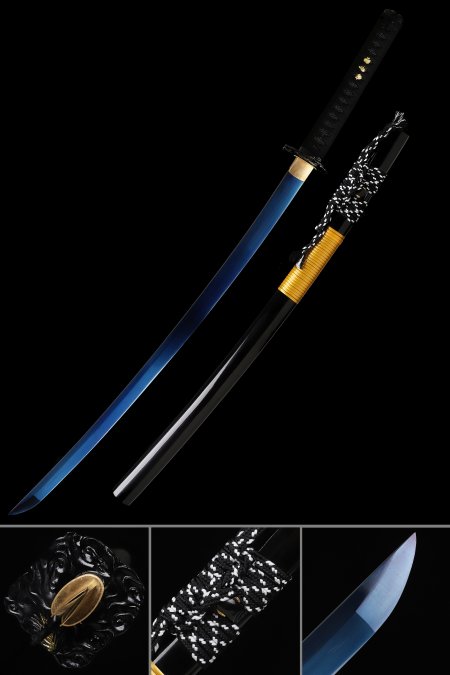
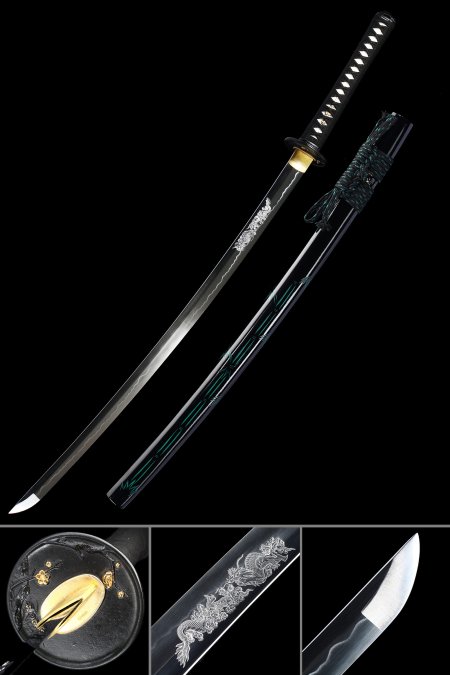
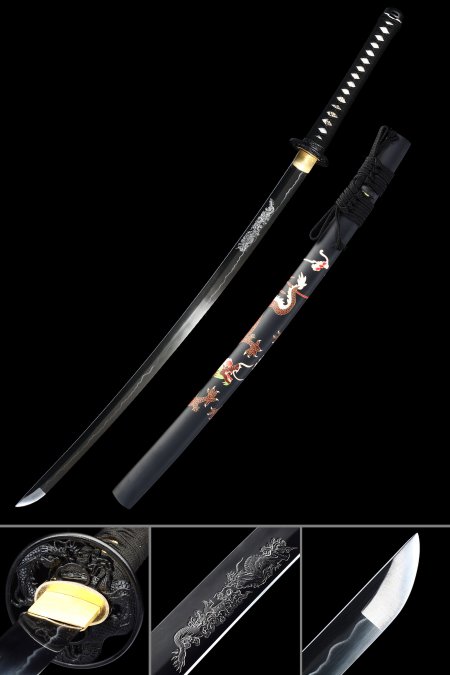
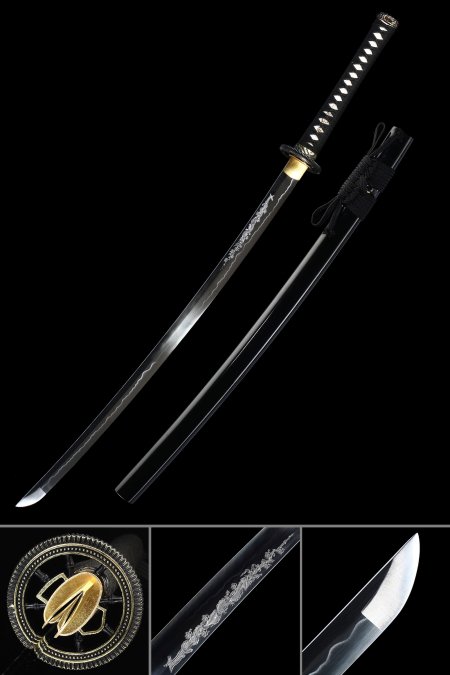
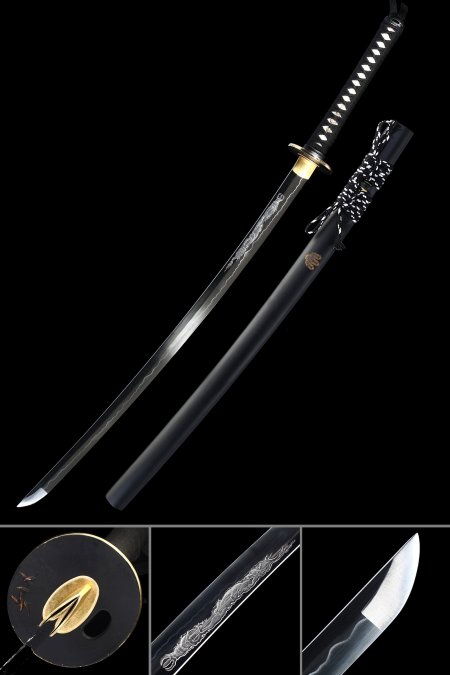
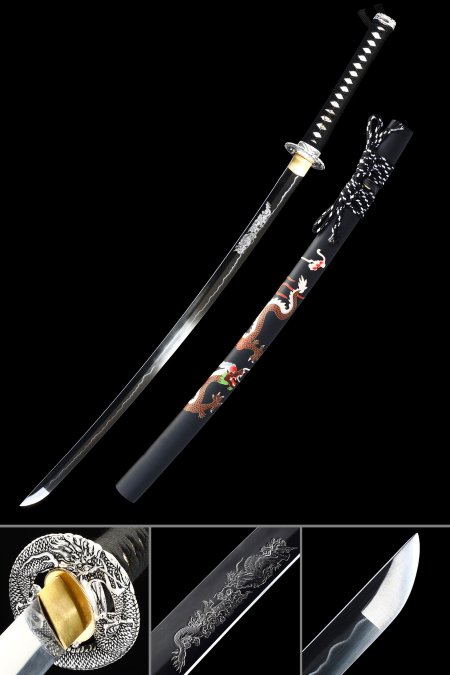
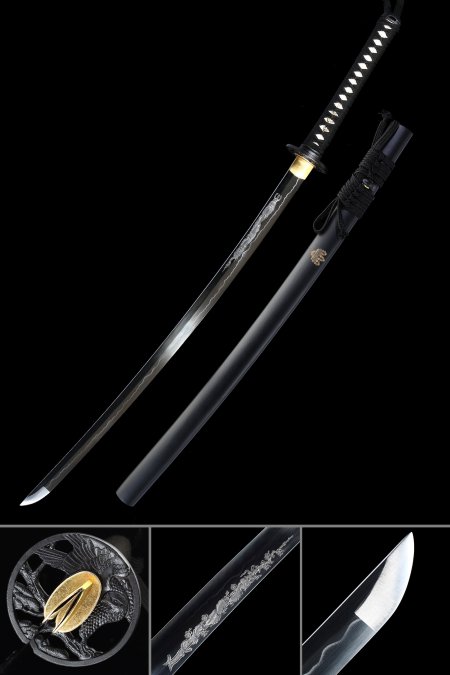
1090 carbon steel contains approximately 0.90% carbon, placing it in the high-carbon range that allows for meaningful differential hardening during the forging process. This heat-treatment technique creates a visible hamon - the temper line along the edge - that is a hallmark of authentic Japanese sword aesthetics. Lower-carbon steels and decorative stainless alloys typically cannot produce this effect. For collectors, the hamon is not purely cosmetic; it signals that the blade underwent a genuine hardening process rather than a surface treatment, which distinguishes a quality display replica from a mass-produced wall hanger.
How does full-tang construction affect a display katana's value?
Full-tang construction means the steel blade extends uninterrupted through the entire length of the handle, secured beneath the tsuka wrap and held in place by a mekugi peg through the tsuka and nakago. Partial-tang or rat-tail-tang construction, by contrast, uses a narrow steel stub that is often glued or pinned inside a hollow handle. For display collectors, full-tang katana hold higher perceived and resale value because the construction mirrors historical Japanese sword standards. When rotating a full-tang katana during display inspection, the balance point and weight distribution feel fundamentally different - a detail experienced collectors notice immediately.
What do the different tsuba motifs on these katanas represent?
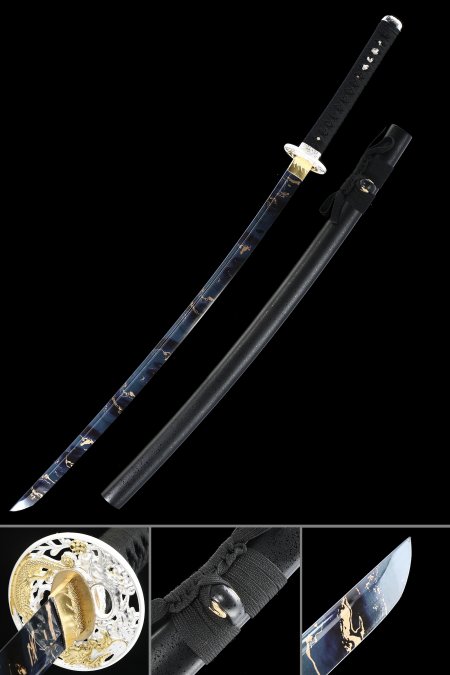
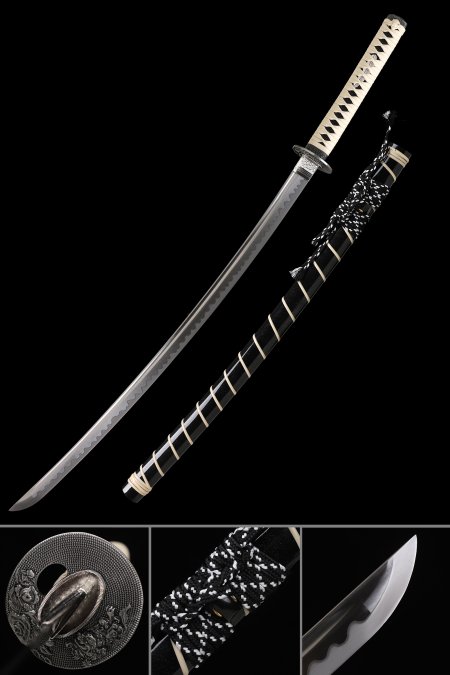
The tsuba - the hand guard - was historically one of the most expressive decorative elements of Japanese sword craft, often commissioned as standalone art objects. In this collection, common motifs carry specific symbolic weight: the dragon (ryu) represents strength, wisdom, and transformation in East Asian tradition; the phoenix (ho-oh) symbolizes rebirth and imperial grace; the crane is associated with longevity and good fortune; and the koi fish represents perseverance and aspiration, drawn from the legend of koi ascending waterfalls to become dragons. Selecting a tsuba motif is one of the more meaningful curatorial decisions a collector makes, as it defines the narrative identity of the displayed piece.
How should I care for a 1090 carbon steel katana during long-term display?
Carbon steel - including 1090 - is susceptible to surface oxidation when exposed to humidity, airborne salts, or fingerprint oils. For long-term display, apply a light coat of choji oil or high-grade mineral oil to the blade surface every two to four months using a soft, lint-free cloth. Store or display the katana away from exterior walls where temperature fluctuations drive moisture cycling. If your display environment has humidity above 60%, consider a cabinet with silica gel desiccant packs. Always handle the blade with cotton gloves or by the tsuka to prevent oil transfer from skin. When storing inside the saya for extended periods, remove the blade periodically to ensure no moisture is trapped at the habaki collar.
Does the black lacquer saya require any special maintenance?
Black lacquer saya are typically finished over a hardwood core, and the lacquer itself is fairly durable under normal indoor display conditions. Avoid direct sunlight exposure, which causes lacquer to fade, yellow, or develop fine cracking over time - UV-filtering display case glass is a worthwhile investment for serious collectors. Dust the saya with a dry microfiber cloth; do not use water-based cleaners or solvents, which can cloud or strip the lacquer finish. If the sageo cord develops fraying, it can be replaced without affecting the saya itself - replacement sageo in matching colors are available through most Japanese sword accessory suppliers. Light scratches on the lacquer surface can sometimes be buffed out with a fine carnauba wax applied sparingly.