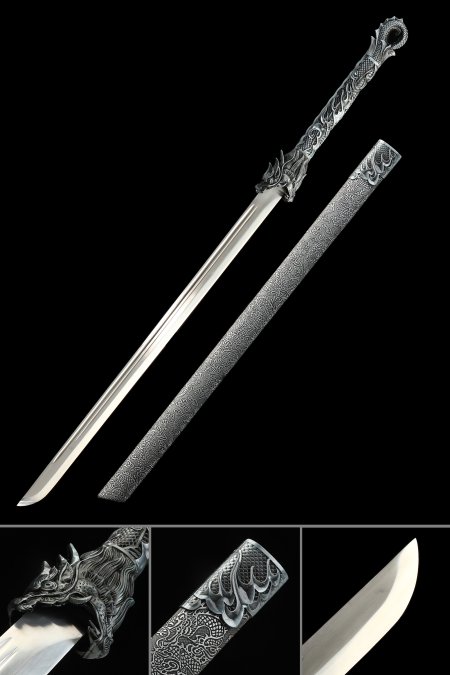
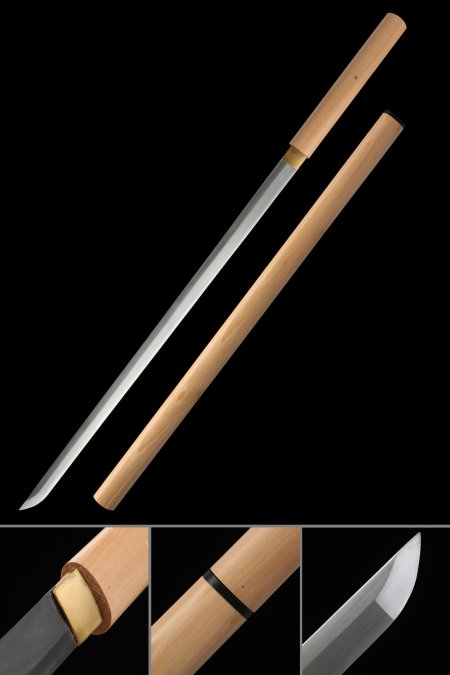
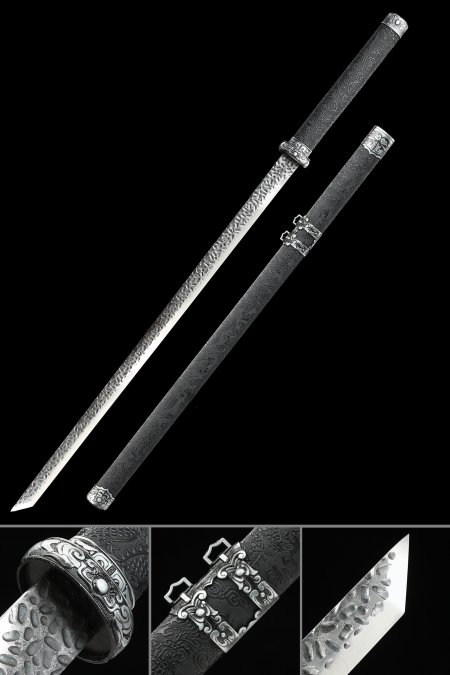
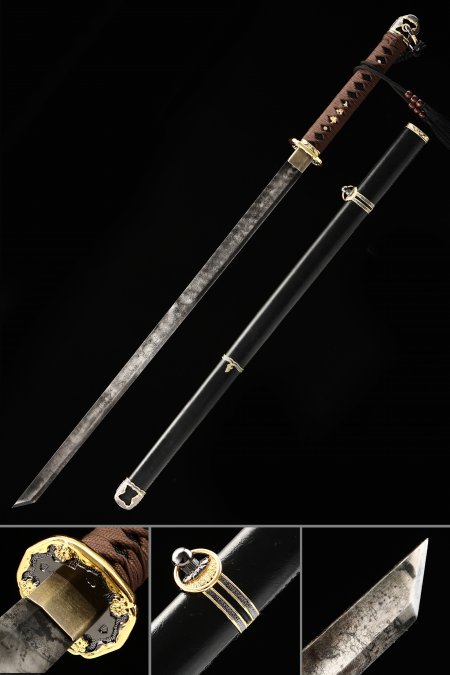
1090 Steel Ninjato
Explore our 1090 Steel Ninjato collection — straight-bladed collectible swords forged from high-carbon 1090 steel, prized for its hardness and edge retention. Each piece features traditional fittings and meticulous hand-finishing worthy of serious collectors. Every order ships with free shipping and hassle-free returns.
Free Shipping
149.00 USD
ON SALE! 15% OFF
Was: 179.00 USD
Free Shipping
119.00 USD
ON SALE! 30% OFF
Was: 169.00 USD
Free Shipping
219.00 USD
Related Collections
Frequently Asked Questions
What makes 1090 carbon steel a good choice for ninjato blades?
1090 carbon steel contains approximately 0.90 percent carbon, which places it among the higher-carbon mono-steels used in collectible sword forging. After proper quenching and tempering, 1090 typically reaches a Rockwell hardness of 58–62 HRC, giving the blade excellent edge retention and rigidity. Compared to lower-carbon options like 1060, the higher carbon content allows for a finer, more defined edge geometry, while still offering reasonable toughness when the spine is left softer through differential heat treatment. For display collectors, the practical benefit is a blade that holds a clean edge profile over long periods without frequent maintenance, and the steel responds beautifully to traditional polishing techniques that reveal its grain structure.
How is a ninjato different from a katana?
The most obvious distinction is blade geometry. A katana features a curved, single-edged blade typically between 60 and 73 centimeters, designed with a signature sori (curvature) that can vary from shallow to pronounced. A ninjato, by contrast, has a straight or nearly straight blade, often slightly shorter, with a squared-off tsuba (guard) rather than the round or ornate guards common on katana. Historically, the ninjato's origins are debated among scholars, but as a collectible category it has become well established. On a display rack, the ninjato's linear silhouette creates a striking visual counterpoint to curved swords, which is one reason collectors often pair the two styles together.
Can a clay-tempered hamon appear on a straight ninjato blade?
Absolutely. Clay tempering is a heat-treatment method, not a shape-dependent process. The smith applies a clay mixture of varying thickness along the blade before quenching. Thicker clay insulates the spine, cooling it slowly for a softer, tougher structure, while the thinly coated edge cools rapidly and hardens. The boundary between these two zones produces the visible hamon line. On a straight ninjato, the hamon often runs in a more linear path compared to the dramatic waves seen on curved blades, giving it a distinct, clean aesthetic. The technique also contributes to structural resilience, making clay-tempered pieces especially valued by collectors who appreciate both form and traditional forging methods.
How should I care for a 1090 steel ninjato on display?
High-carbon steel is reactive, so moisture is its main adversary. After any handling, wipe the blade with a soft, lint-free cloth to remove fingerprint oils, then apply a thin coat of choji oil or food-grade mineral oil along the entire surface. If you display the sword on an open wall rack, aim for a room humidity between 40 and 55 percent; a small dehumidifier or silica gel packets nearby can help in damp climates. Avoid placing the sword in direct sunlight, which can dry out wooden saya and fade tsuka-ito wrap colors over time. Inspect the blade every few months for any early signs of oxidation spots—catching them early means a gentle wipe with oil usually resolves the issue before pitting develops.
Is a 1090 steel ninjato a good gift for a sword collector?
A 1090 ninjato makes an excellent gift because it fills a niche many collectors overlook. Most enthusiasts start with a katana, so a straight-bladed ninjato adds immediate variety to an existing display. The 1090 steel grade signals genuine quality—gift recipients who understand metallurgy will recognize it as a serious collectible rather than a decorative wall hanger made from stainless steel. Presentation is another strong point: these swords typically arrive with a fitted wooden saya and wrapped handle, making them display-ready out of the box. For added impact, pairing a ninjato with a complementary wakizashi from our collection creates a visually cohesive two-sword set that any collector would appreciate.
Customer Reviews
Goku A
California, United States
Really happy with the purchase. Great craftsmanship for the price, and customer service got back to me quickly.
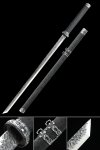 |
Ninjato 1090 Carbon Steel Hand-Hammered Blade with Black Dragon-Engraved Saya and Silver Scroll Tsuba |
Goku A
California, United States
Really happy with this purchase. Great craftsmanship for the price, and customer service was quick to respond.
|
Ninjato 1090 Carbon Steel Hand-Hammered Blade with Black Dragon-Engraved Saya and Silver Scroll Tsuba |
Robert E Beck
Pennsylvania, United States
Very impressive. I would purchase this functional work of art again.
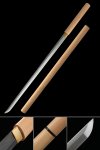 |
Shikomizue Stick Sword in 1090 Carbon Steel with Natural Hardwood Saya and Clay-Tempered Hamon |
Cody Jake Peterson
Utah, United States
Little scratches at the bottom of the sword handle but if that wasn’t a thing 5 stars all around
|
Shikomizue Stick Sword in 1090 Carbon Steel with Natural Hardwood Saya and Clay-Tempered Hamon |
Kurtis Bee
Illinois, United States
Love it, sword comes nice and sharp. Feels great, great craftsman ship. All in all very happy with this product.
|
Shikomizue Stick Sword in 1090 Carbon Steel with Natural Hardwood Saya and Clay-Tempered Hamon |
Ryan Kollenborn
South Carolina, United States
Awesome sword, it came very sharp too! I'm not that familiar with Manganese steel but from what I've read it's quite strong. I'll be making another purchase for sure!. Great Experience with True Katana.
|
Shikomizue Stick Sword in 1090 Carbon Steel with Natural Hardwood Saya and Clay-Tempered Hamon |
Joshua Dobbins
Georgia, United States
Maybe my expectations were a little high because I thought that there was inventory in the California factory but I had to wait some time for them to be shipped from China which took a while. After review I noticed a notch on the blade of the Shikomizue Sword and some small defects in design. Overall an Ok product.
|
Shikomizue Stick Sword in 1090 Carbon Steel with Natural Hardwood Saya and Clay-Tempered Hamon |