What makes Damascus steel tanto blades visually unique?
Updated Mar 2026
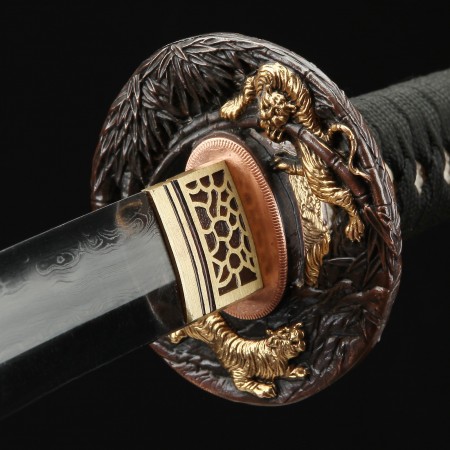
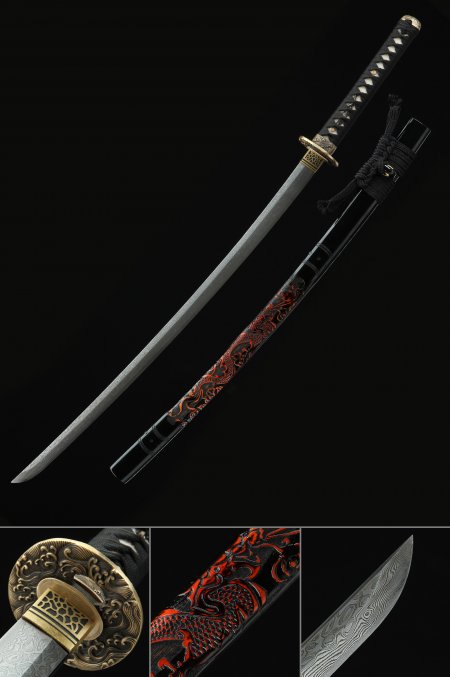
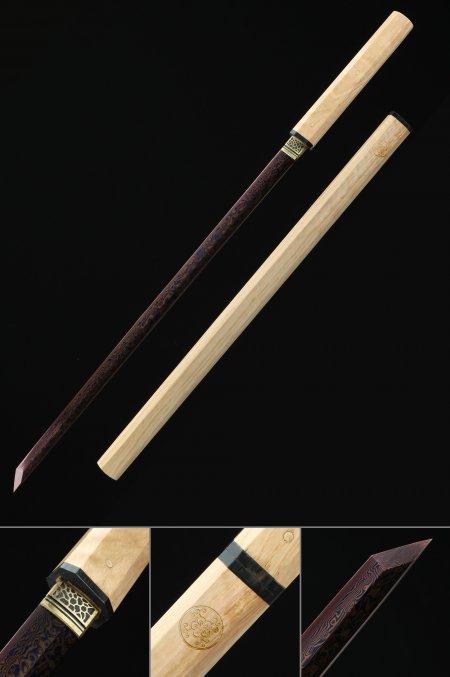
Damascus steel tanto blades display a flowing, water-grain or ladder pattern across the blade surface that results directly from the forging process. High- and low-carbon steel layers are folded and manipulated under heat, and when the finished blade is acid-etched, the differential carbon content causes the two steel types to react at different rates - revealing the layered pattern beneath. This means no two Damascus blades share an identical surface pattern, making each tanto a one-of-a-kind collectible. On pieces that also feature a real hamon line produced through clay-differential hardening, collectors can appreciate two distinct visual signatures on a single blade: the active hamon along the edge and the flowing Damascus grain across the flat.