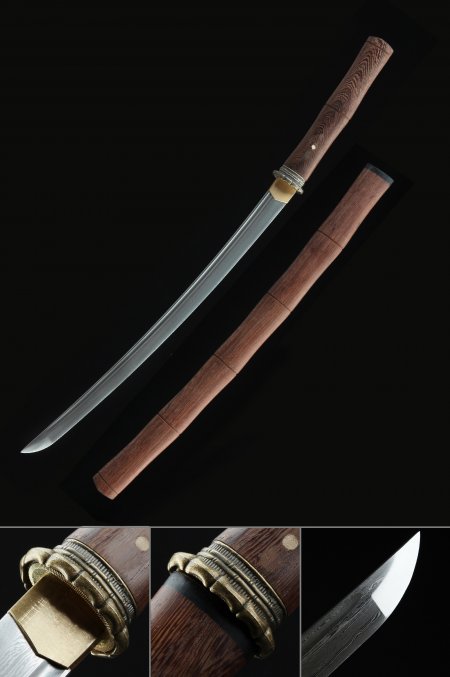
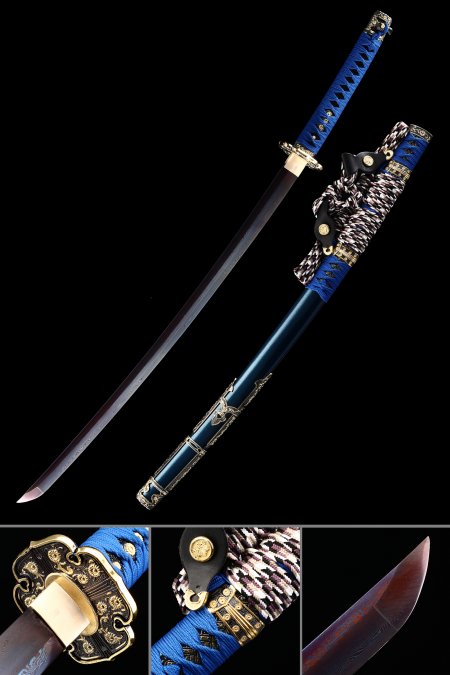
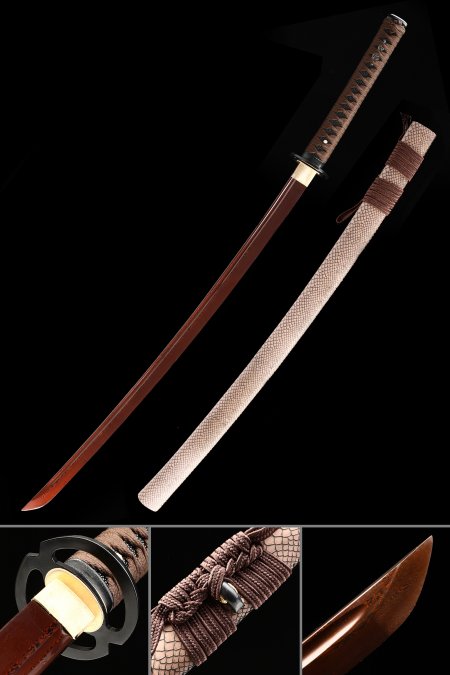
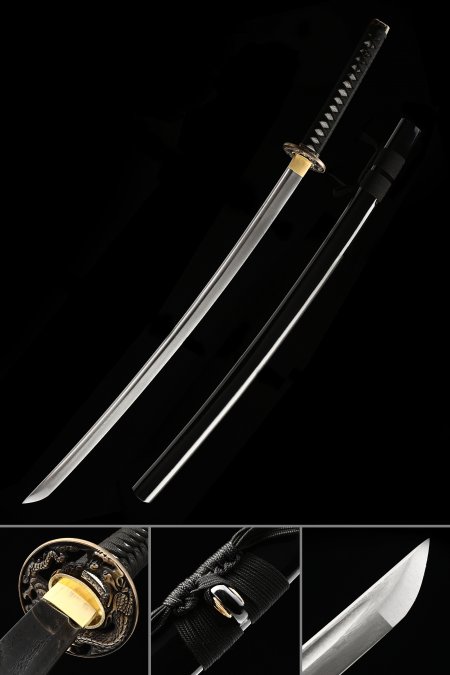
How does Damascus steel differ from T10 clay tempered steel in a tanto?
Updated Mar 2026
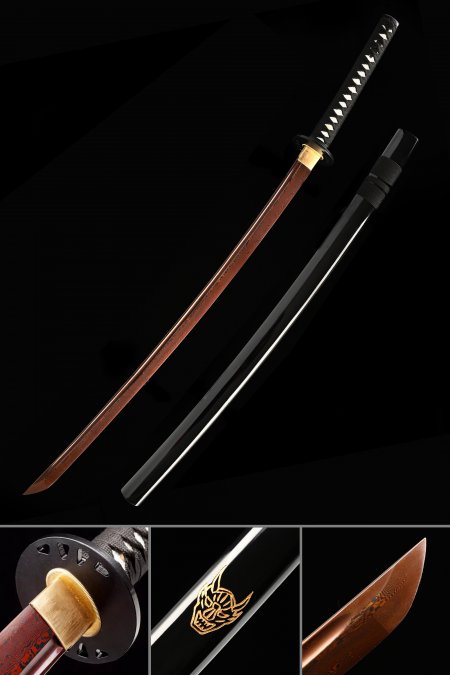
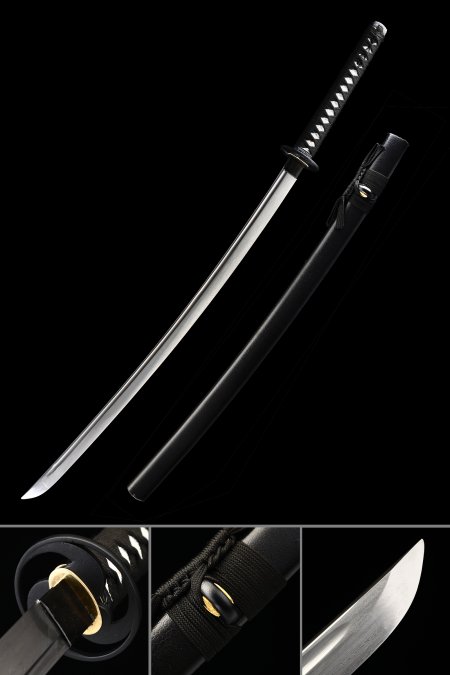
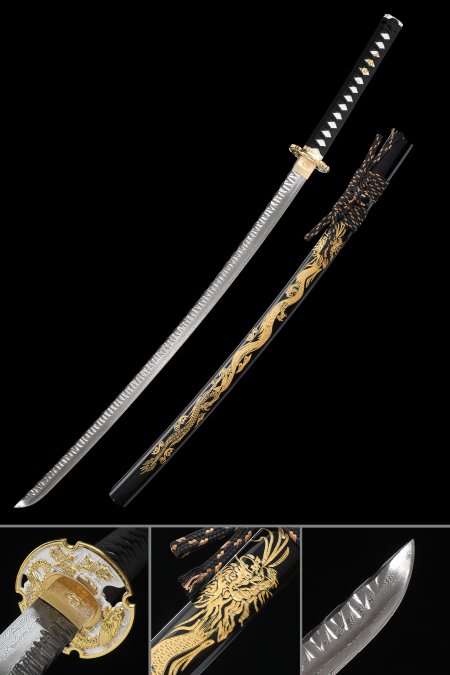
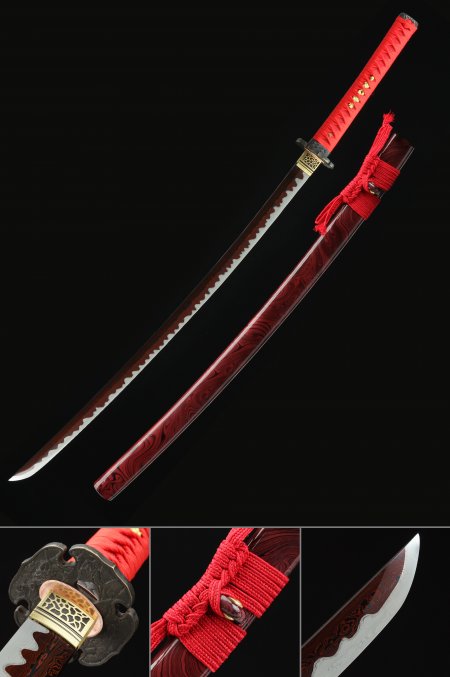
These two steels represent fundamentally different approaches to both metallurgy and aesthetics. Damascus steel is made by forge-welding multiple steel layers — typically alternating high and low carbon compositions — then folding and drawing them out repeatedly. The result is a surface pattern of flowing lines or waves that appears after acid etching, and no two blades share identical grain. T10 tool steel, by contrast, is a high-carbon mono-steel prized for its fine grain structure and hardness. Clay tempering adds a layer of insulating clay to the spine before quenching, causing the edge to harden faster and producing a visible hamon — the temper line that serious collectors examine closely as evidence of authentic heat treatment. Damascus appeals to collectors drawn to visual complexity; T10 clay tempered appeals to those who value the technical story written in a genuine hamon.