Phoenix Tsuba Tanto

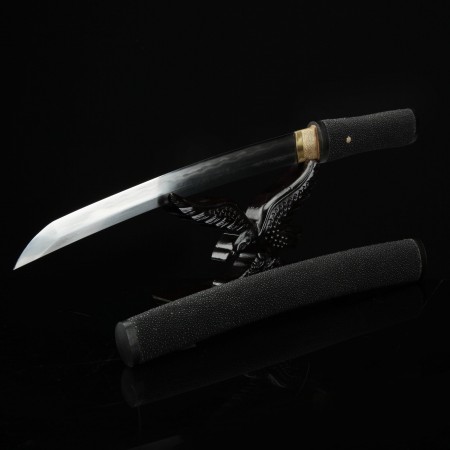
The Phoenix Tsuba Tanto collection brings together masterfully crafted tanto blades distinguished by ornate phoenix-motif guard work and premium materials. Each piece features full-tang construction, hand-selected handle wrapping, and finely detailed tsuba casting that transforms a traditional short-blade form into a compelling display centerpiece. Free standard shipping is included on every order, and we stand behind each collectible with a hassle-free return policy.
Showing 2 Products

Related Collections

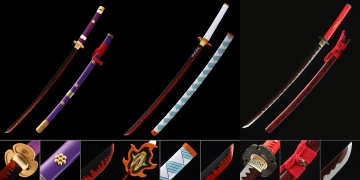
Skull Tsuba Katana28 items


109 Reviews

Flame Blade Katana29 items


284 Reviews

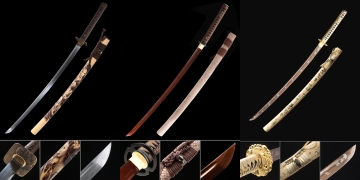
Beige Saya Katana32 items


96 Reviews

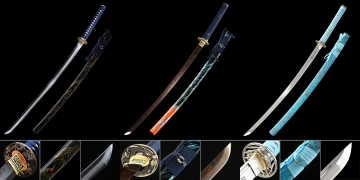
Crane Tsuba Katana29 items


36 Reviews

Frequently Asked Questions

What makes a phoenix tsuba tanto different from a standard tanto?
The defining distinction is the tsuba design itself. A phoenix tsuba tanto is built around a guard specifically cast or carved to depict the hō-ō, Japan's mythological phoenix, with detailed feather relief, wing spread, and often gilded or antiqued surface finishing. Standard tanto furniture may use geometric or minimalist guards — or in the case of aikuchi style, no tsuba at all. Beyond aesthetics, a well-executed phoenix tsuba adds meaningful visual weight to the piece when displayed, making it a more compelling centerpiece than a plain-guard equivalent. Collectors focused on furniture as much as blade steel often seek out themed tsuba designs precisely because they elevate the overall composition of a mounted display.
How does Damascus steel differ from T10 clay tempered steel in a tanto?
These two steels represent fundamentally different approaches to both metallurgy and aesthetics. Damascus steel is made by forge-welding multiple steel layers — typically alternating high and low carbon compositions — then folding and drawing them out repeatedly. The result is a surface pattern of flowing lines or waves that appears after acid etching, and no two blades share identical grain. T10 tool steel, by contrast, is a high-carbon mono-steel prized for its fine grain structure and hardness. Clay tempering adds a layer of insulating clay to the spine before quenching, causing the edge to harden faster and producing a visible hamon — the temper line that serious collectors examine closely as evidence of authentic heat treatment. Damascus appeals to collectors drawn to visual complexity; T10 clay tempered appeals to those who value the technical story written in a genuine hamon.
Is full-tang construction important for a display tanto collectible?
Yes, and for reasons that go beyond structural strength. Full-tang construction — where the blade steel runs as a single uninterrupted piece through the entire handle — is considered a hallmark of quality craftsmanship in Japanese-style blades. In a collectible context, it signals that the maker did not compromise on the hidden parts of the piece, which experienced collectors recognize immediately when they handle it. The weight distribution also feels more balanced and intentional compared to partial-tang or rat-tail tang alternatives. When displaying or examining the tanto over time, that solid, unified feel is part of the ownership experience that distinguishes a true collectible from a decorative replica.
How should I care for the tsuba and blade between display rotations?
Blade care and tsuba care require slightly different approaches. For the blade, apply a thin, even coat of choji oil or high-grade mineral oil using a soft cloth or rice paper every two to three months, or more frequently in coastal or high-humidity environments. Avoid touching the blade surface with bare hands — skin oils accelerate oxidation on high-carbon steel. For the tsuba, use a dry or very lightly dampened soft cloth to remove dust from the relief work; avoid liquid cleaners that could affect any patina or plating on the guard's surface. Store the complete tanto in a low-humidity environment, ideally with a silica gel packet in the display case, and remove the blade from the saya periodically to prevent moisture accumulation inside the scabbard.
Would a phoenix tsuba tanto make a meaningful gift for a Japanese culture enthusiast?
It makes an excellent choice precisely because it carries layered meaning. The phoenix (hō-ō) in Japanese tradition symbolizes renewal, prosperity, and virtue — associations that translate well as gift symbolism regardless of the recipient's familiarity with blade collecting. Visually, the combination of an ornate themed tsuba, a patterned or hamon-bearing blade, and a contrasting lacquered saya creates an impressive presentation even before any background knowledge is applied. For recipients who are already engaged with Japanese history, martial arts, or metallurgy, the craftsmanship details — Damascus layering, clay tempering, rayskin handle wrapping — give them genuine material to explore and appreciate over time. Presented on a wooden display stand, a phoenix tsuba tanto is a gift that functions as both art object and conversation piece.

Customer Reviews

Edmond Liu California, United States

I thought my product was made in Japan… Looks like made in China… good thing blade sharp display doesn’t look bad except handle has wood piece that’s light brown that doesn’t match black they could’ve dyed it. Def worth more around $50-$90 not $150. The little wood part on sword handle bothers me they should’ve dyed it black to blend it in. Other than that honestly it’s just okay and don’t think it was worth the $150
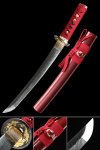
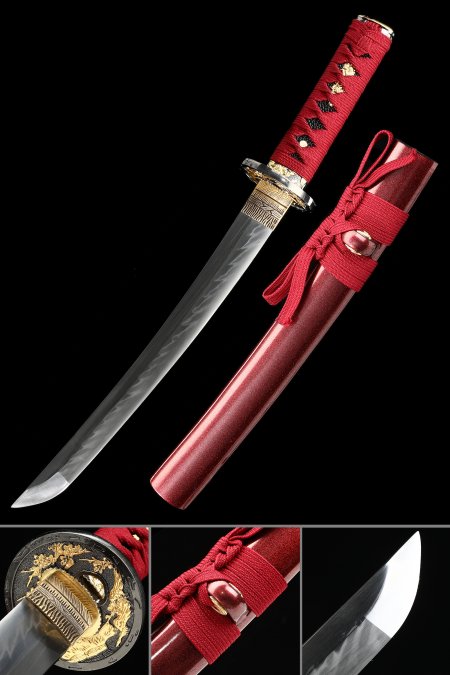
T10 Clay Tempered Tanto Sword with Real Hamon in Red Saya - Gold Floral Tsuba Collectible T10 Clay Tempered Tanto Sword with Real Hamon in Red Saya - Gold Floral Tsuba Collectible
Arthur Dorety New Jersey, United States

I've ordered 6 swords from Truekatana. This picture represents a Chinese Straight Sword and Chinese Broadsword I purchsed. I'm not a metalurgist, forgemaster or swordmaster. I learned a little Shao lin and wu shu broadsword in my youth, but that's about it. All that said these swords are truly functional, beautifully balanced and of exquisite workmanship. Besides being weapons they are beautiful works of art. I like to collect swords of all types and these two are among the most expensive I've bought, both being in the $1000 range. They are also, by far, the nicest.
I've also bought two katanas and two wakizashi. Though I did not venture into the same price range, they are truly viable weapons and beautiful art pieces.
Truekatana has truly exceptional pieces, fully functional as well as beautiful to behold. They are worth every penny and if you wait for a sale you will likely find something you like at a better than fair price.

T10 Clay Tempered Tanto Sword with Real Hamon in Red Saya - Gold Floral Tsuba Collectible T10 Clay Tempered Tanto Sword with Real Hamon in Red Saya - Gold Floral Tsuba Collectible
Cart 0 Items

Your cart is empty