How is Damascus steel different from standard high-carbon steel?
Updated Mar 2026
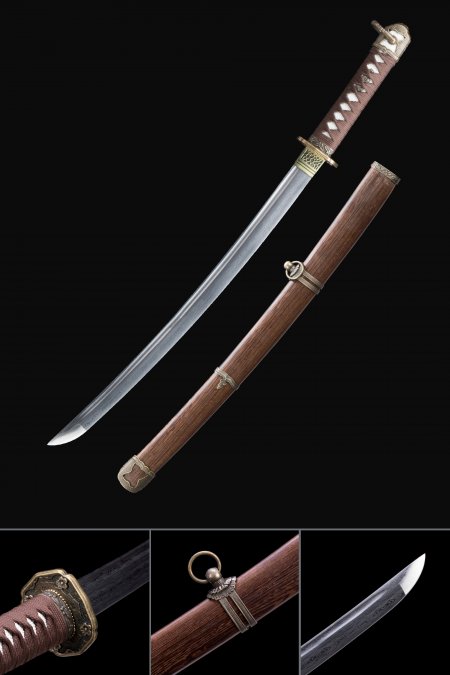
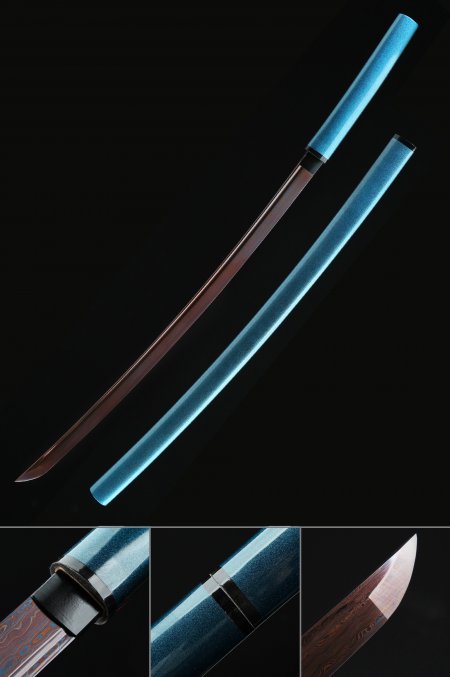
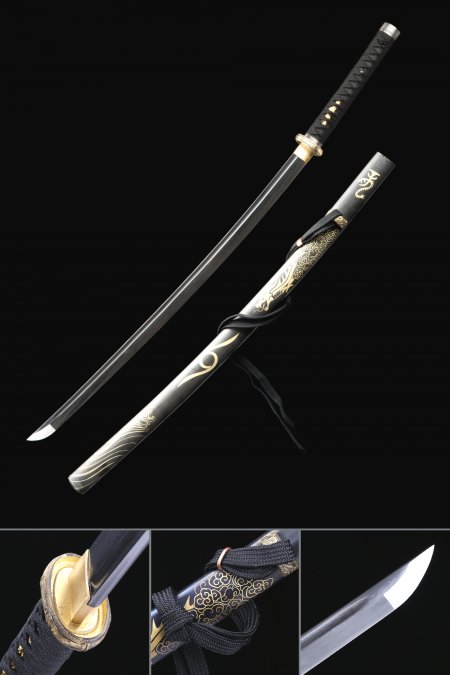
Standard high-carbon steel blades are forged from a single homogeneous billet, so the finished surface is uniform in color and texture after polishing. Damascus steel, by contrast, is constructed by forge-welding at least two different alloys together, then folding and drawing the billet repeatedly to multiply the layers. When the finished blade is acid-etched, the differing carbon content of each layer reacts at different rates, revealing the flowing grain patterns Damascus is known for. This means Damascus blades carry both a structural story — the record of the smith’s folding process — and a visual one. Because no two billets fold identically, the surface pattern on every Damascus tanto is genuinely unique, which is a significant part of their appeal as display collectibles.