How does T10 clay-tempered steel differ from 1060 carbon steel in a naginata?
Updated Mar 2026
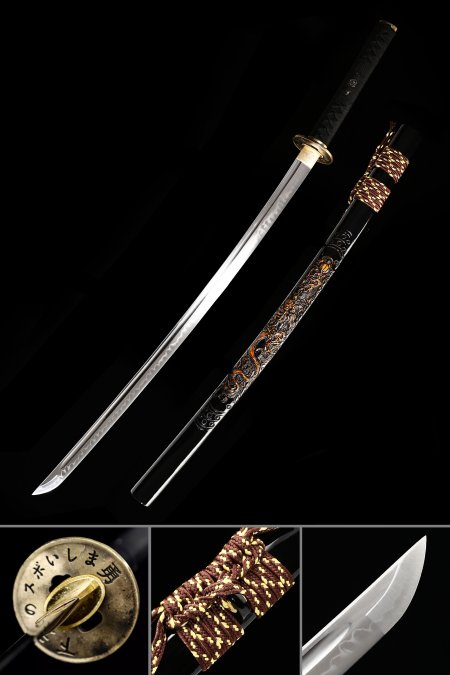
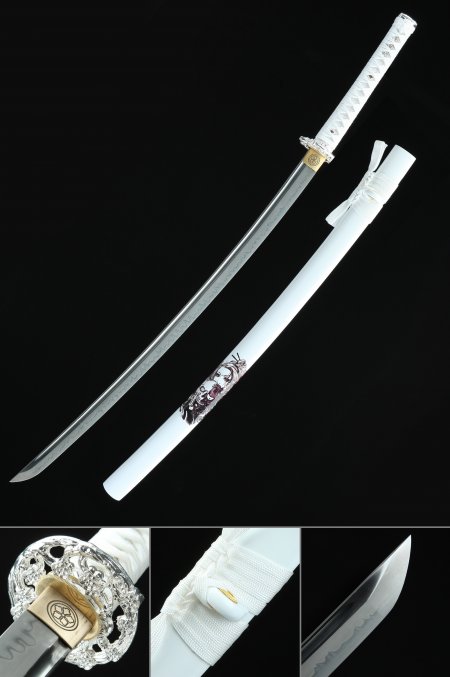
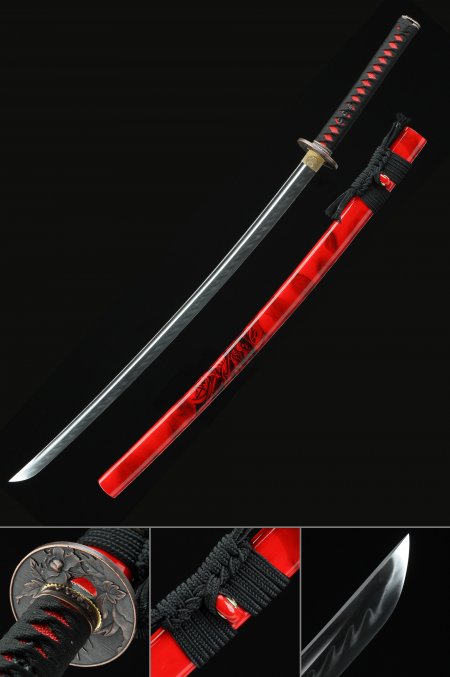
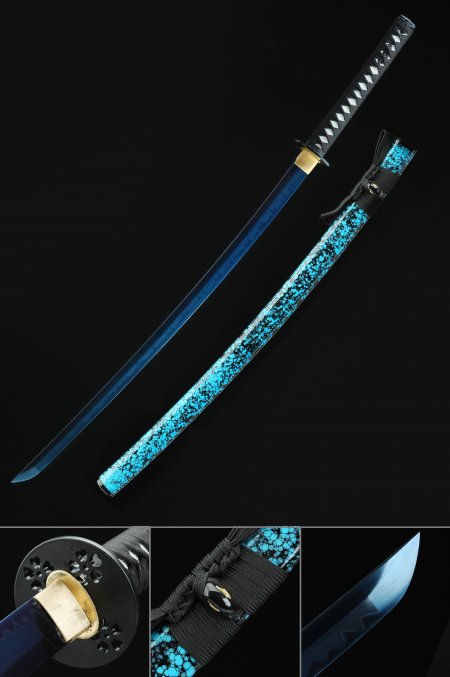
T10 and 1060 are both high-carbon steels, but they differ in composition and the finishing techniques available to the smith. T10 contains trace tungsten, which improves wear resistance and allows the steel to hold a refined geometry at the edge. More importantly, T10 responds exceptionally well to clay tempering — a process where the smith applies clay along the spine before quenching, creating a differential hardness between edge and spine. This produces a genuine hamon: the visible crystalline temper line that is the hallmark of authentic Japanese forging. 1060 steel, by contrast, is a straightforward high-carbon alloy that is more forgiving to forge and finish, making it an excellent foundation for collectors who prioritize structural integrity and clean geometry over the visual complexity of a hamon. Both are valid choices depending on what a collector values in a display piece.