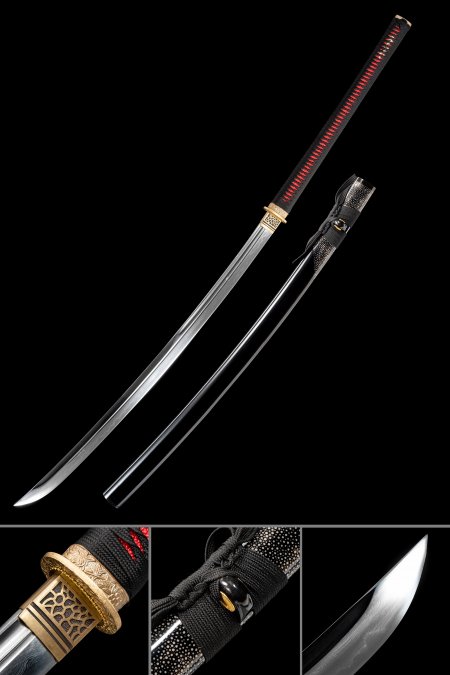
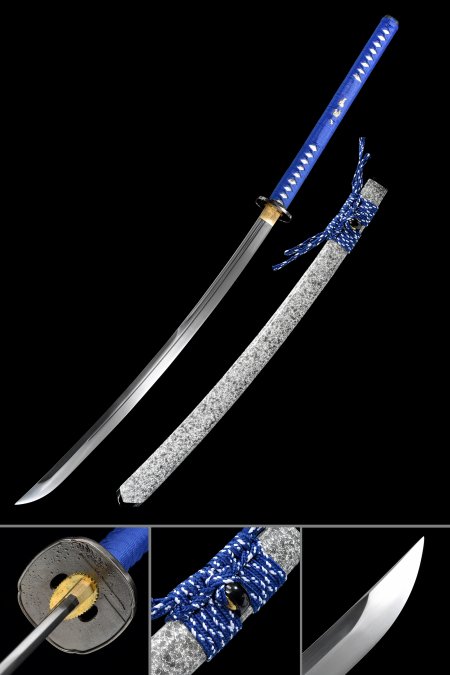
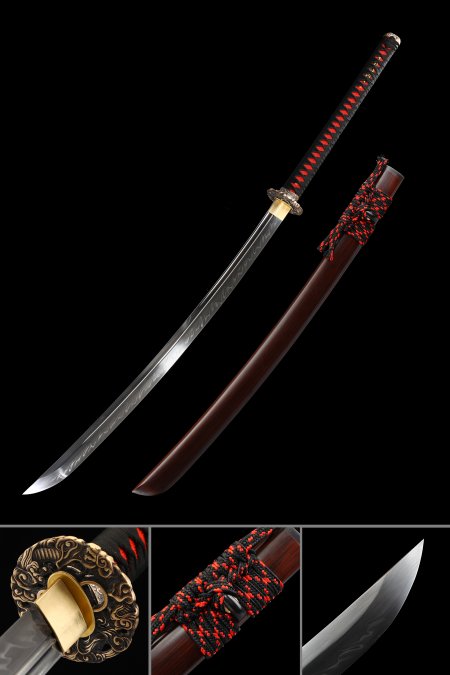
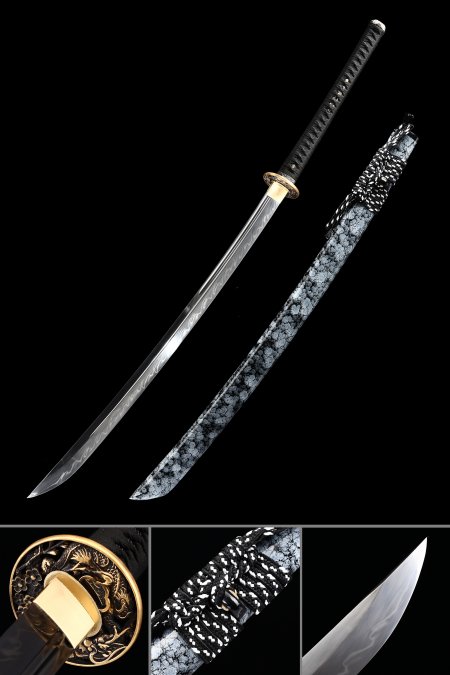
What makes clay tempering different from standard quenching on a naginata?
Updated Feb 2026
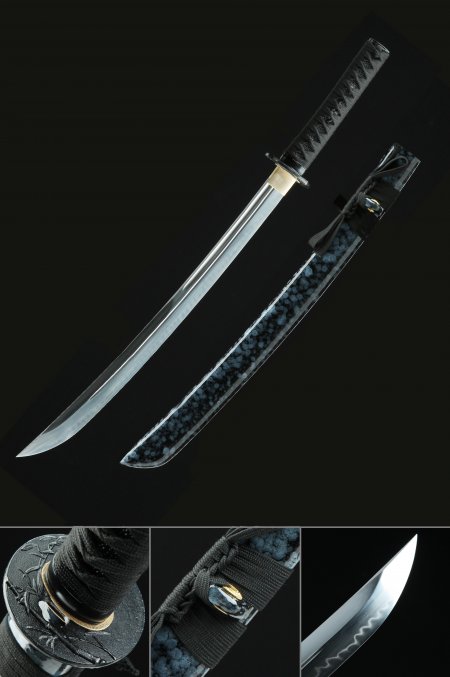
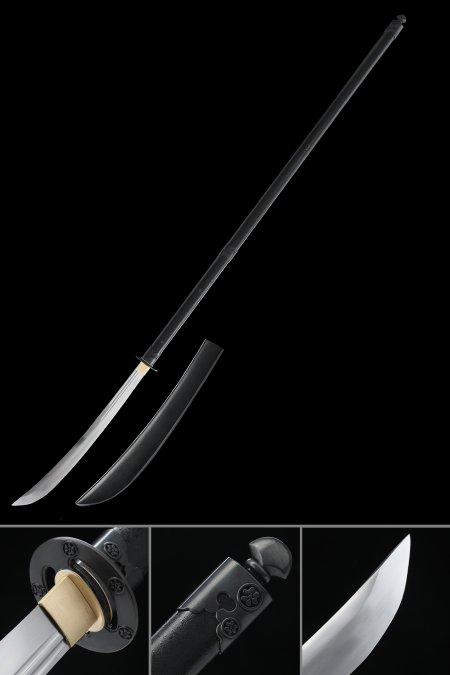
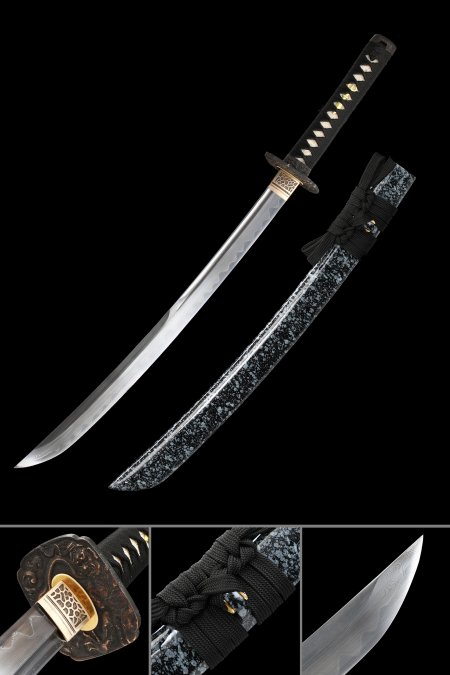
Standard quenching submerges the entire blade in water or oil at a uniform rate, producing consistent hardness throughout. Clay tempering adds an extra step: a mixture of charcoal powder,iteite clay, and sometimes ash is applied in varying thicknesses along the blade before the quench. The thicker coating on the spine insulates the steel so it cools slowly, remaining tough and flexible, while the thinly coated edge cools rapidly to achieve greater hardness. This differential creates the visible hamon line — essentially a crystalline boundary between the two hardness zones. On a naginata, whose long curved blade endures significant lateral stress during handling or display vibrations, that softer spine acts as a built-in shock absorber, reducing the chance of cracking. The hamon also makes every piece unique; no two clay applications produce an identical pattern, giving collectors a genuine one-of-a-kind feature.