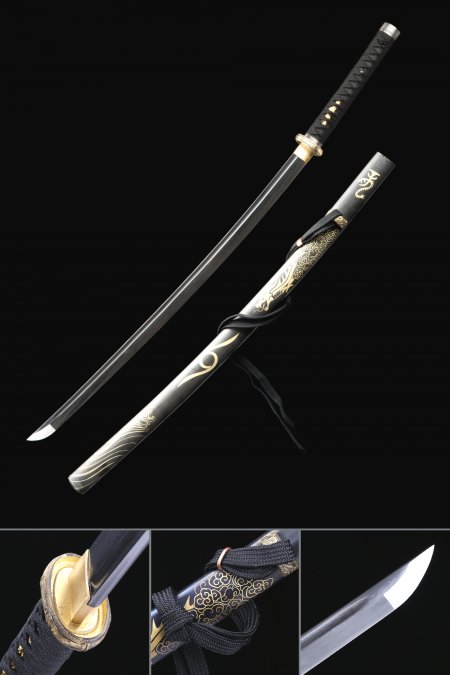
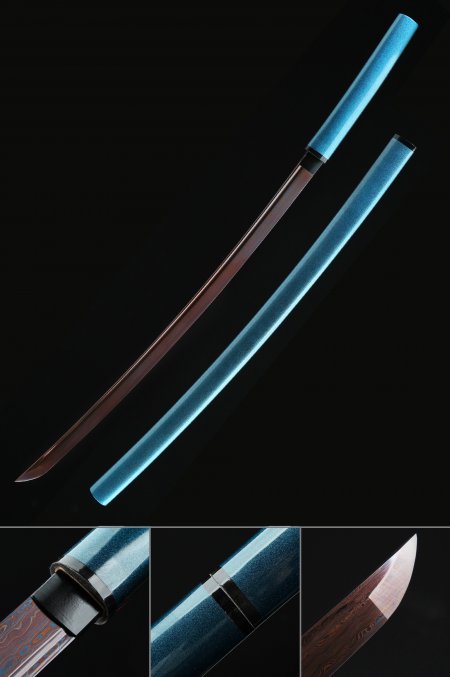
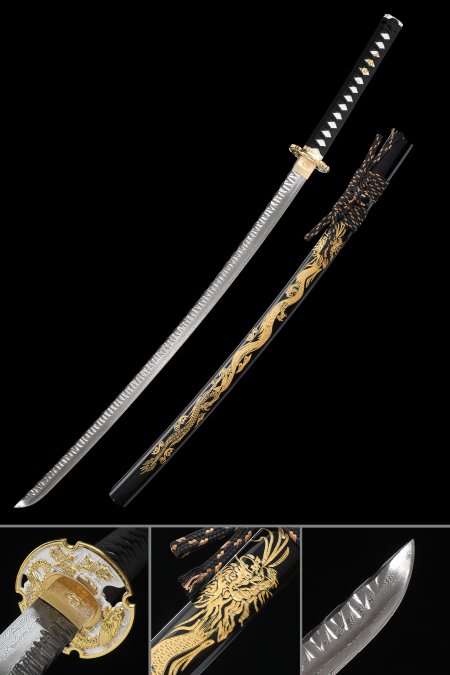
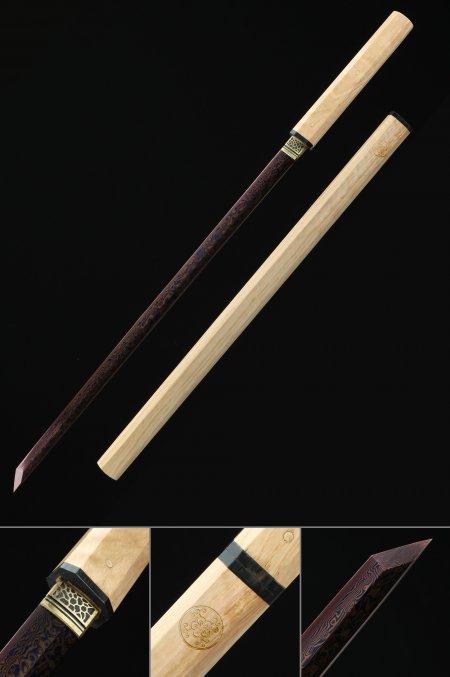
How does Damascus steel differ from 1095 carbon steel in these blades?
Updated Mar 2026
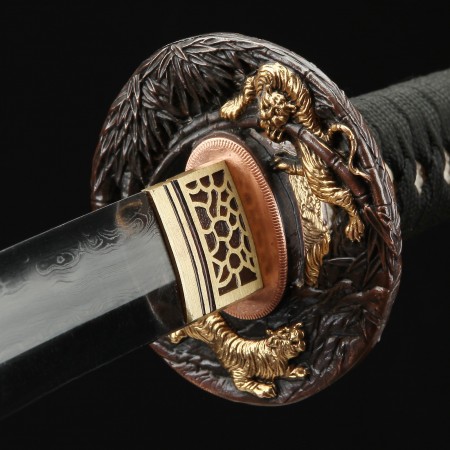
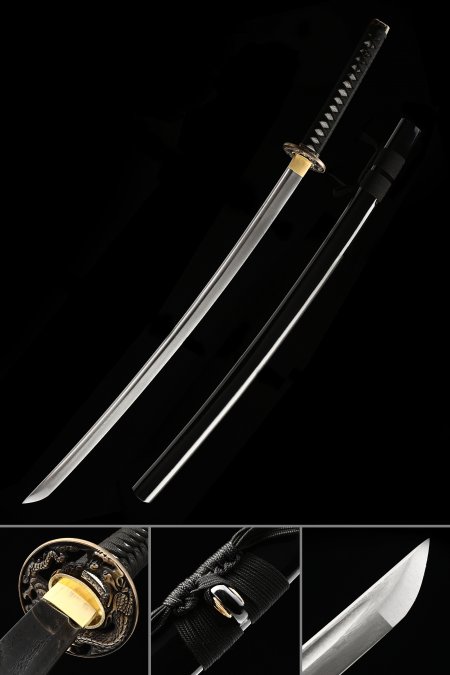
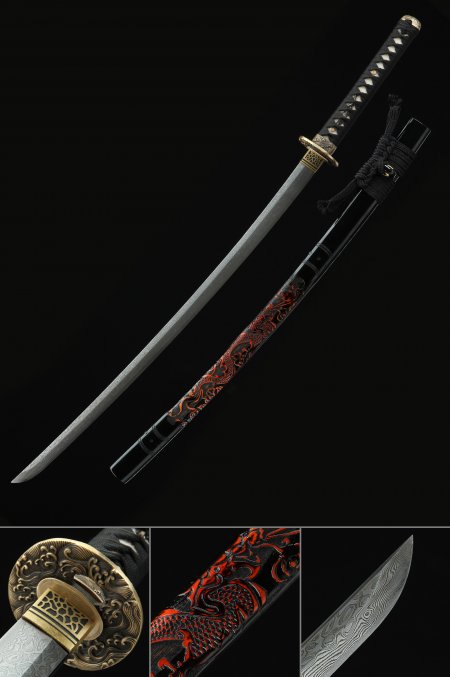
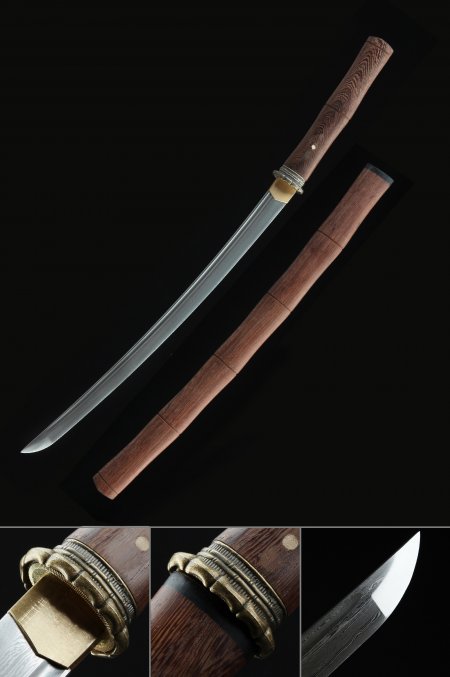
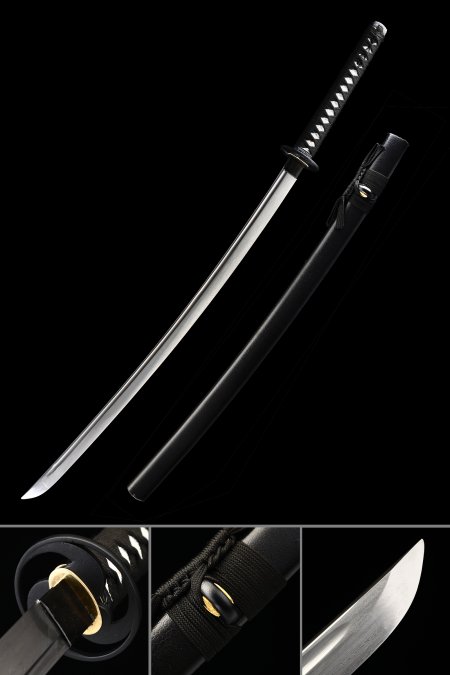
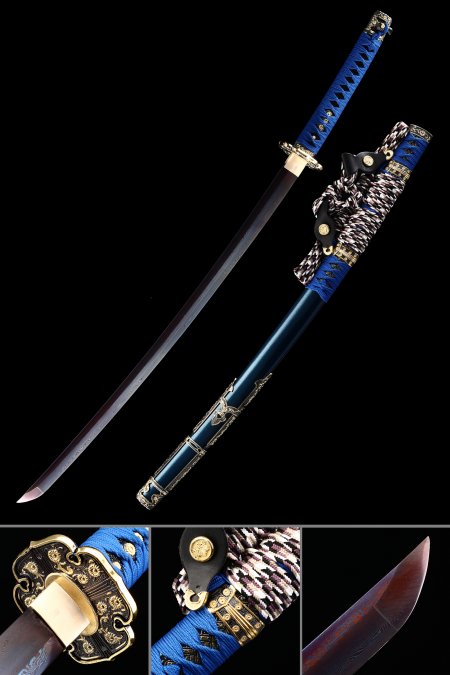
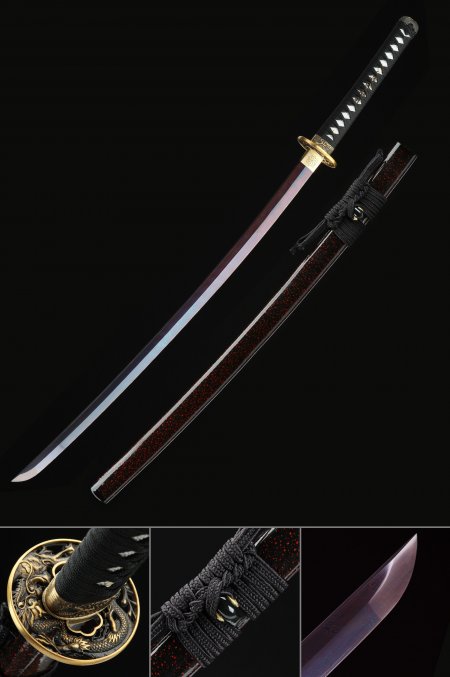
Damascus steel in these odachi and tachi is produced by forge-welding two or more steel alloys with differing carbon content, then repeatedly folding and drawing the billet to create the characteristic layered grain pattern visible on the blade surface. The result is a visually distinctive collectible piece with flowing woodgrain, ladder, or teardrop motifs etched to the surface after forging. 1095 high-carbon steel, by contrast, is a single-alloy blade steel that does not display pattern welding but responds exceptionally well to clay tempering - a process that produces a genuine differential hamon, the misty crystalline line along the blade's edge boundary. For display purposes, Damascus steel offers dramatic surface aesthetics under light, while a clay-tempered 1095 blade with real hamon appeals to collectors focused on traditional Japanese heat-treatment authenticity.