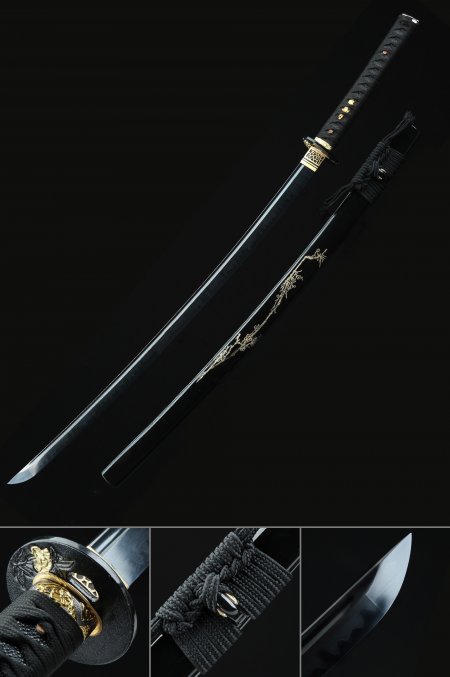
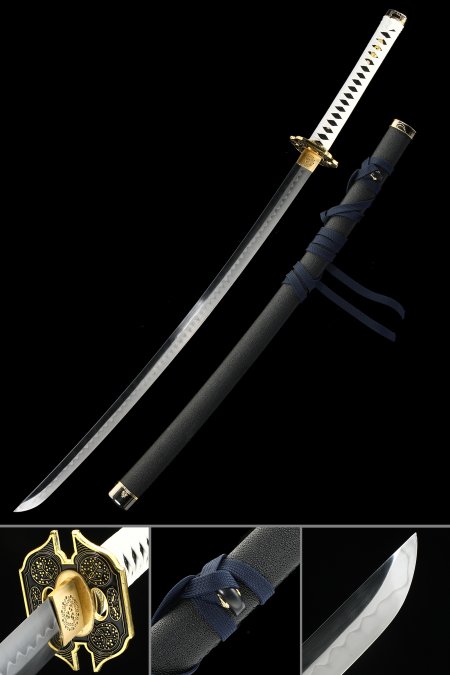
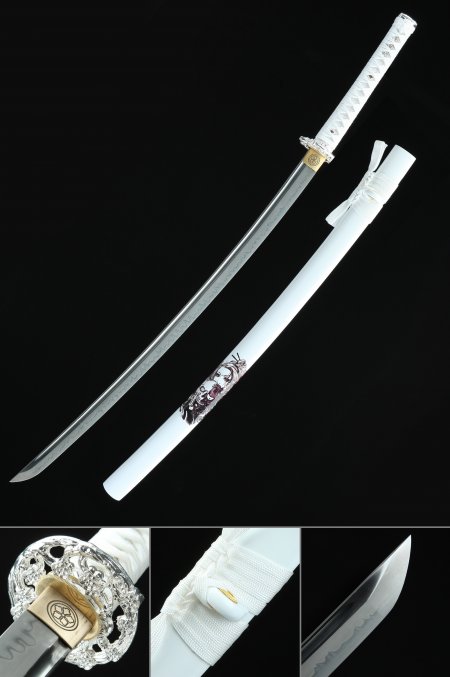
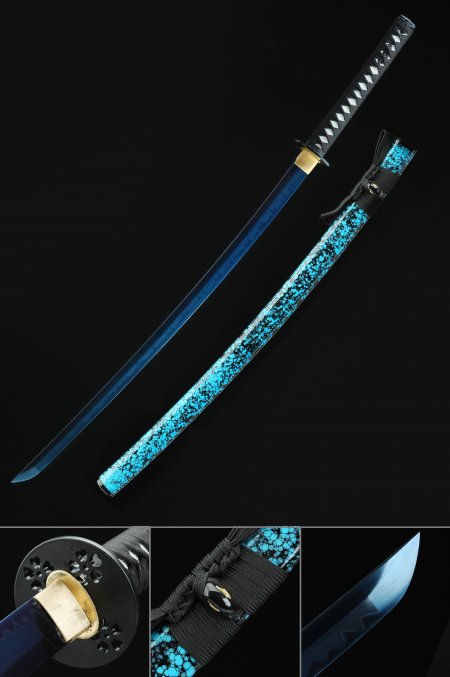
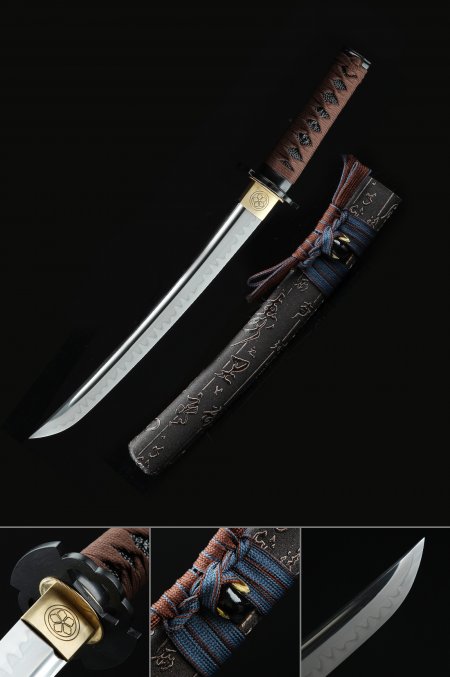
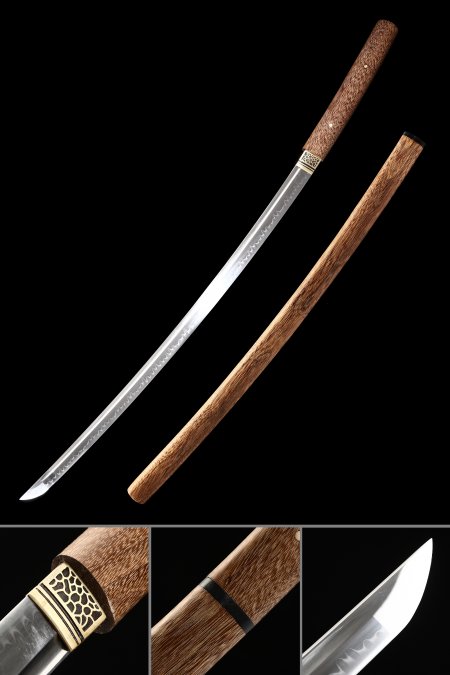
How is a genuine hamon formed on a tachi blade?

 Updated Mar 2026

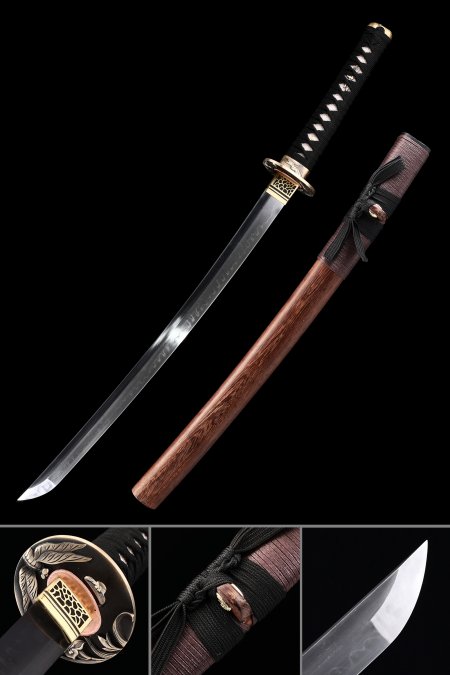
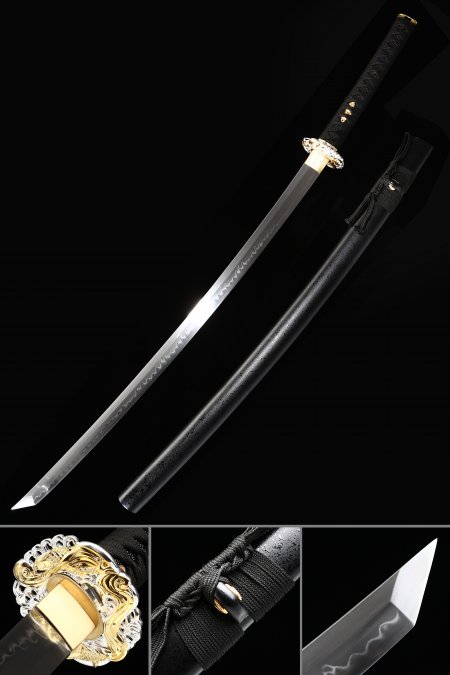
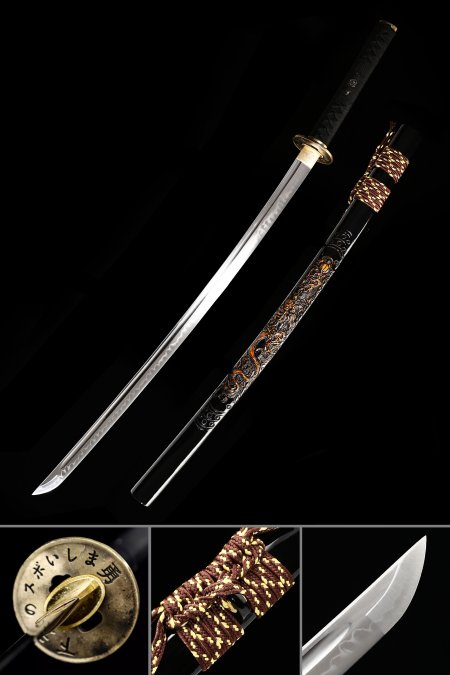
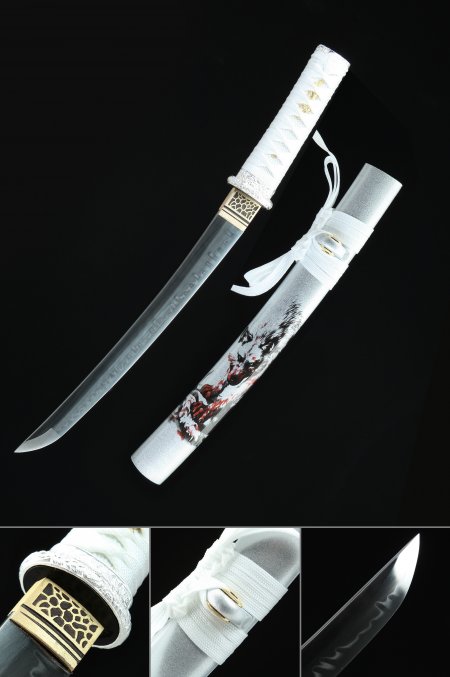
A real hamon is produced through differential clay tempering - a process where the swordsmith applies a thick layer of clay slurry along the spine of the blade and a thin or absent layer near the edge before the quench. When the blade is plunged into water, the thinly coated edge cools rapidly and hardens into martensite, while the clay-insulated spine cools more slowly and remains relatively soft. The boundary between these two zones becomes visible as the hamon - a misty, wave-like line running along the length of the blade. On 1095 and T10 carbon steel tachi in this collection, this line is a structural feature formed during forging, not an acid etch applied afterward. It is one of the most reliable indicators of a properly heat-treated blade.
Popular Products

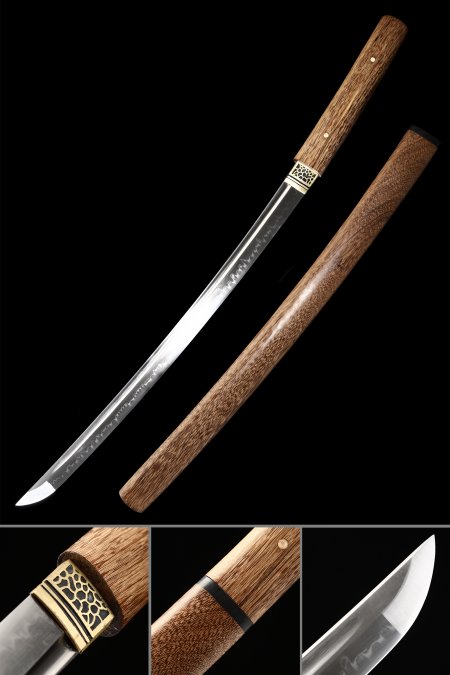
20% OFFshirasaya wakizashi
179.00 USD
219.00 USD
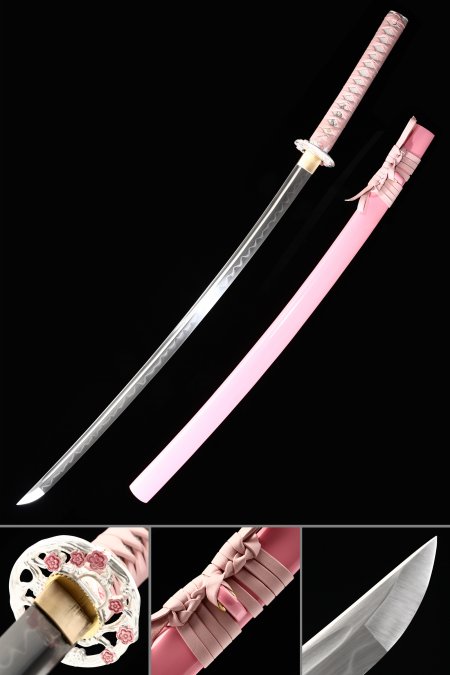
15% OFFpink katana
189.00 USD
219.00 USD
20% OFFblack katana
209.00 USD
259.00 USD
20% OFF
259.00 USD
329.00 USD
15% OFFwhite katana
209.00 USD
249.00 USD
20% OFFblue katana
209.00 USD
259.00 USD
20% OFFwakizashi sword
219.00 USD
279.00 USD
15% OFFblack katana
199.00 USD
229.00 USD
20% OFFjapanese katana
209.00 USD
259.00 USD
15% OFFtanto sword
149.00 USD
179.00 USD
15% OFFtanto sword
179.00 USD
209.00 USD
20% OFFshirasaya katana
209.00 USD
259.00 USD
20% OFFshirasaya wakizashi
179.00 USD
219.00 USD
15% OFFpink katana
189.00 USD
219.00 USD
20% OFFblack katana
209.00 USD
259.00 USD
20% OFF
259.00 USD
329.00 USD
15% OFFwhite katana
209.00 USD
249.00 USD
20% OFFblue katana
209.00 USD
259.00 USD
20% OFFwakizashi sword
219.00 USD
279.00 USD
15% OFFblack katana
199.00 USD
229.00 USD
20% OFFjapanese katana
209.00 USD
259.00 USD
15% OFFtanto sword
149.00 USD
179.00 USD
15% OFFtanto sword
179.00 USD
209.00 USD
20% OFFshirasaya katana
209.00 USD
259.00 USD

Explore Our Collections