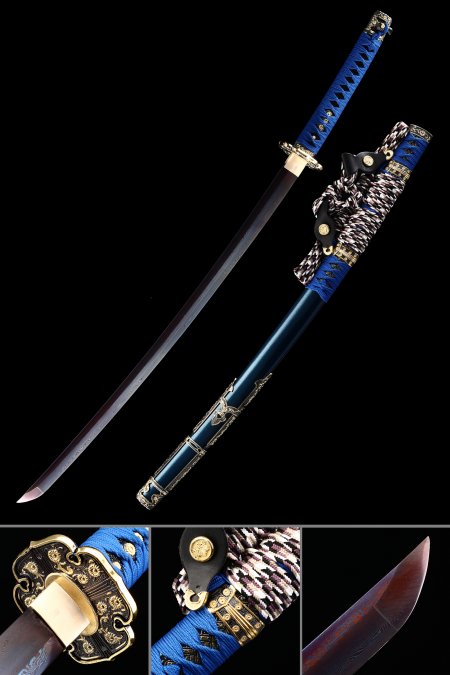
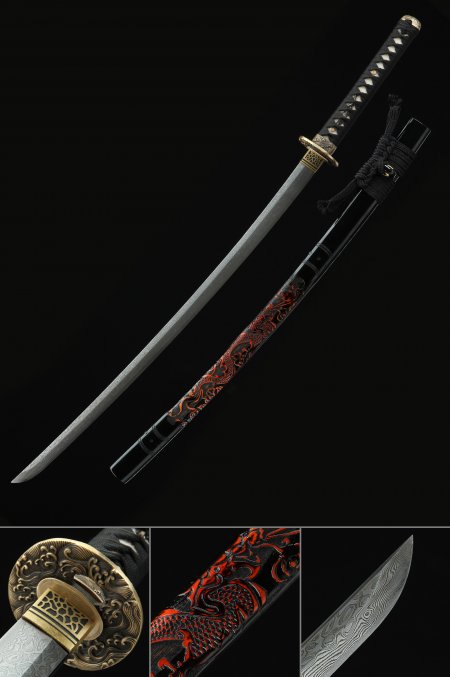
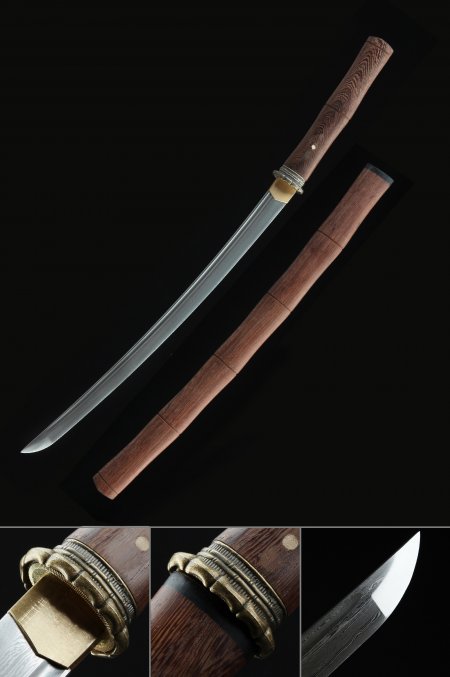
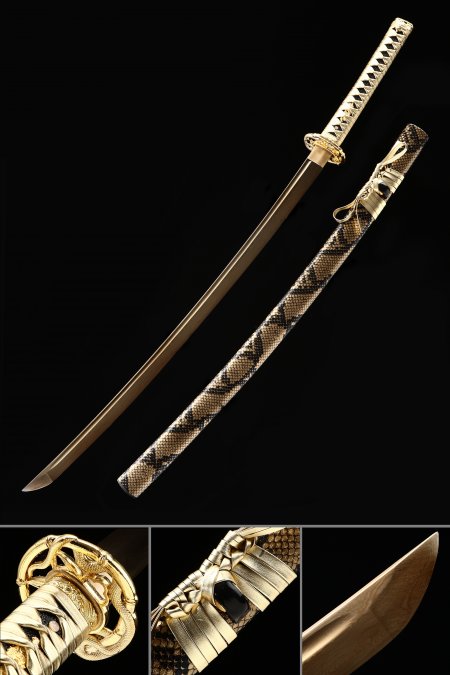
How does Damascus steel differ from 1095 carbon steel in tachi blades?
Updated Mar 2026
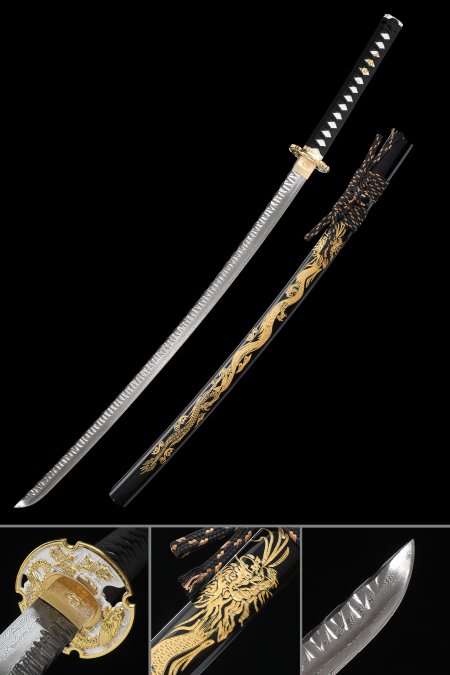
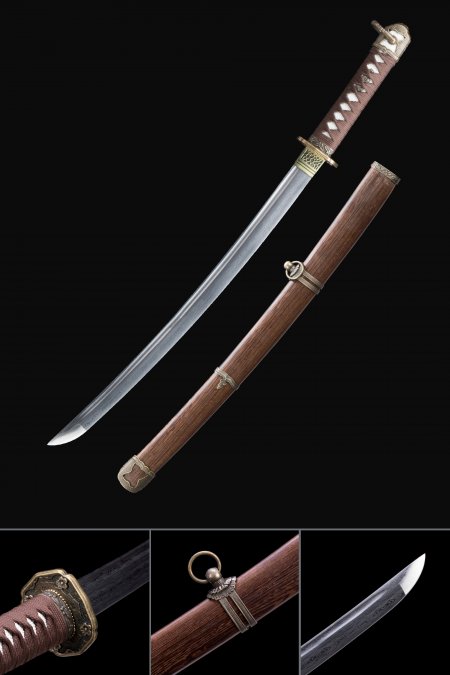
Damascus steel tachi blades are produced by forge-welding multiple layers of high-carbon and low-carbon steel, then folding and drawing the billet repeatedly. The result is a surface with flowing grain patterns - called the hada - that appear as wood-grain, water-ripple, or ladder-like lines depending on the folding method. No two Damascus blades share an identical surface pattern. By contrast, 1095 carbon steel is a single-alloy high-carbon steel valued for its predictable hardness, edge retention, and responsiveness to clay tempering. A 1095 blade subjected to differential hardening develops a genuine hamon - the misty boundary line between the hardened edge and the softer spine - which is visible as a natural feature of the steel itself rather than a surface treatment. Collectors who prioritize visual complexity and uniqueness tend to favor Damascus; those who value the authentic temper aesthetics of traditional Japanese blade craft often gravitate toward 1095 or T10 steel pieces with real hamon.