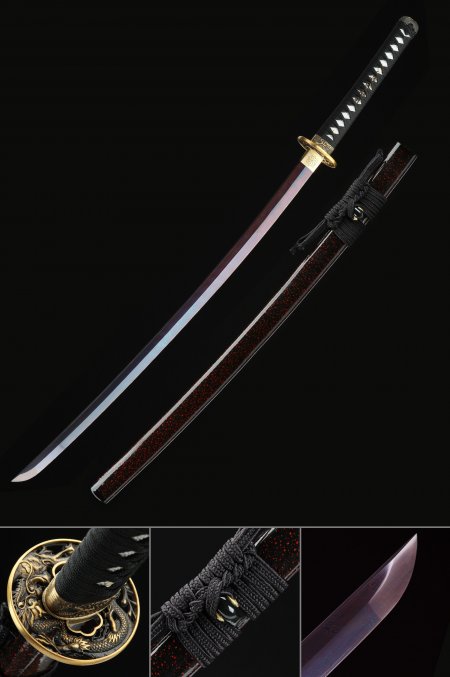
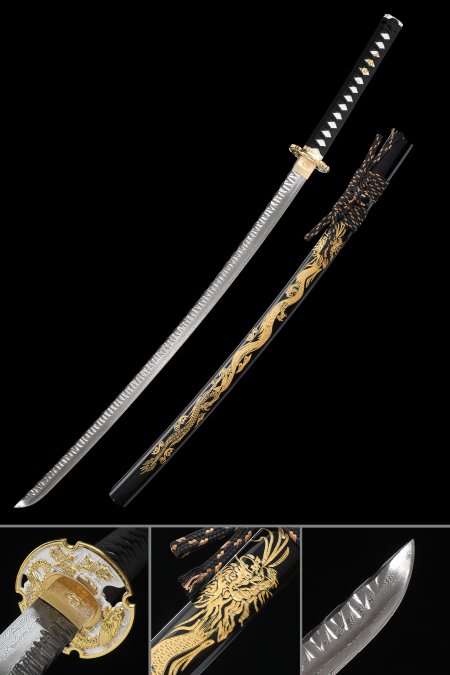
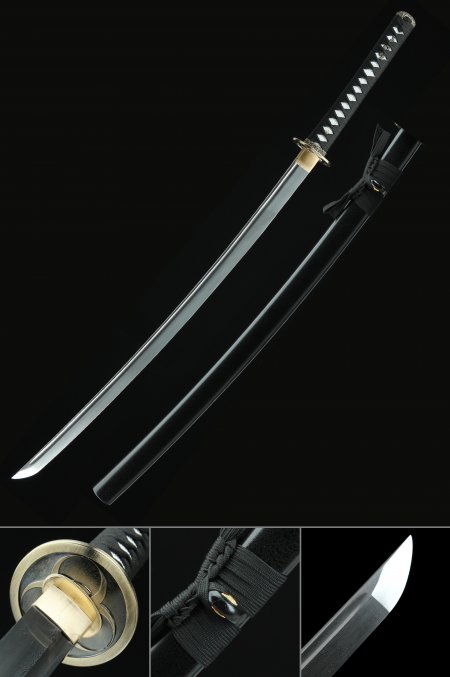
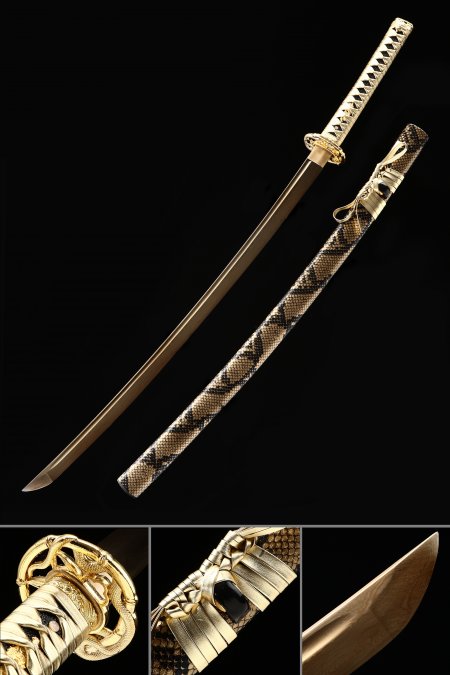
What is the difference between T10 clay-tempered and Damascus steel in these tachi?
Updated Mar 2026
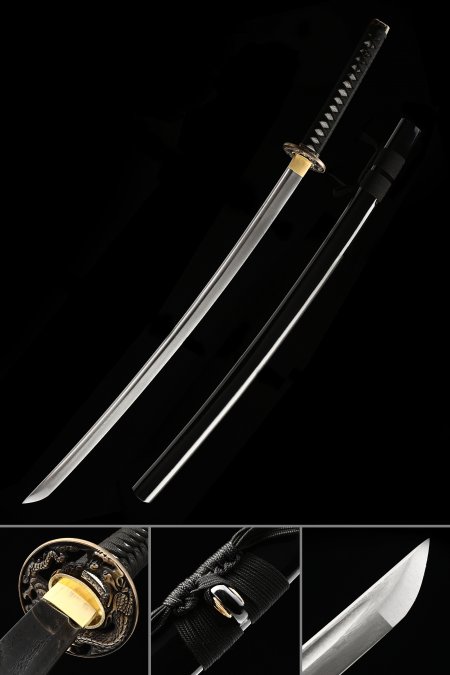
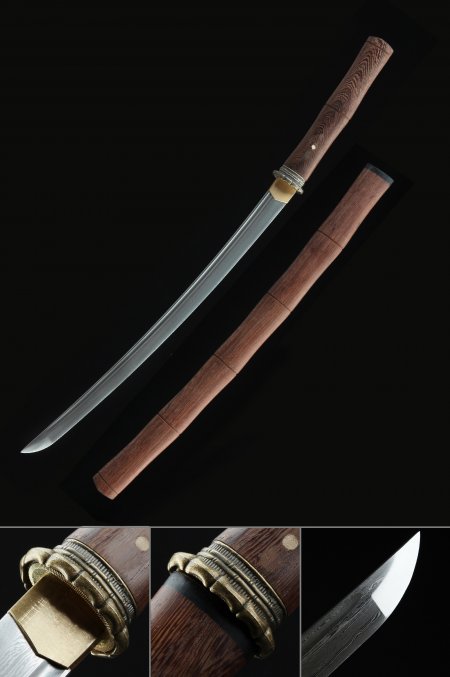
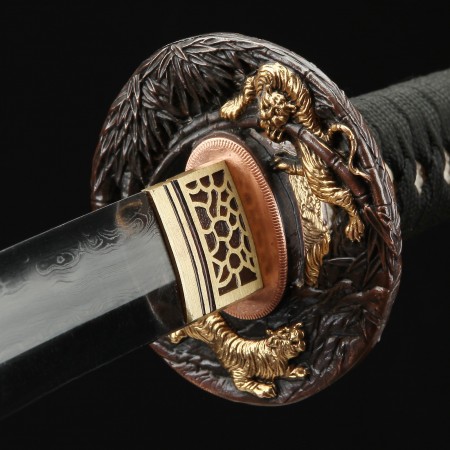
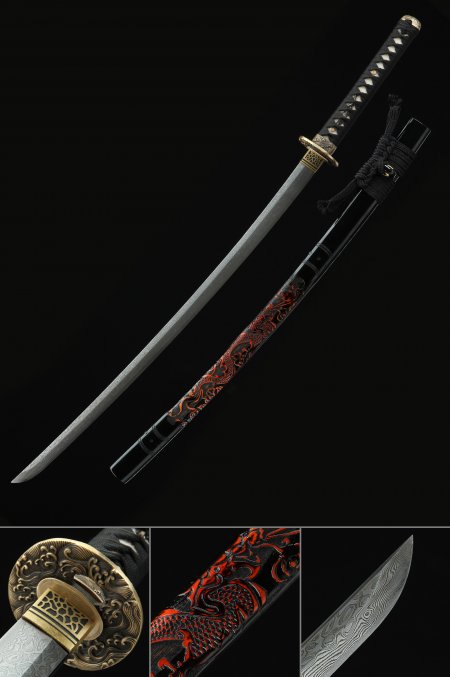
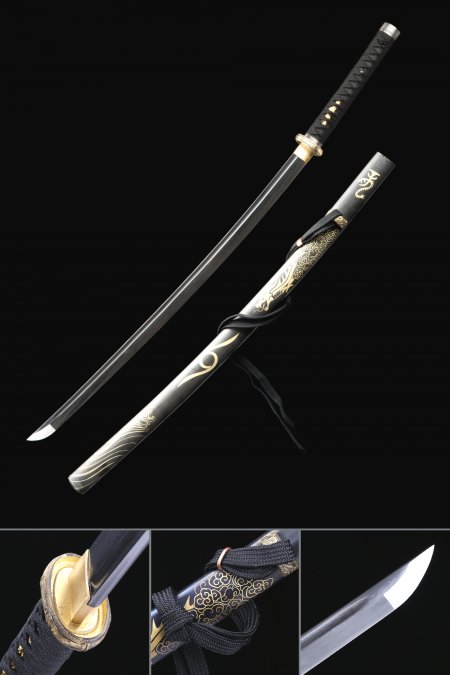
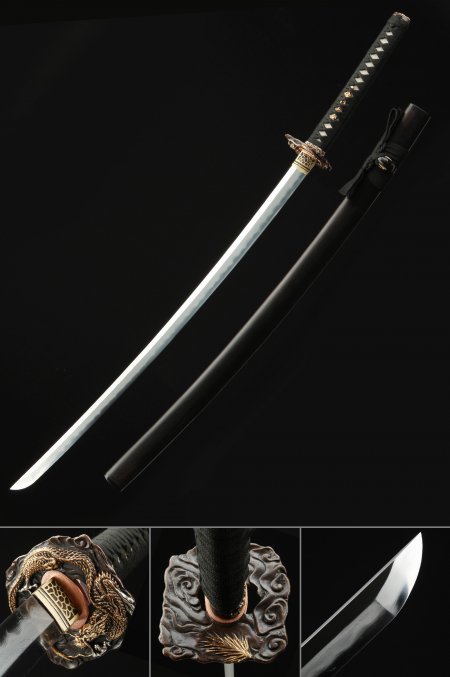
T10 is a high-carbon tool steel known for its fine grain structure and ability to hold a well-defined hamon when clay tempered. The clay tempering process involves applying a refractory clay slurry to the blade before the final quench, insulating the spine and producing a harder edge with a softer, more flexible back. The resulting hamon — the wavy temper line — is a genuine metallurgical feature, not a cosmetic grind. Damascus steel, by contrast, is produced by forge-welding multiple steel layers together and manipulating the billet through repeated folding and drawing, which creates flowing surface patterns unique to each blade. T10 appeals to collectors focused on authentic Japanese tempering traditions; Damascus appeals to those who prioritize visual texture and pattern variation in the blade itself.