Do the clay-tempered pieces have a real hamon line?
Updated Feb 2026
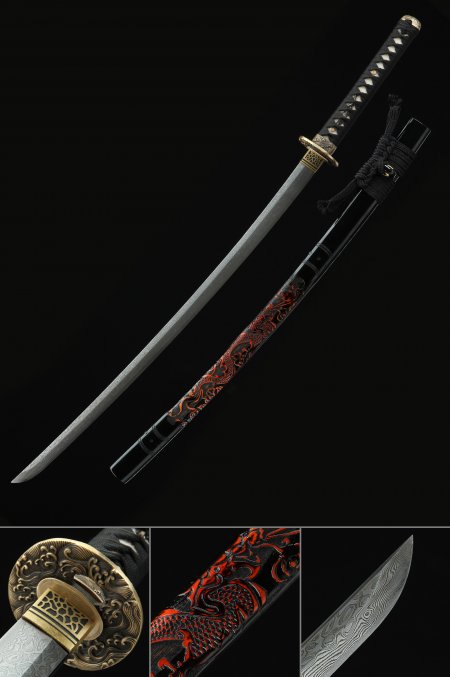
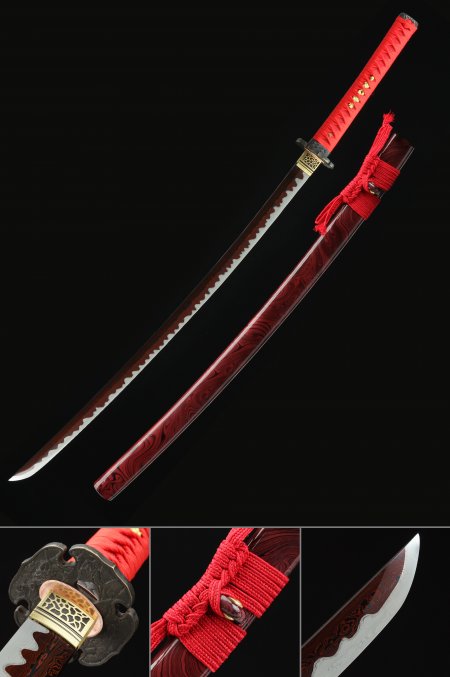
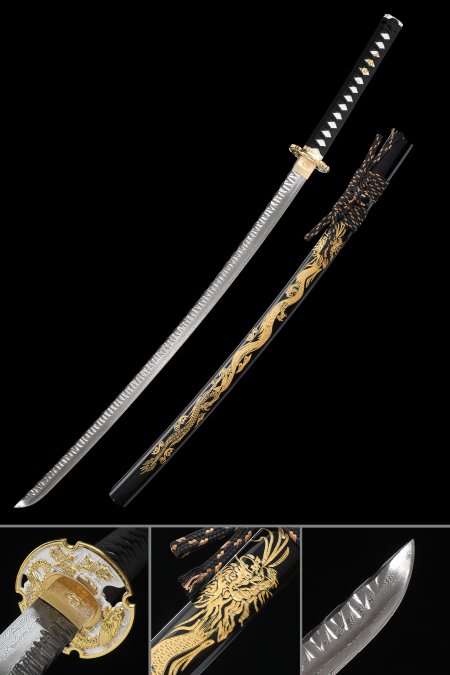
Yes. Several tachi in this collection are clay-tempered using a traditional differential hardening technique. During heat treatment, a clay mixture is applied more thickly along the spine and thinly along the edge before the blade is quenched. This causes the edge to harden faster than the spine, producing a genuine hamon — a visible temper line where the two hardness zones meet. On a Damascus blade, the hamon interacts beautifully with the underlying fold pattern, creating a layered visual effect that is especially striking under display lighting. The hamon is not etched or painted; it is a structural result of the forging process.