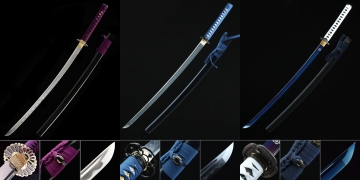
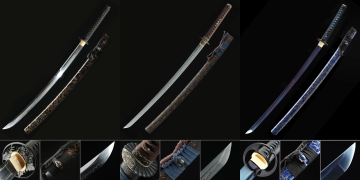
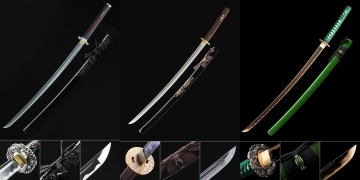
What makes the peony tsuba design historically significant?
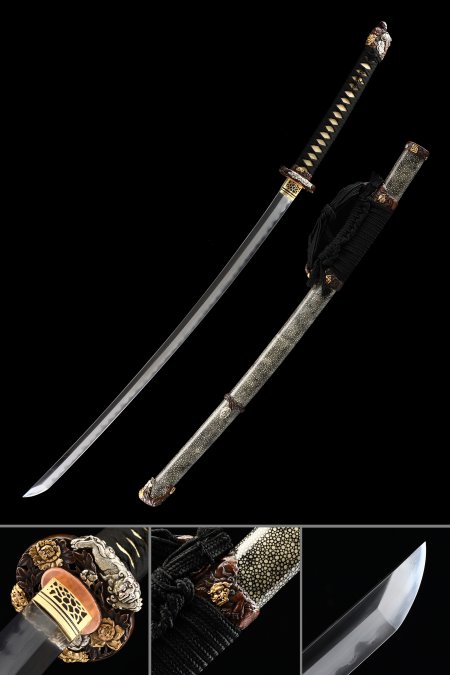
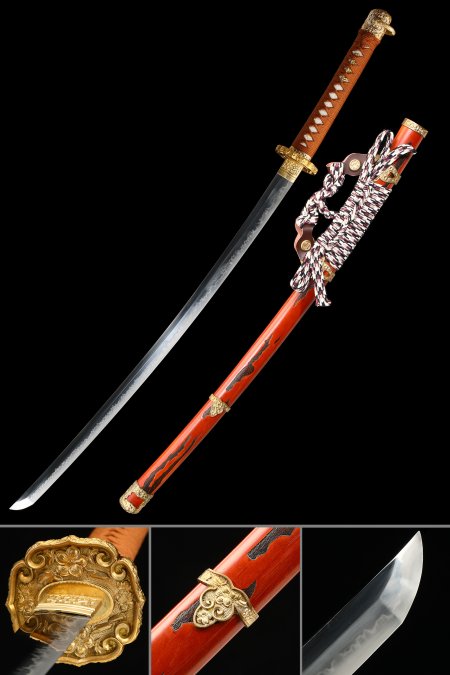
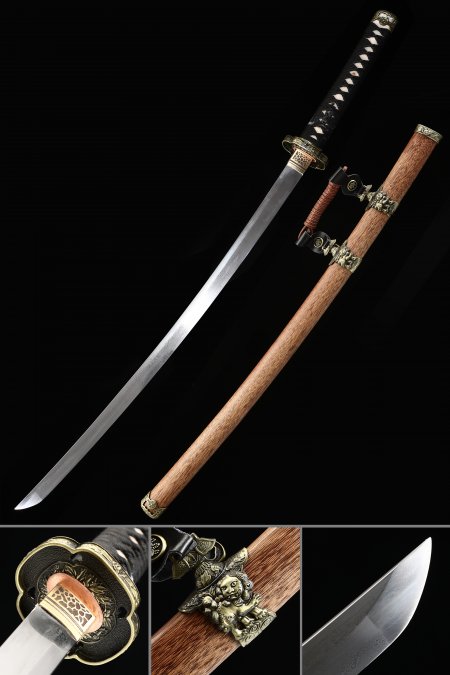
The peony — botan in Japanese — was one of the most prestigious decorative motifs in East Asian art and court culture. In Japanese sword fittings, it appeared frequently on tsuba and kozuka belonging to high-ranking samurai or ceremonial presentation swords. The flower symbolized wealth, honor, and nobility, which made it a natural selection for guards on tachi carried by elevated classes. Copper and gold casting allowed artisans to achieve detailed floral relief that plain iron work could not replicate as vividly. Today, collectors value peony tsuba tachi as display pieces that carry this layered symbolic weight alongside their visual appeal.
What is the difference between T10 clay-tempered and Damascus steel in these tachi?
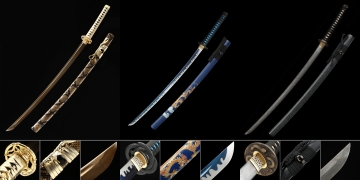
T10 is a high-carbon tool steel known for its fine grain structure and ability to hold a well-defined hamon when clay tempered. The clay tempering process involves applying a refractory clay slurry to the blade before the final quench, insulating the spine and producing a harder edge with a softer, more flexible back. The resulting hamon — the wavy temper line — is a genuine metallurgical feature, not a cosmetic grind. Damascus steel, by contrast, is produced by forge-welding multiple steel layers together and manipulating the billet through repeated folding and drawing, which creates flowing surface patterns unique to each blade. T10 appeals to collectors focused on authentic Japanese tempering traditions; Damascus appeals to those who prioritize visual texture and pattern variation in the blade itself.
How should I store a tachi sword to preserve the blade and fittings?
Long-term storage requires attention to both the steel blade and the organic materials in the fittings. The blade should be lightly coated with a neutral mineral oil or traditional choji oil before storage to prevent surface oxidation, especially in humid climates. Store the tachi horizontally on a padded sword rack or wrapped in a soft cloth — avoid leaving it in the saya for extended periods without occasional airing, as trapped moisture can cause both blade rust and saya degradation. Lacquered saya should be kept away from direct sunlight and heat sources to prevent cracking. Rayskin-wrapped handles and ito should also be inspected periodically for moisture damage or adhesive loosening.
Is a full-tang construction important for a display tachi?
Yes — full-tang construction means the steel extends continuously from the blade tip through the handle, secured by the handle components rather than glued or pinned at a short stub. For a display collectible, this matters for two reasons. First, it ensures the sword can be safely handled, rotated, and inspected without risk of the blade separating from the handle. Second, it reflects the construction standard used in genuine historical Japanese swords, making it a more accurate and structurally honest collectible. Tachi assembled with rat-tail or threaded-rod tangs may look similar from a distance but lack this structural continuity and historical fidelity.
What display setup complements a peony tsuba tachi well?
A horizontal katana or tachi stand in dark wood or lacquered black finish tends to complement the ornate copper or gold tsuba without visual competition. Displaying the tachi with the edge facing downward honors the historical carrying orientation of the tachi as distinct from the katana. If pairing with other pieces, consider grouping by fitting material — a gold peony tsuba tachi pairs well with other gold-accented display swords. Red lacquer saya variants photograph and display particularly well against neutral or dark backgrounds. For a curated wall or shelf display, keeping the saya on preserves the lacquer and rayskin while the overall silhouette still communicates the tachi's elegant curvature.