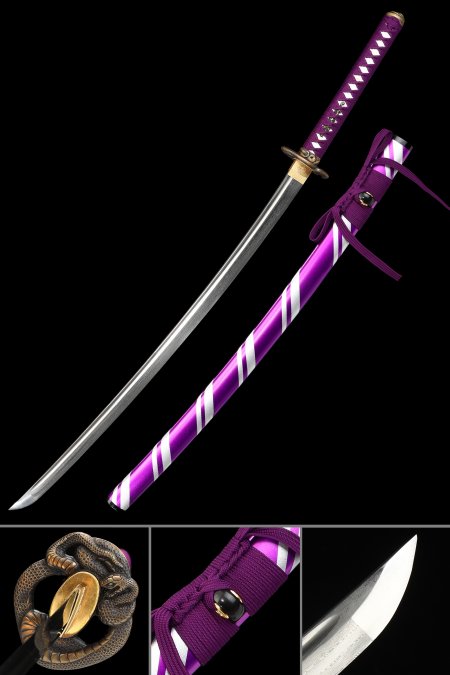
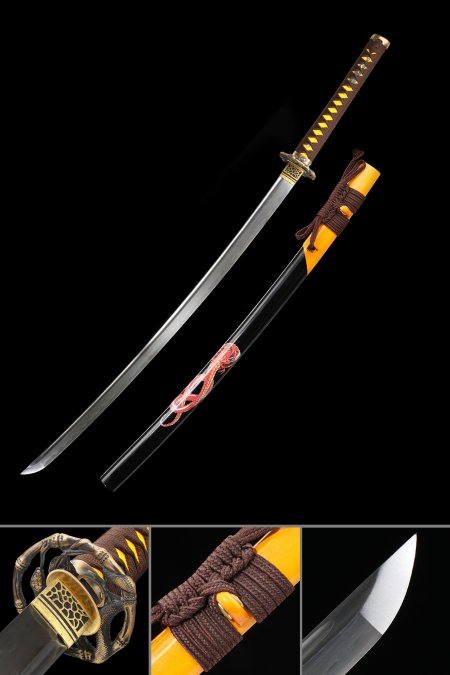
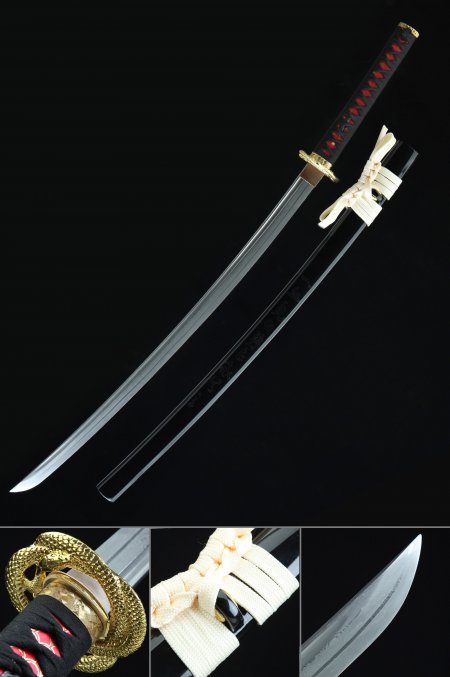
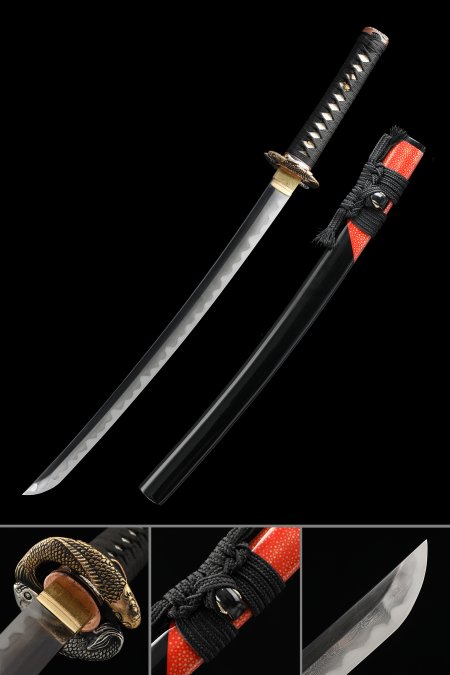
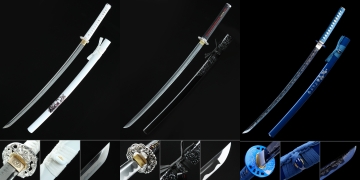
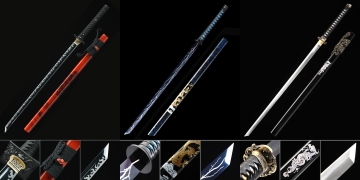
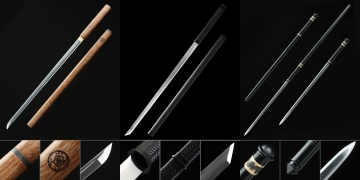
What steel types are used in Snake Tsuba Katanas?
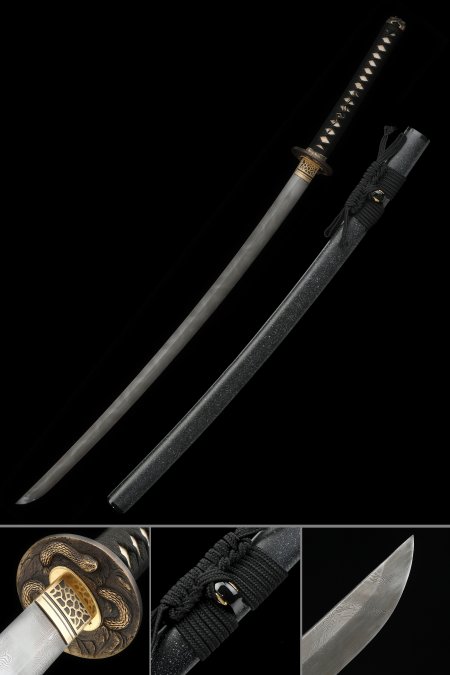
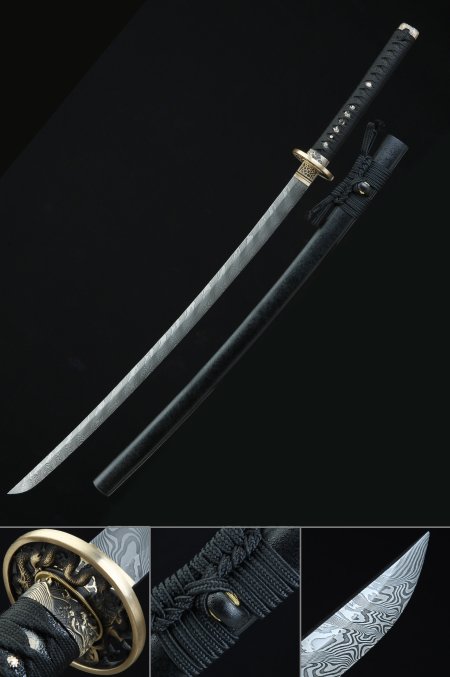
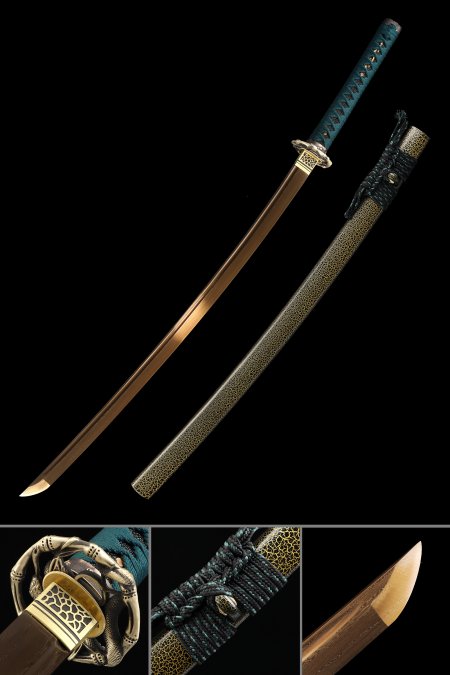
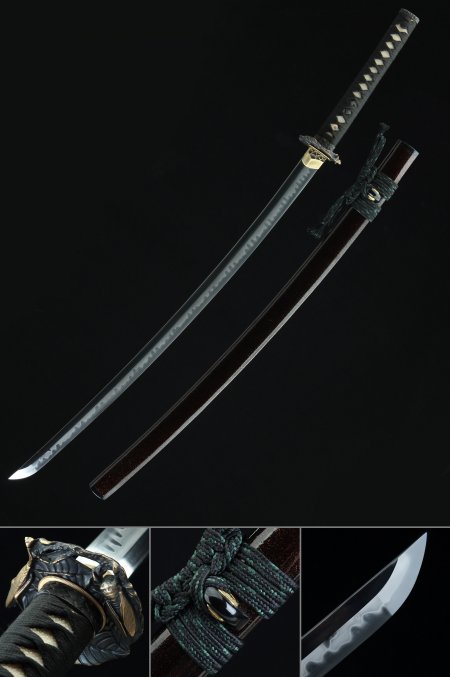
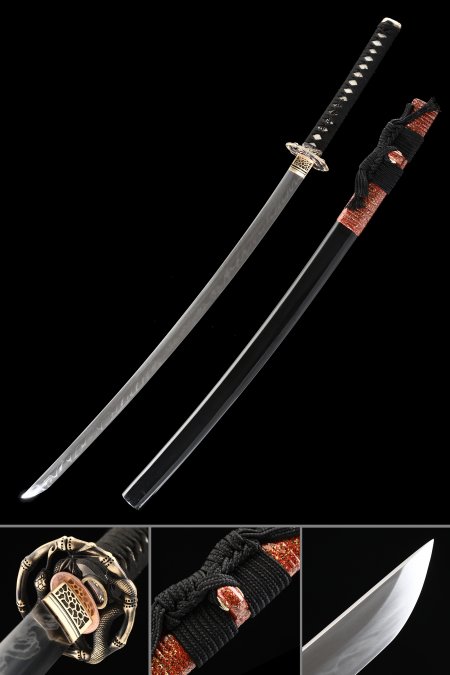
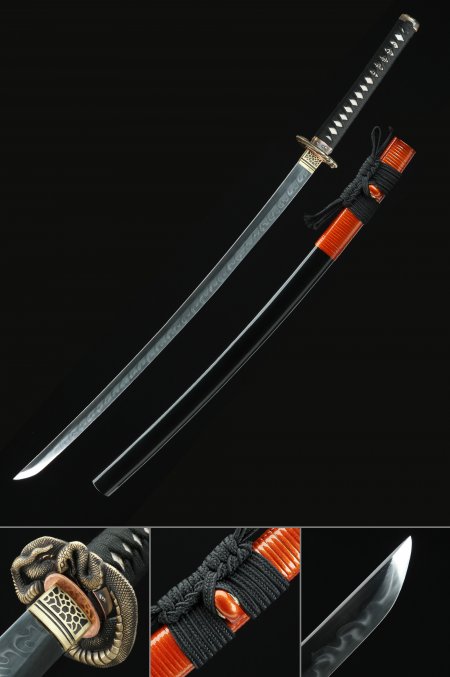
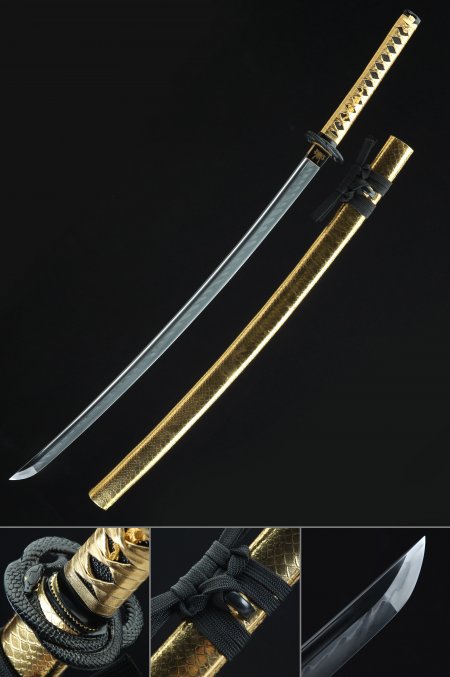
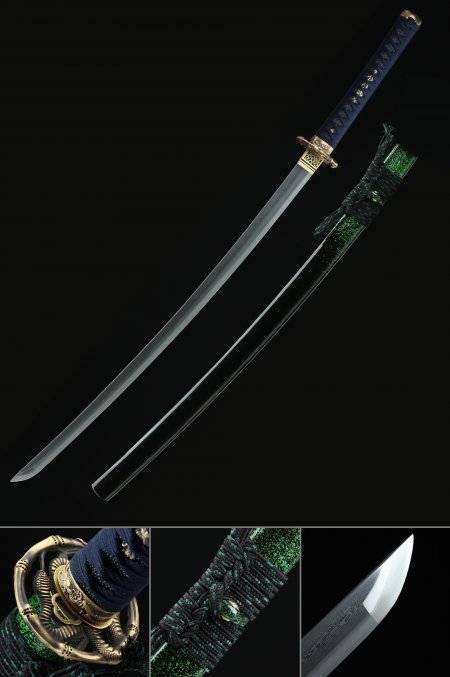
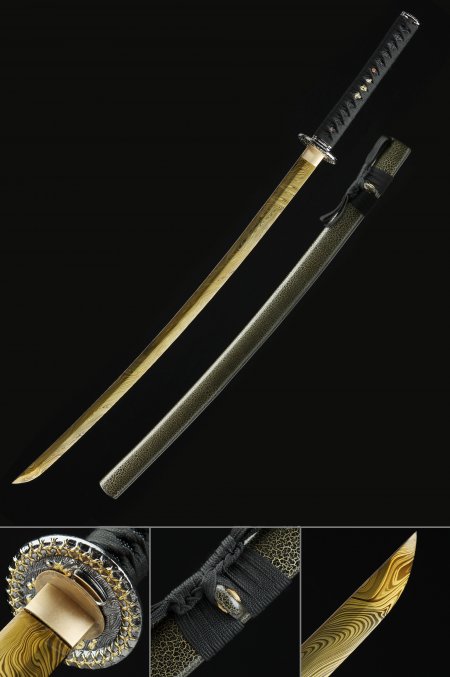
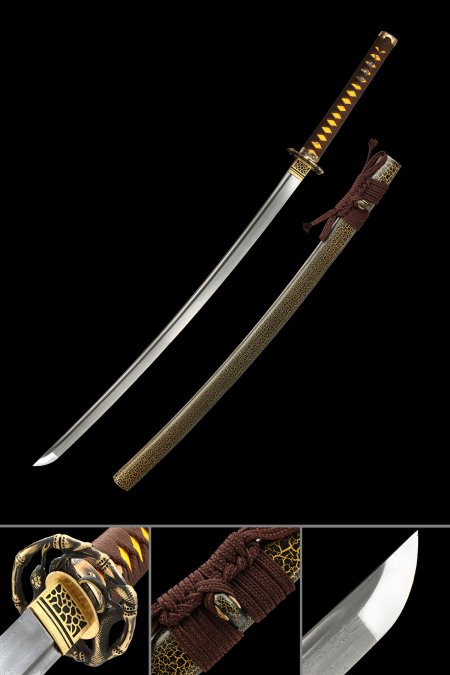
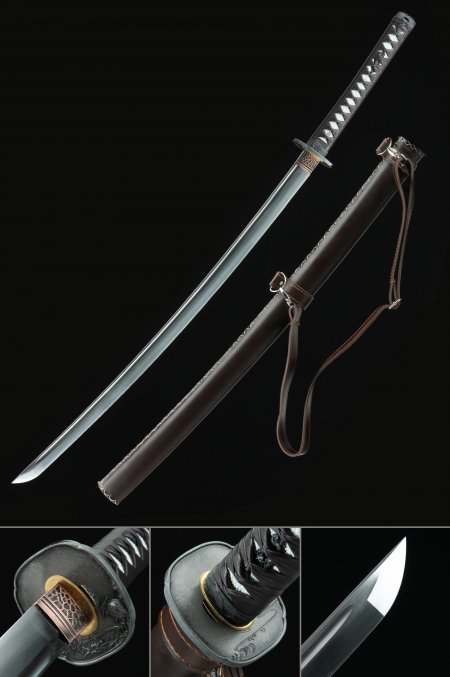
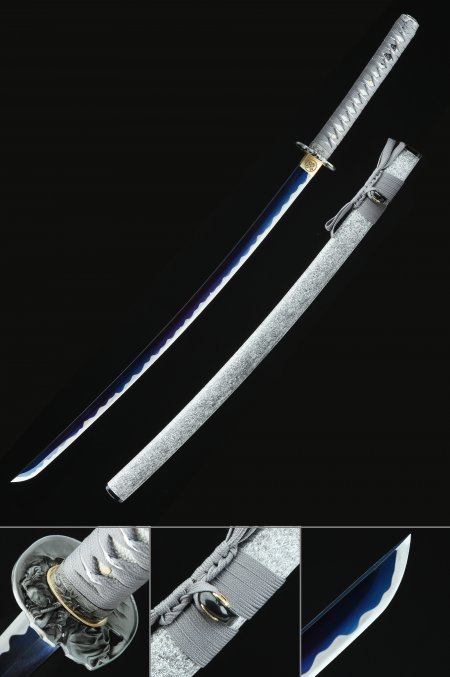
This collection spans several distinct steel categories, each with different visual and structural characteristics. T10 tool steel is a high-carbon alloy with added tungsten that produces a particularly active hamon when clay-tempered - the temper line appears detailed and irregular rather than uniform, which is a mark collectors prize. 1095 and 1060 high-carbon steels are more straightforward in composition but respond well to differential hardening and polishing, showing a clean blade surface. Damascus steel in this collection refers to pattern-welded construction, where multiple steel billets are forge-welded and manipulated to create visible layered patterns across the flat of the blade - the golden Damascus variant achieves this with contrasting alloy layers that produce a warm, distinctive grain. Spring steel builds prioritize structural resilience over hamon development, making them well-suited for long-term display without risk of surface stress. Each steel type produces a genuinely different visual result, so the choice depends on whether you prioritize hamon activity, surface pattern, or tonal finish.
How does a snake tsuba differ from a standard iron tsuba?
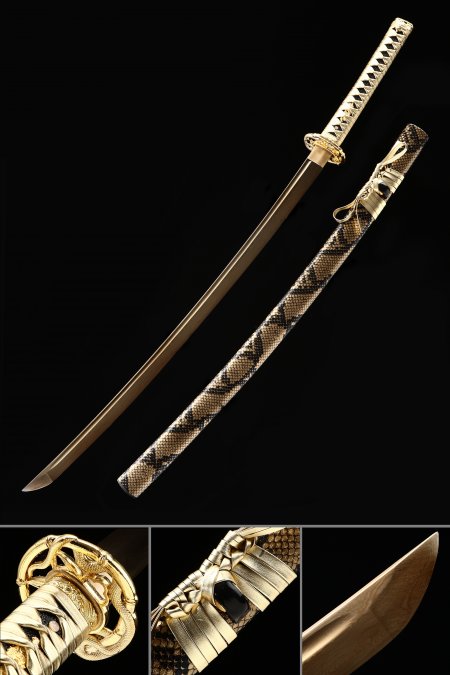
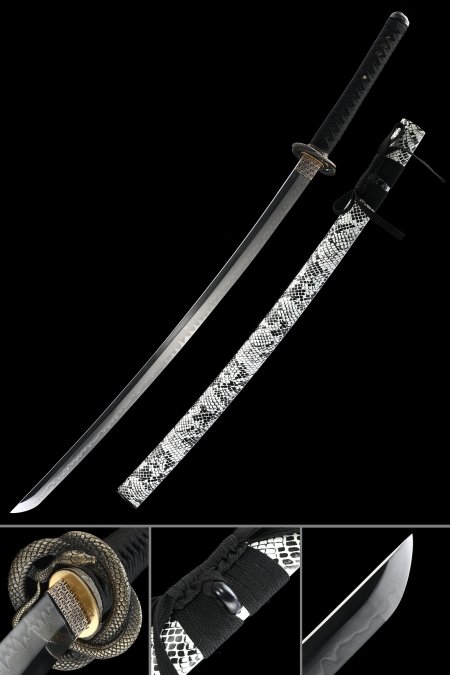
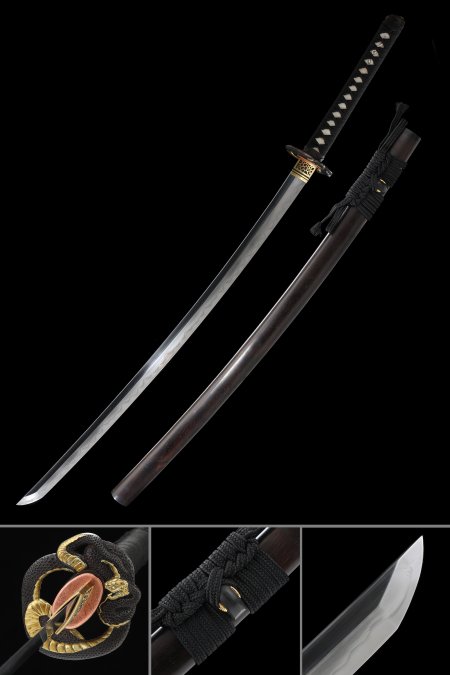
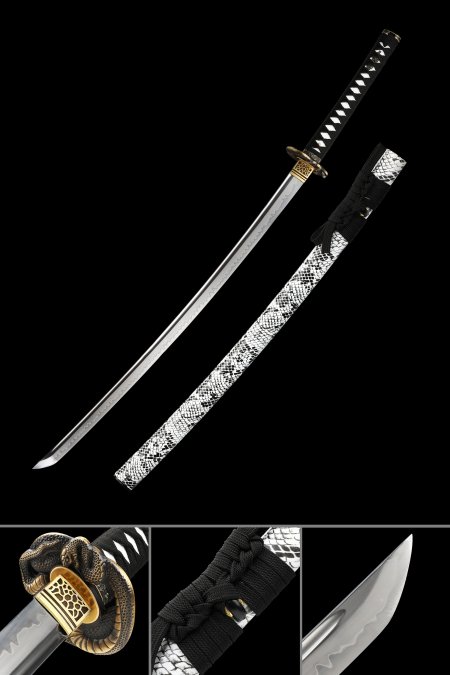
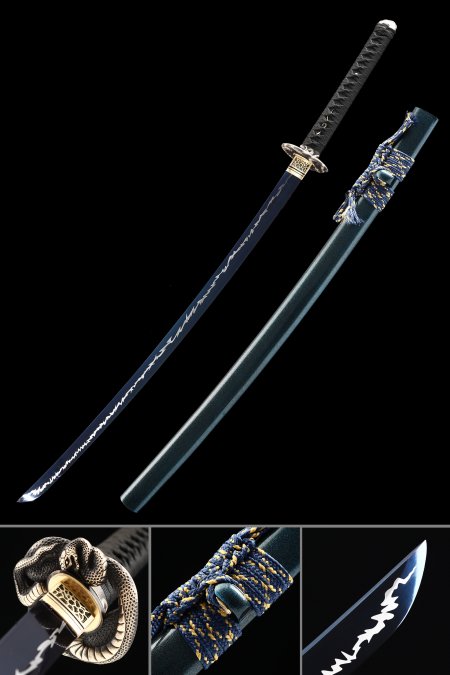
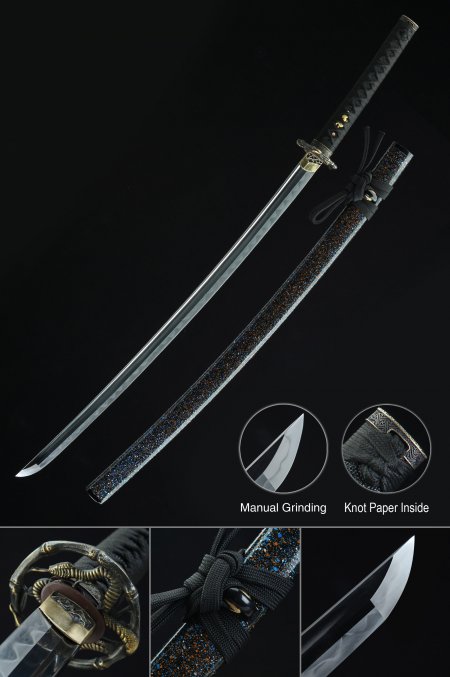
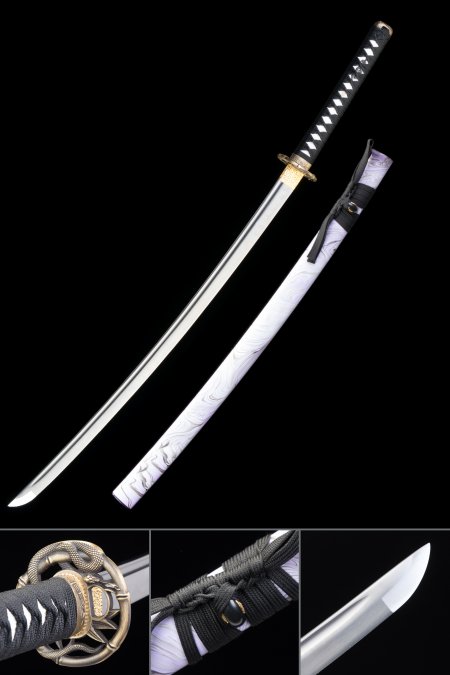
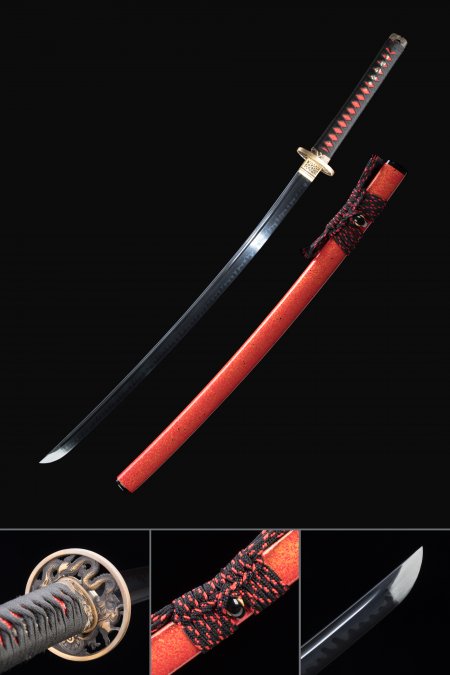
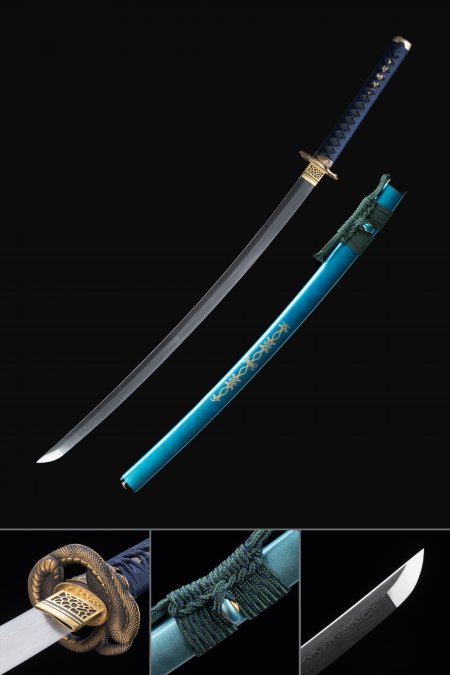
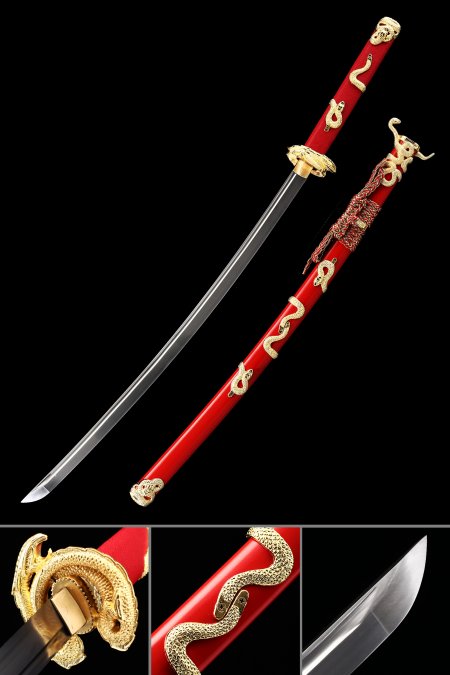
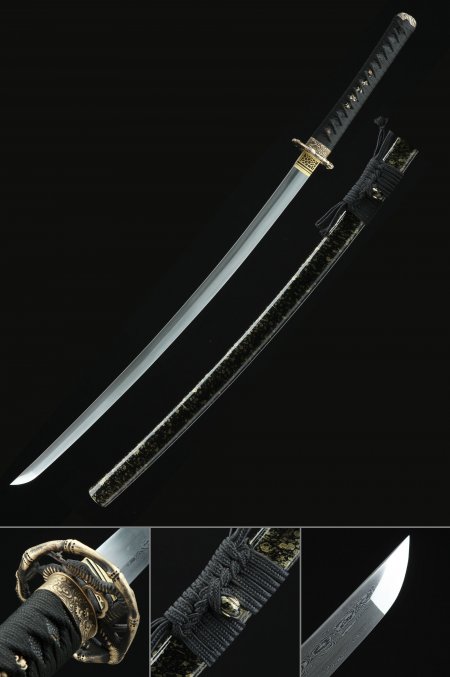
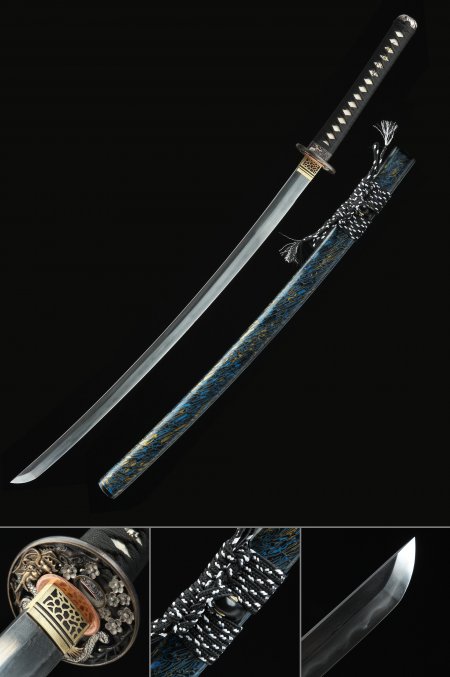
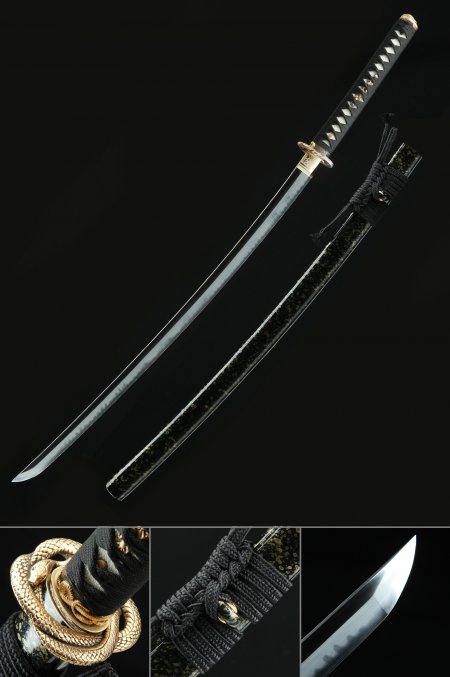
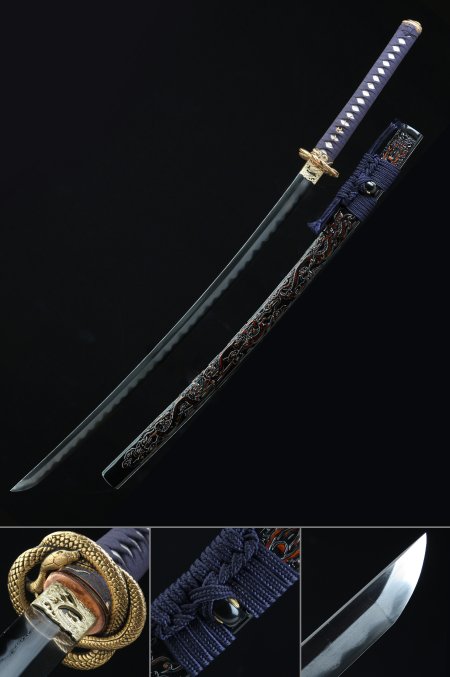
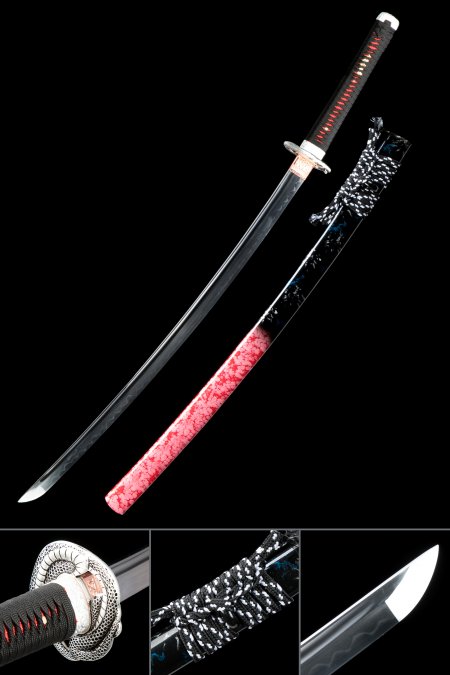
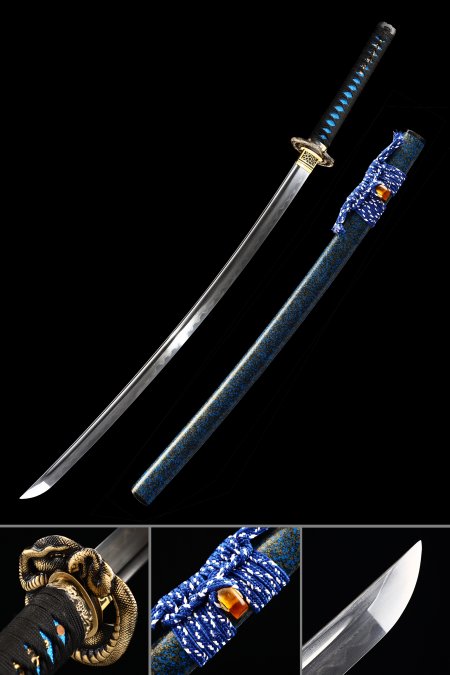
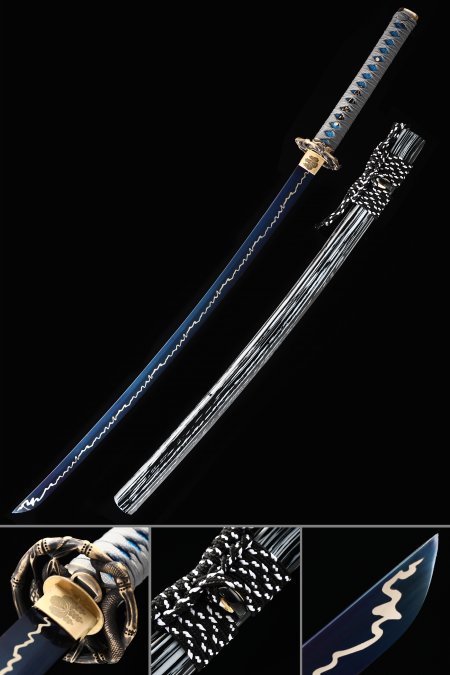
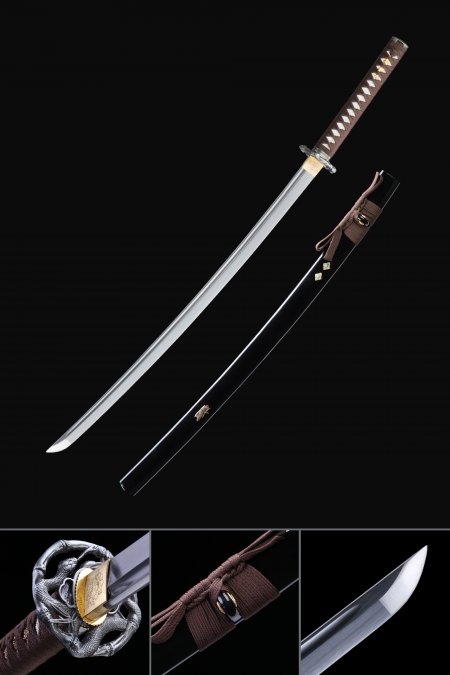
A standard iron tsuba - the classical form used on historical Japanese swords - is typically a flat disc or lobed shape with minimal relief, valued for its understated finish and historical accuracy. A snake tsuba introduces dimensional casting or forging to shape the guard itself into a serpent motif, with the body of the snake forming the outer rim and the head often positioned near the blade slot. The material also differs: while historical tsuba were commonly wrought iron or shakudo (a copper-gold alloy), the snake tsuba in this collection are cast from bronze alloy, gilded zinc, or iron-style alloy, each finished to reflect the overall koshirae theme. Functionally, both guard types serve the same structural role, but the snake tsuba carries the additional layer of symbolic iconography - the serpent in Japanese tradition represents protection and transformation - which is a primary reason collectors choose it as a display centerpiece rather than a historically neutral piece.
What should I know about maintaining a lacquered saya?
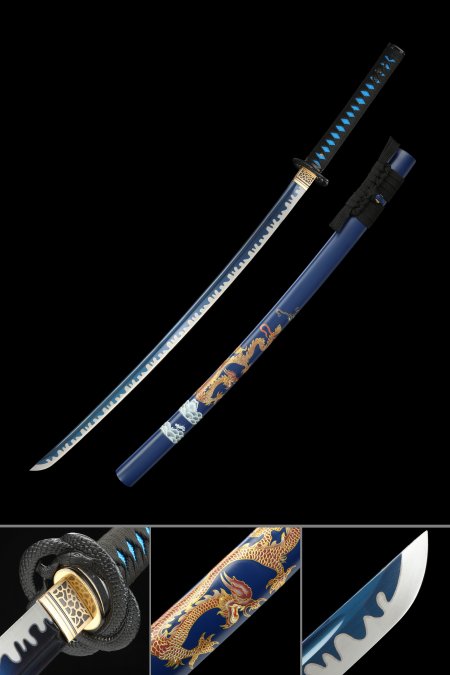
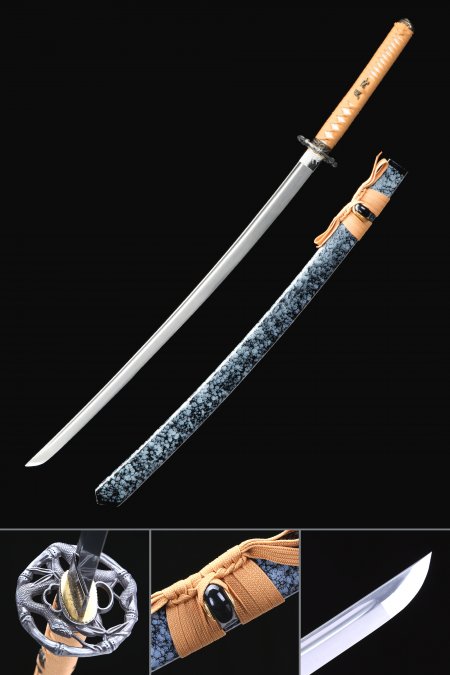
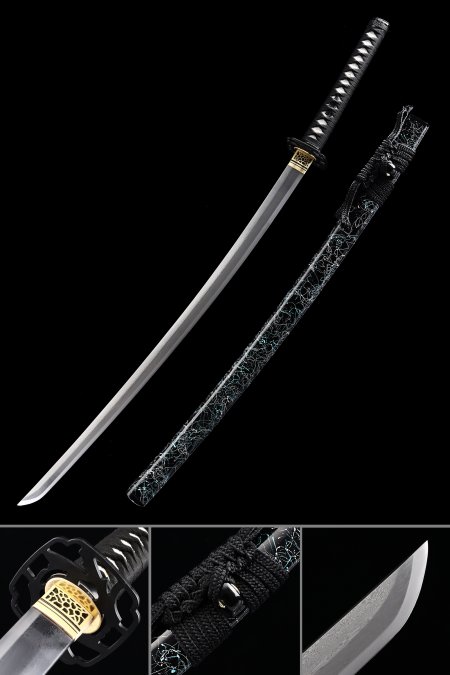
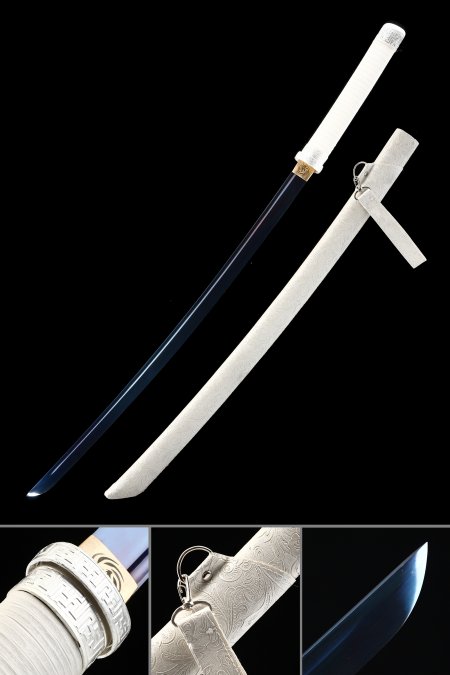
Lacquered saya require consistent environmental conditions more than active maintenance. The primary risks are humidity fluctuation and direct sunlight. High humidity can cause the wood core beneath the lacquer to expand, which stresses the lacquer surface and can result in hairline cracking over time. Extremely dry conditions have the opposite effect. Storing the saya in an environment maintained between 45–60% relative humidity prevents both outcomes. Direct UV exposure will fade and dull most lacquer finishes, including black, piano gloss, and speckled variants, so display positioning away from windows matters. For cleaning, a soft dry cloth to remove dust is sufficient - avoid moisture and solvent-based cleaners entirely on lacquered surfaces. If the saya includes a python-pattern or crackle finish, the textured surface benefits from occasional very light buffing with a dry microfiber cloth to maintain the visual depth of the finish. The blade stored inside should be lightly oiled with choji oil before insertion to prevent any moisture transfer to the interior wood.
Is a snake tsuba katana appropriate as a collector's gift?
It is one of the stronger choices within the Japanese sword collectible category for gifting, specifically because the snake motif gives the piece a clear identity that the recipient can connect to. Rather than a generically styled katana, a snake tsuba piece has a consistent aesthetic thread running through the guard, handle wrap color, and saya finish - for example, a gilded snake tsuba paired with a golden Damascus blade and python-pattern saya creates a visually coherent set that reads as intentional and considered. For recipients who are new to collecting, the full-tang construction and named steel type (T10, Damascus, 1095) provide talking points and a foundation for learning about the category. For experienced collectors, the variation in steel type, hamon character, and fitting material means there are genuinely different pieces to consider rather than surface-level variants. Display stands are a practical addition to pair with the gift, as a katana presented horizontally on a stand communicates the piece is meant to be seen and appreciated in place.
How do I identify a real hamon on a katana?
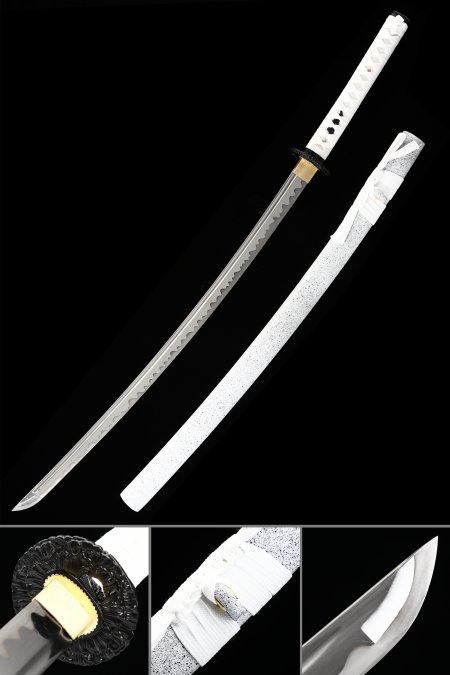
A real hamon is the visible boundary line between the hardened edge and the softer spine of a differentially tempered blade. It forms during the clay-tempering process, where clay is applied to the spine before quenching, causing the uncoated edge to cool faster and harden into martensite while the spine remains in a softer pearlitic state. The hamon appears as a misty or cloud-like band running parallel to the edge, often with distinct activity - nie (granular crystalline structure visible to the naked eye) or nioi (a finer, mist-like boundary) - that shifts visibly under raking light. The key distinction from a cosmetic or acid-etched hamon is that a real hamon is three-dimensional and embedded in the steel structure, not a surface-applied pattern. When you tilt a clay-tempered T10 or 1095 blade under a directional light source and the hamon changes in character - appearing brighter, sharper, or more detailed depending on angle - that is the clearest indicator of authentic differential hardening. Acid-etched lines tend to look flat and consistent regardless of lighting angle.