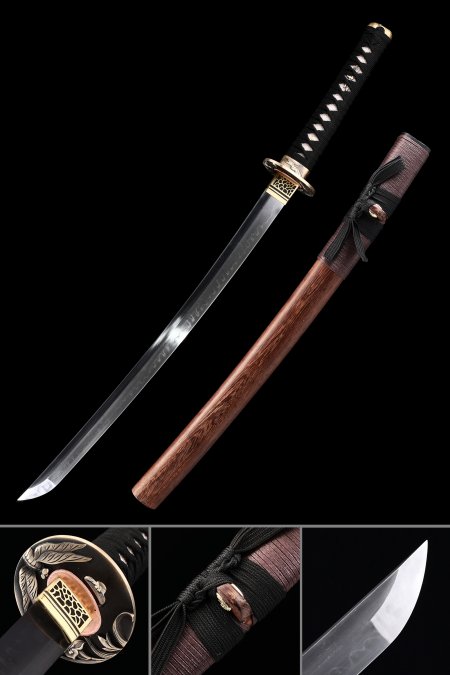
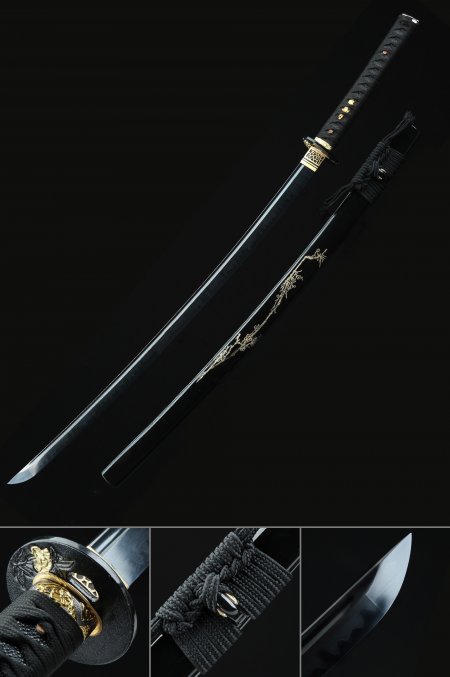
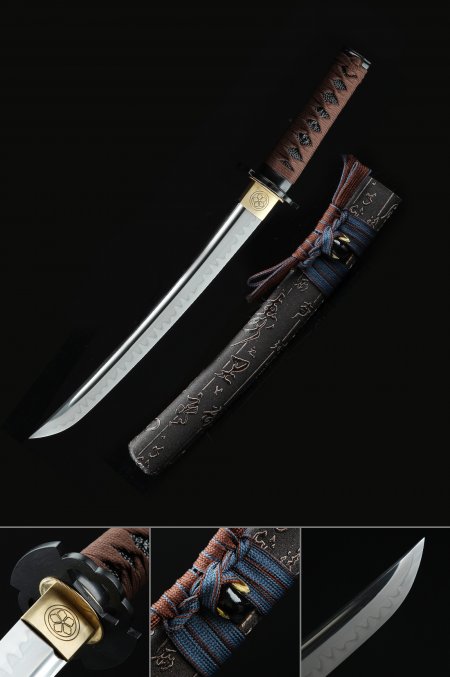
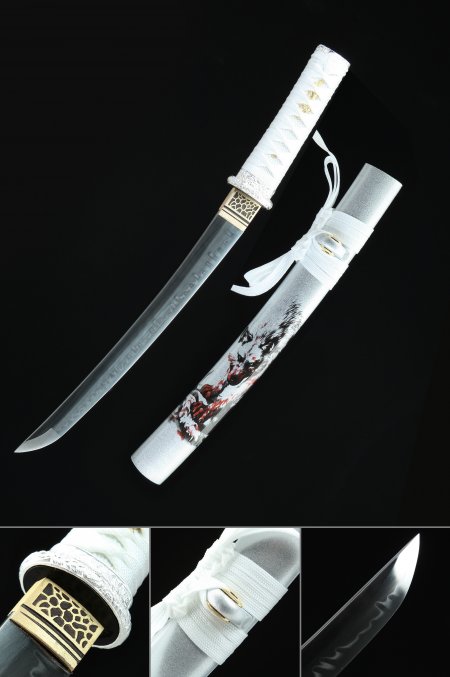
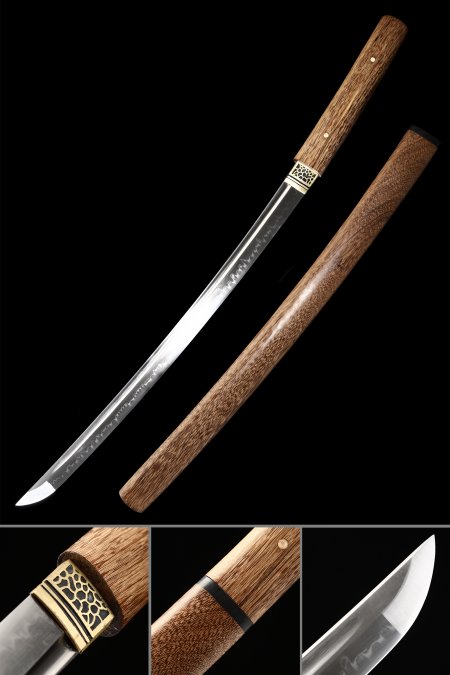
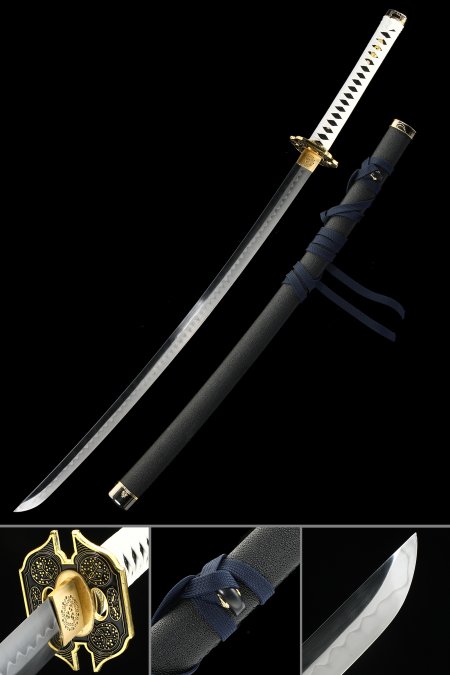
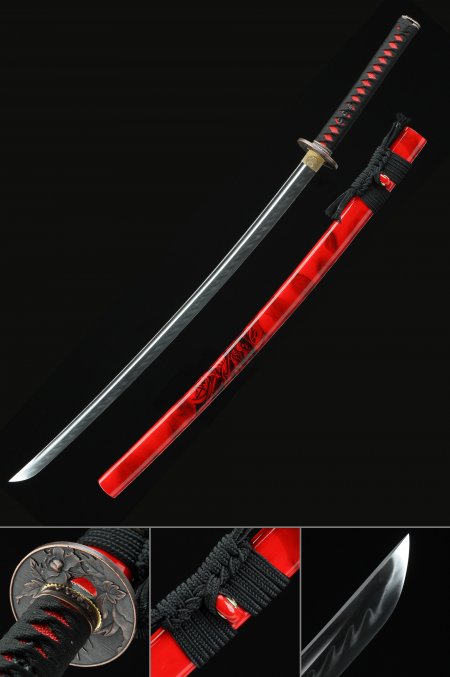
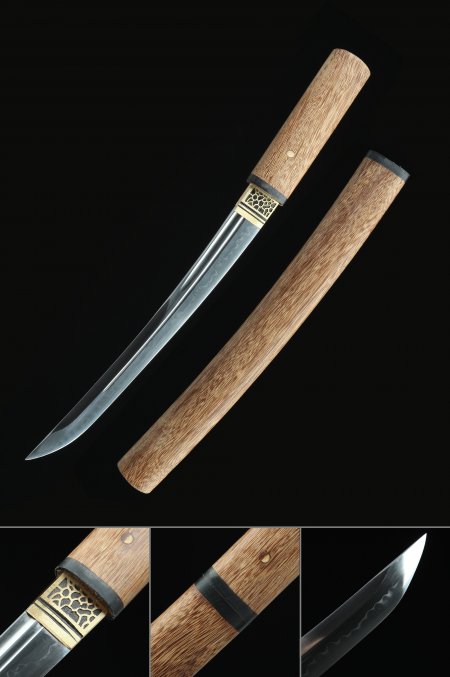
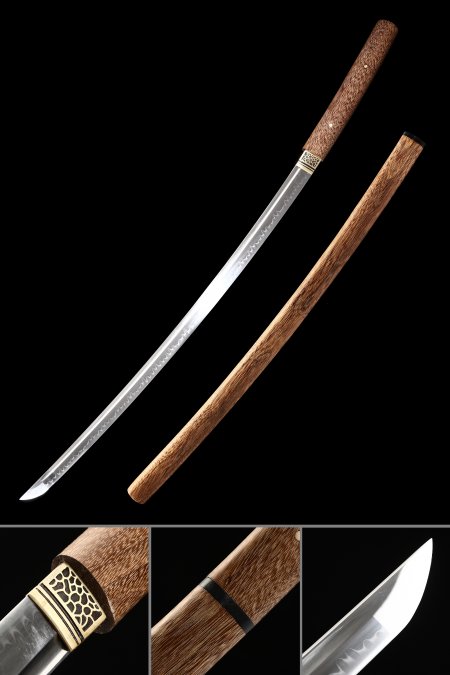
A genuine hamon is produced through a differential heat treatment process called tsuchioki, in which a clay mixture is applied along the spine and sides of the blade before hardening. The edge area, left with minimal clay coverage, cools rapidly during quenching and forms a hard martensitic structure, while the clay-insulated spine cools slowly and remains relatively soft and flexible. The visual boundary between these two zones is the hamon - a misty, crystalline line that is unique to each blade. On T10 high-carbon steel, the elevated tungsten content enhances grain refinement and allows polishers to develop a clearly visible, well-defined hamon. Unlike acid-etched or wire-brushed imitation activity, a real hamon changes in appearance under different lighting angles, which is one of the most reliable ways collectors distinguish authentic differential tempering.