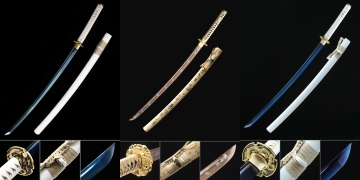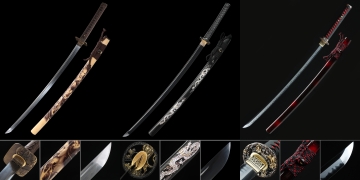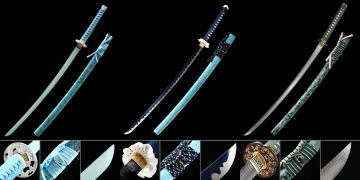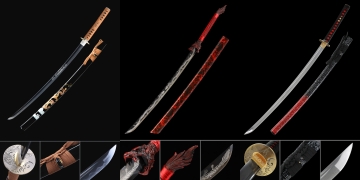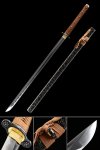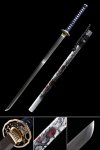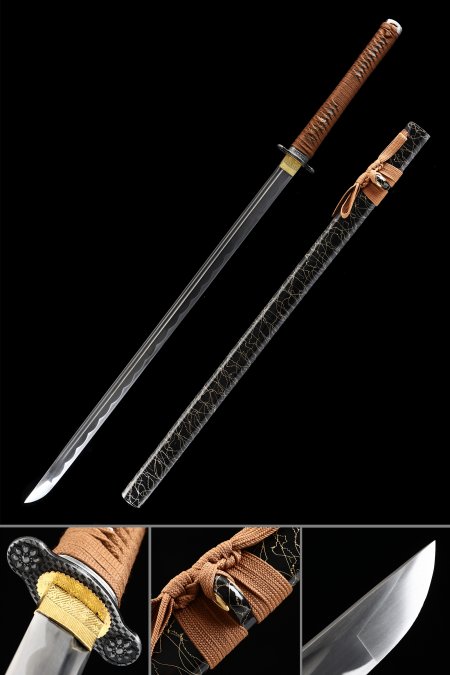
Plum Blossom Tsuba Ninjato

The Plum Blossom Tsuba Ninjato collection brings together hand-forged straight-blade swords distinguished by their ornate plum blossom guard work and refined lacquer saya finishing. Each piece is crafted from quality carbon or Damascus steel with full-tang construction, paired with meticulously wrapped ito handles and hand-detailed fittings that reward close inspection. These are collector-grade display pieces built to the standards that serious enthusiasts demand — and every order ships free with hassle-free returns.
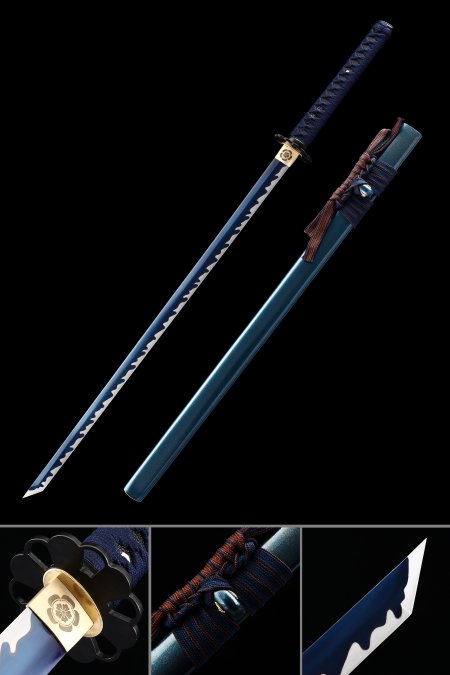
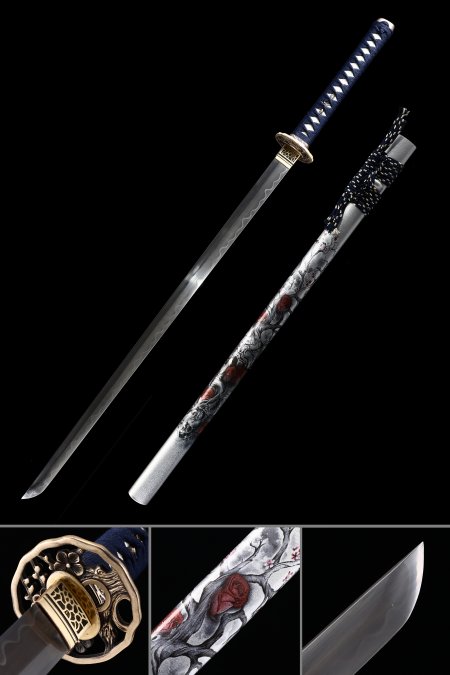
Showing 3 Products

Related Collections

Beige Sageo Katana24 items


109 Reviews

Lion Tsuba Katana27 items


107 Reviews

Teal Saya Katana26 items


43 Reviews

Phoenix Tsuba Katana28 items


63 Reviews

Frequently Asked Questions

What steel types are used in plum blossom tsuba ninjato?
This collection spans three distinct steel types, each with different visual and structural characteristics. 1045 high-carbon steel is a classic choice — it has a uniform grain, takes a consistent polish, and is well-regarded for display collectibles that prioritize clean, traditional aesthetics. Damascus steel is formed by folding and welding multiple steel layers, producing a flowing surface pattern that is unique to each individual blade; no two Damascus pieces look identical, which adds significant collectible value. Manganese steel rounds out the lineup with its capacity for blue heat-tint finishing, a controlled oxidation process that gives the blade a cool blue-gray tone highly prized in display contexts. The steel choice also influences the overall color palette of the assembled piece — a collector coordinating a display around a specific color scheme should factor blade tone alongside tsuba finish and saya color.
What does the plum blossom motif represent on the tsuba?
The plum blossom — ume in Japanese — is one of the most enduring decorative motifs in East Asian art and craft. Unlike the cherry blossom, which blooms in mild spring conditions, the ume flowers in late winter, often while frost is still present. This timing gave it a strong symbolic association with perseverance, quiet strength, and renewal in the face of adversity. When the plum blossom motif appears on a tsuba, it elevates the piece from functional fitting to decorative statement. On collectible ninjato, the tsuba is the visual focal point — the element that draws the eye when the sword is mounted on a wall stand or displayed horizontally. A well-cast plum blossom tsuba with gold tone finishing creates an immediate contrast against a lacquered black or white saya, making it particularly effective in display arrangements.
How should I store a lacquered saya ninjato long-term?
Lacquered saya finishes — whether black with gold vine relief, white hand-painted, or blue — are durable but sensitive to a few specific conditions. Avoid storage in areas with high humidity fluctuations, which can cause the wooden saya core to expand and contract, eventually cracking or lifting the lacquer surface. A stable indoor environment between 40–60% relative humidity is ideal. Keep the piece away from direct sunlight; UV exposure will fade both lacquer pigment and ito wrap color over time. If displaying on a wall mount, ensure the mounting hardware does not apply stress to the saya body. For long-term storage in a case or sleeve, place a thin layer of acid-free tissue between the blade and saya interior if the piece will not be handled for extended periods. Light dusting with a soft dry cloth is sufficient for routine surface care — avoid solvent-based cleaners on lacquered surfaces.
How is a ninjato different from a katana as a display collectible?
The most immediately visible difference is blade geometry. A katana features a pronounced curve — the sori — developed through differential clay tempering during the forging process. A ninjato has a straight or nearly straight blade profile, which gives it a visually distinct silhouette in a display setting and evokes a different aesthetic tradition. For collectors, this distinction matters when curating a themed display: straight-blade pieces read as more angular and architectural against a wall, while curved katana create a more dynamic flowing line. The ninjato's shorter, straight blade also typically pairs with a square or geometric tsuba shape, though the plum blossom tsuba variants here demonstrate that decorative round guard designs adapt equally well to straight blades. Collectors who own both types often find they complement rather than duplicate each other in a mixed display.
Is a ninjato with Damascus steel a good gift for a sword collector?
A Damascus steel ninjato makes an unusually strong gift choice for a collector precisely because of the blade's individuality. The layered folding process that creates Damascus patterning means each blade's surface is genuinely unique — the swirling or ladder-pattern grain cannot be reproduced exactly, which gives the recipient something no one else owns in identical form. Paired with a plum blossom tsuba and hand-painted saya, the piece also carries aesthetic depth that a collector can appreciate on multiple levels: metallurgical craft, decorative motif history, and material color harmony. For gifting, a ninjato with a complementary display stand presents well out of the box without requiring additional accessories. If the recipient already collects katana, a Damascus ninjato provides meaningful variety rather than duplicating a form they likely already own.

Customer Reviews

Cart 0 Items

Your cart is empty