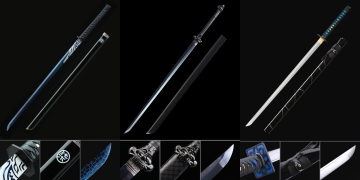
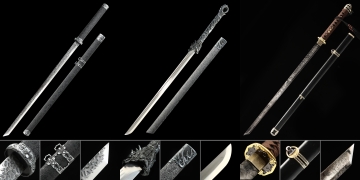
What makes 1095 carbon steel a popular choice for collectible katanas?
1095 carbon steel contains approximately 0.95% carbon, which places it in the high-carbon category favored by traditional Japanese swordsmithing. During the forging process, this carbon concentration allows the steel to develop a tight, uniform grain structure that responds well to grinding and finishing. For collectors, this means a blade that holds a clean, consistent surface — whether left in a polished state or given a matte gray treatment. The steel is also widely regarded for its predictable heat-treat behavior, which skilled smiths use to create a visually distinct hamon (temper line) on traditionally styled pieces. It’s a material that rewards craftsmanship and looks intentional on a display.
How does a gray blade finish differ from a polished or black finish?
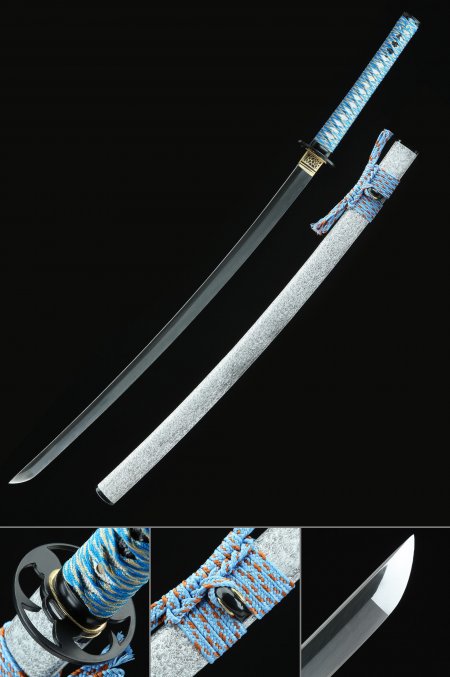
A gray finish on a 1095 carbon steel blade is typically achieved through a controlled stone or acid treatment that leaves the surface with a soft, matte texture rather than a reflective sheen. This differs meaningfully from a mirror polish, which maximizes light reflection and highlights the blade’s geometry, and from a black finish (often achieved via heat bluing or chemical blackening), which creates a darker, more dramatic tone. The gray finish sits between these two aesthetically — understated but refined, with enough surface texture to show the blade’s forged character. Collectors who prefer a natural, antiqued appearance or who display pieces under gallery lighting often find gray finishes more visually nuanced than high-gloss alternatives.
Do gray 1095 katanas need special care compared to stainless steel swords?
Yes, and it’s an important distinction. Unlike stainless steel alloys, 1095 carbon steel contains no chromium, which means it lacks built-in corrosion resistance. Without periodic maintenance, surface oxidation can develop, especially in humid climates. The standard care routine involves lightly wiping the blade with a soft cloth after handling to remove fingerprint oils and moisture, then applying a thin coat of choji oil or a purpose-made sword oil every few months. The saya provides some protection during storage, but it’s worth ensuring the scabbard interior is clean and dry before sheathing. Displayed pieces should be kept away from moisture sources and re-oiled at least twice a year to maintain the blade’s original gray finish.
What fitting styles complement a gray-finished katana on display?
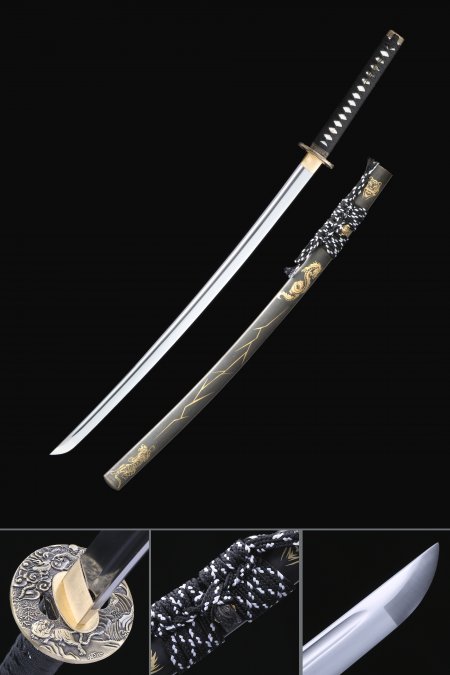
The matte gray tone of a 1095 blade pairs exceptionally well with warm metal accents. Copper tsubas introduce an earthy, antique contrast that reinforces the hand-forged aesthetic, while brass or gold-toned ornamental details — such as dragon or tiger motifs on the menuki or saya fittings — provide visual drama without competing with the blade. For the tsuka wrap, darker ito colors like black, deep blue, or charcoal tend to read as cohesive rather than distracting. A lacquered saya in gray, black, or a coordinating textured finish ties the entire piece together. Collectors assembling a themed display often use fitting cohesion as the organizing principle rather than matching blades blade-for-blade.
Is a gray 1095 katana a good gift for a Japanese sword enthusiast?
It’s a strong choice for someone who appreciates both the historical context and the craft details of Japanese swords. A gray 1095 katana signals material literacy — the recipient will recognize that 1095 is a historically grounded steel grade, and the matte finish reflects an intentional aesthetic choice rather than a default option. These pieces work well as display centerpieces, wall-mount collectibles, or additions to an existing themed sword collection. For gifting, look for pieces with well-documented fittings — named tsuba materials, ito wrap colors, and saya construction details — as these specifics indicate a collectible crafted with attention rather than one produced to a minimum standard.