Green 1095 Carbon Steel Katana
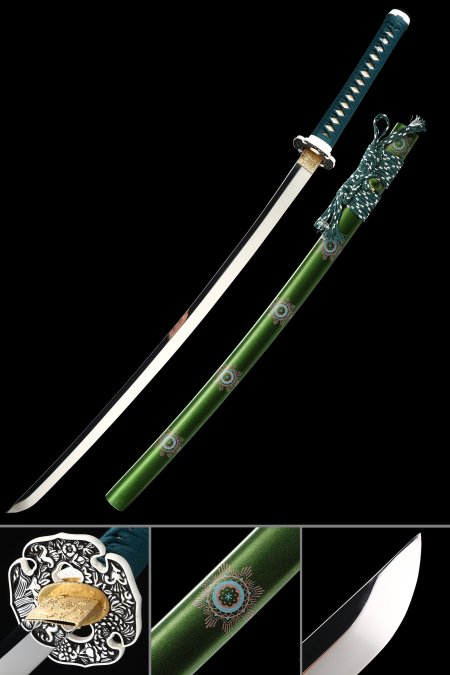
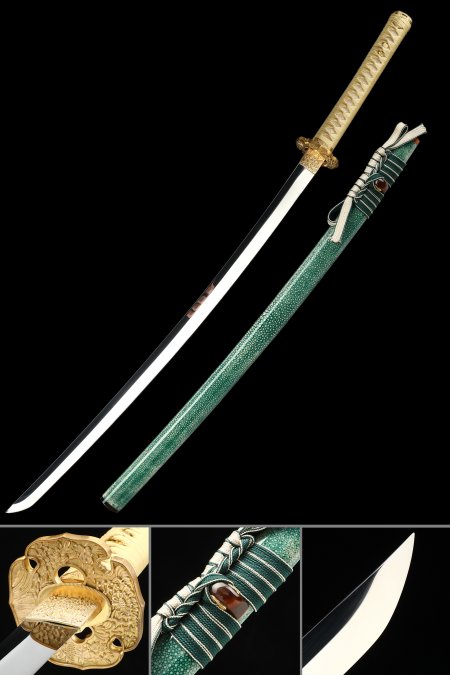
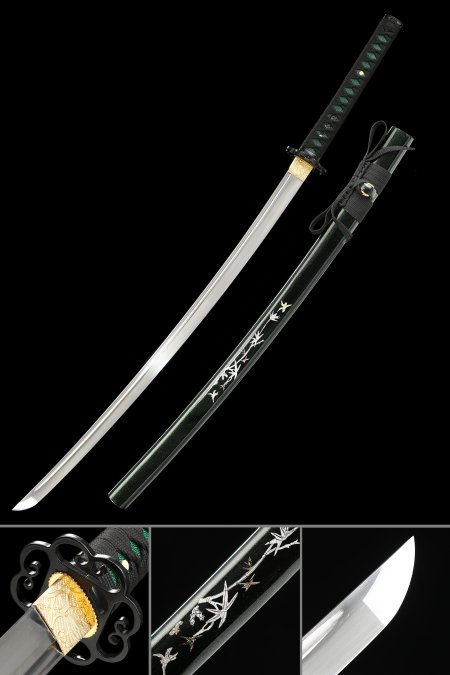
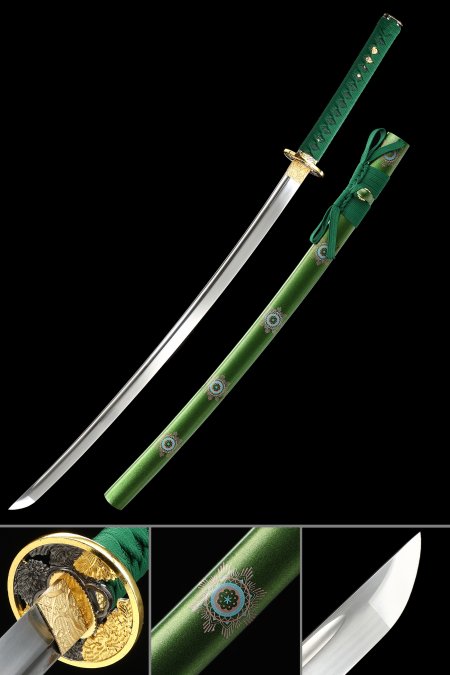
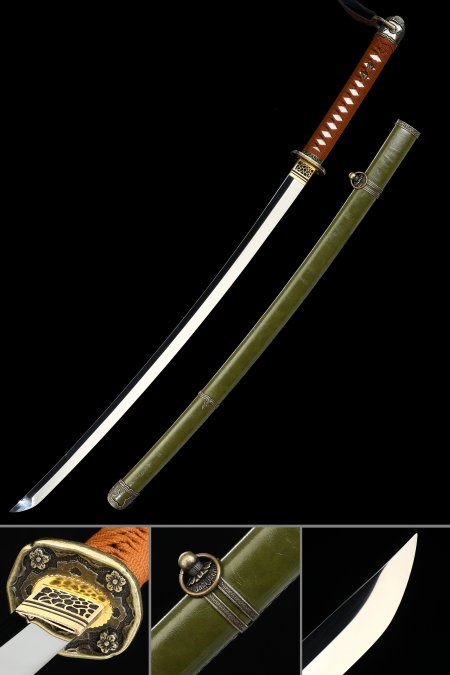
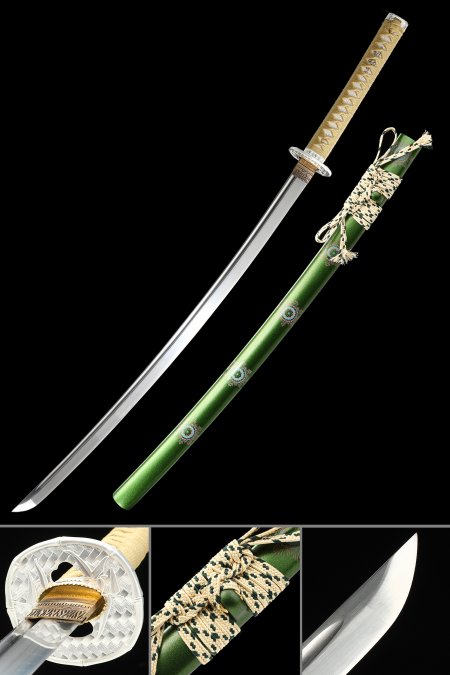
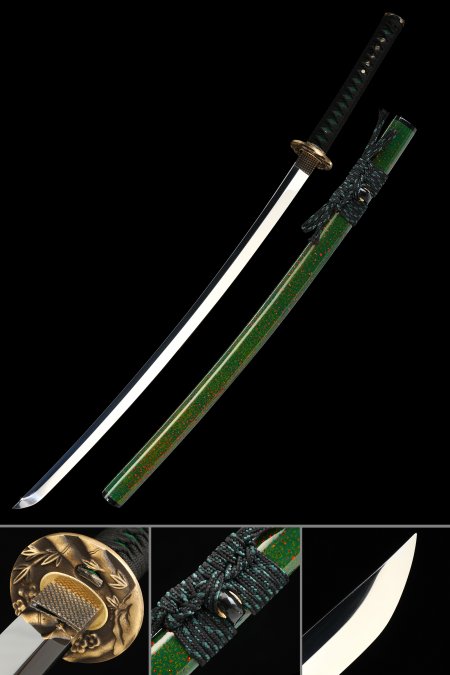
Each katana in this collection pairs a hand-forged 1095 high-carbon steel blade with a distinctive green-finished saya - whether lacquered hardwood, pearl rayskin, or hand-painted bamboo motifs. The result is a display piece that balances traditional Japanese craftsmanship with a bold, cohesive aesthetic. Every sword ships with free standard delivery and is backed by our hassle-free return policy.
Free Shipping
219.00 USD
Free Shipping
359.00 USD
Related Collections
Frequently Asked Questions
What makes 1095 carbon steel a good choice for a display katana?
1095 carbon steel contains roughly 0.95% carbon, placing it in the high-carbon range that responds exceptionally well to differential heat treatment. This process creates a genuine hamon - the visible temper line along the edge - that is a hallmark of authentic Japanese sword aesthetics. For collectors, the hamon is a meaningful feature: it indicates the blade underwent clay coating and controlled quenching rather than uniform heat treatment, reflecting actual traditional technique. The steel also polishes to a bright, reflective finish and holds fine surface detail well, making it an excellent choice for a display collectible where visual quality and craftsmanship authenticity both matter.
How does a lacquered hardwood saya differ from a rayskin saya?
A lacquered hardwood saya is constructed from a shaped wooden core - typically ho wood or a comparable hardwood - then coated with multiple layers of lacquer that are polished between applications to achieve a smooth, high-gloss or satin finish. The result is formal and uniform in color, making it well suited for classic display presentations. A rayskin (same) saya, by contrast, wraps the wooden base in genuine ray or shark skin before finishing. The natural nodules of rayskin create a textured surface that scatters light rather than reflecting it evenly, producing a depth and organic variation that no lacquer alone can replicate. The two styles represent distinct aesthetic traditions and appeal to different collector sensibilities.
What tsuba styles are featured in the green katana collection?
The collection includes several distinct tsuba designs chosen to complement the green saya palette. Gold chrysanthemum tsuba appear on multiple pieces, drawing from the chrysanthemum's deep association with Japanese imperial aesthetics and longevity symbolism. A white geometric tsuba offers a contrasting modernist sensibility against the organic green lacquer. A peony alloy tsuba brings sculptural floral relief work more common in late Edo-period fitting styles. Each tsuba is paired intentionally with its saya - a high-gloss green lacquer saya, for instance, pairs with a formal chrysanthemum design, while a hand-painted bamboo saya is matched with simpler, understated fittings to avoid visual competition.
How should I care for the green lacquered saya long-term?
Green lacquered saya require a degree of environmental awareness that bare wood or rayskin finishes do not. Lacquer is sensitive to ultraviolet light, which causes gradual fading and can cause the finish to become brittle over extended exposure - keep displayed pieces out of direct sunlight or supplement with UV-filtering display case glass. Avoid rapid temperature changes, which cause wood to expand and contract and can lead to hairline cracks in the lacquer surface over time. Clean the exterior only with a dry or lightly dampened soft cloth; solvents and alcohol-based cleaners will strip or cloud the finish. For the blade housed inside, a light application of mineral oil every few months prevents surface oxidation without risk of oil seeping onto the lacquer interior.
Is the WW2 Shin Gunto style katana historically accurate as a collectible?
The Shin Gunto pattern was the standard officer's sword issued to the Imperial Japanese Army from the 1930s onward, representing a deliberate return to traditional tachi and katana mounting aesthetics after decades of Western-influenced military swords. Authentic surviving examples are documented collector pieces with established provenance categories. The collectible replica in this collection captures the defining visual features of the pattern: brown tsuka wrapping, military-grade fittings, and a green leather saya consistent with field-issued examples. As a display collectible, it appeals both to WWII militaria collectors and to Japanese sword enthusiasts interested in how traditional blade culture intersected with 20th-century military history.
Customer Reviews
Valarie Garcia
Texas, United States
Quality is exceptional, craftsmanship is amazing. Absolutely love the Katana sword
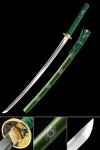 |
1095 Carbon Steel Katana with Green Lacquered Hardwood Saya - Gold-Black Chrysanthemum Tsuba |