1095 Carbon Steel Tibetan Knifes

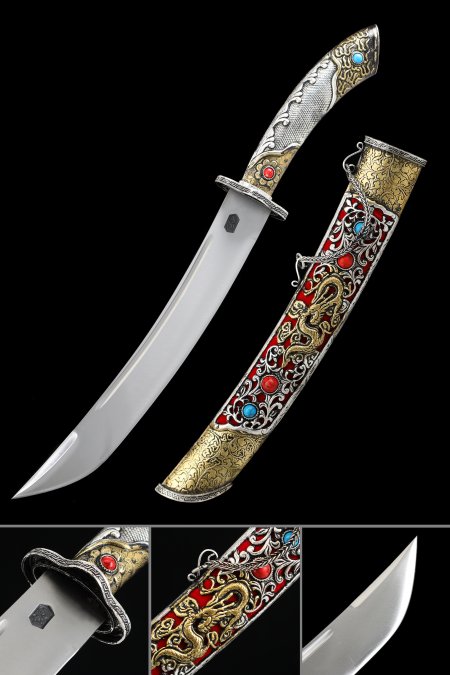
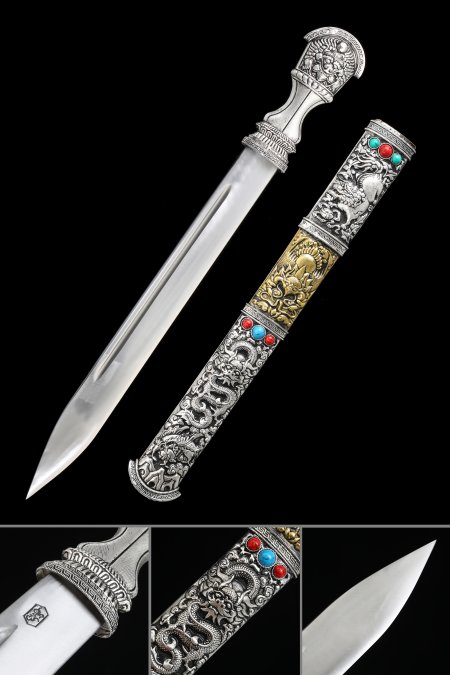
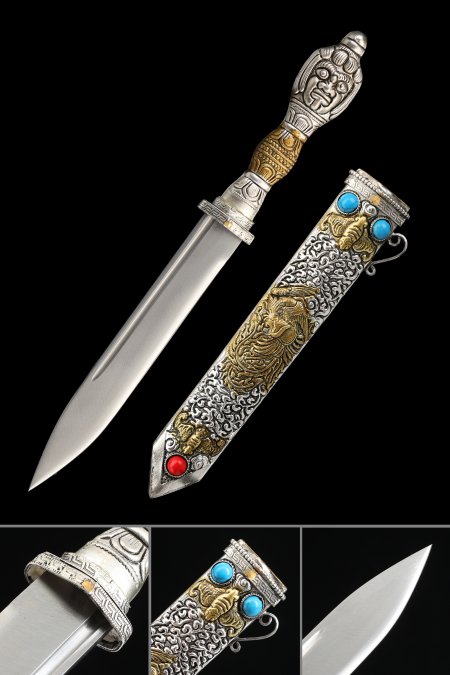
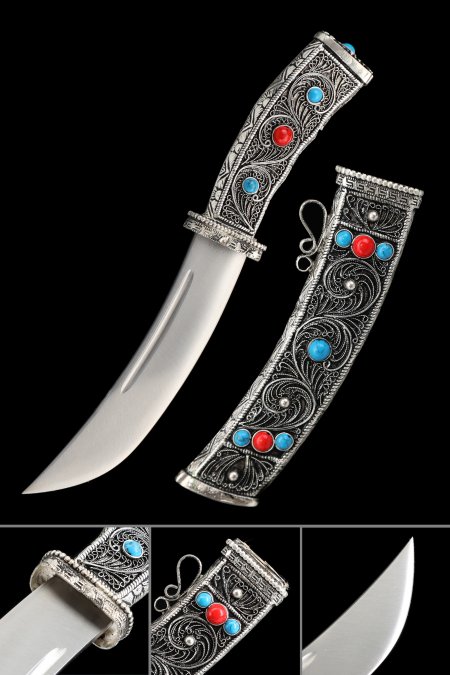
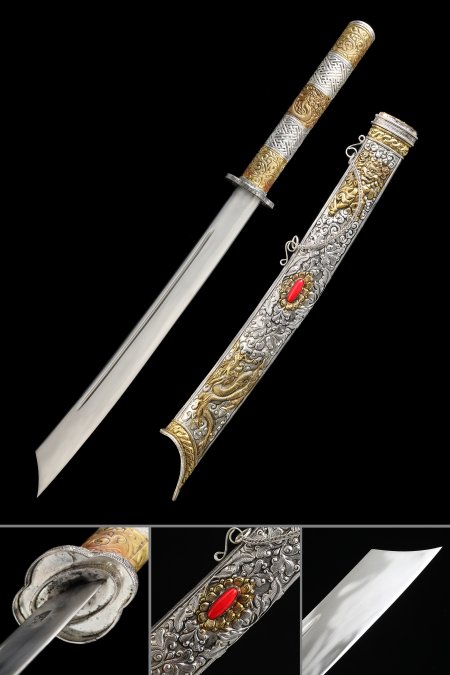
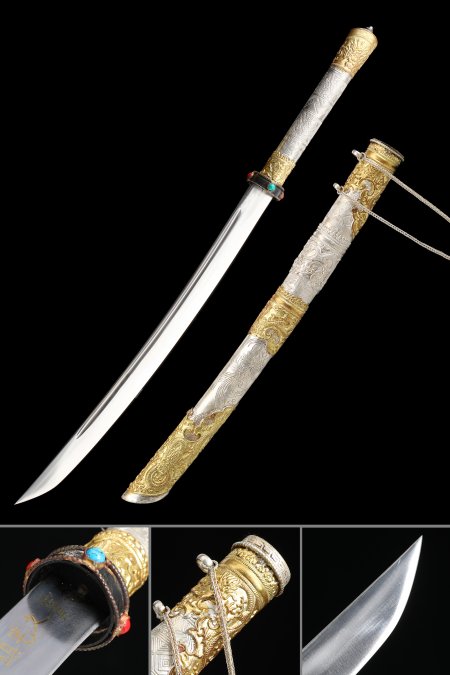
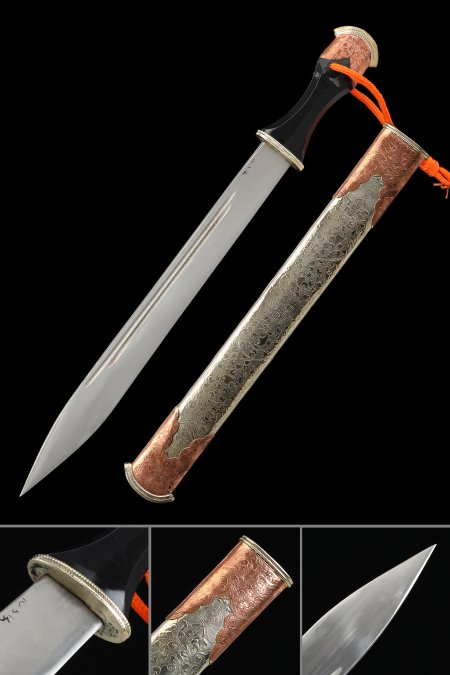
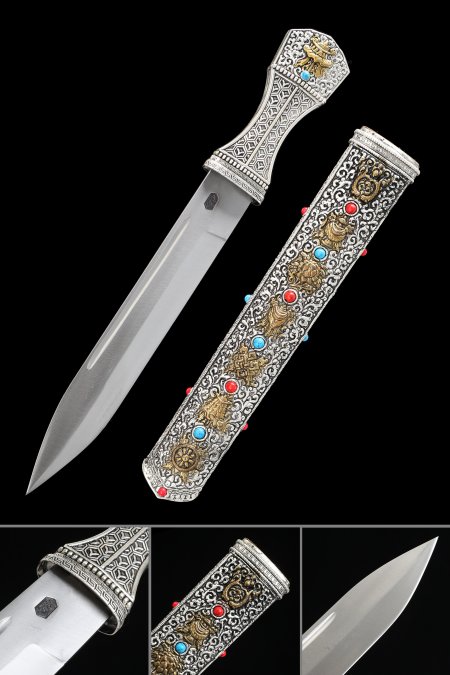
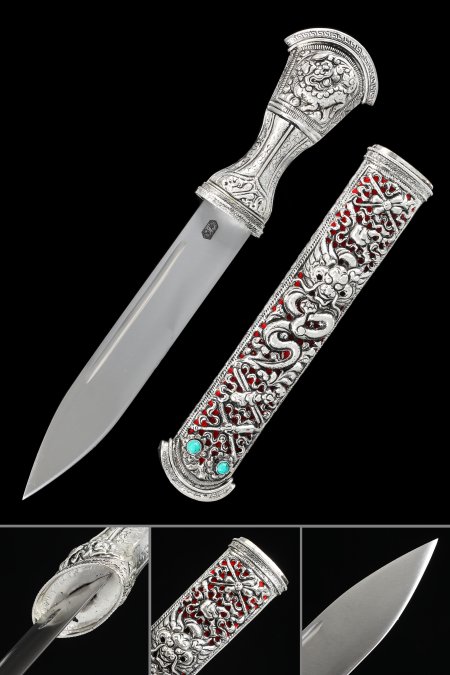
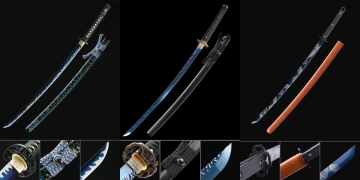
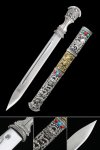
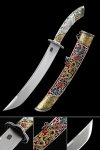
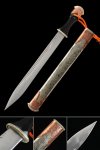
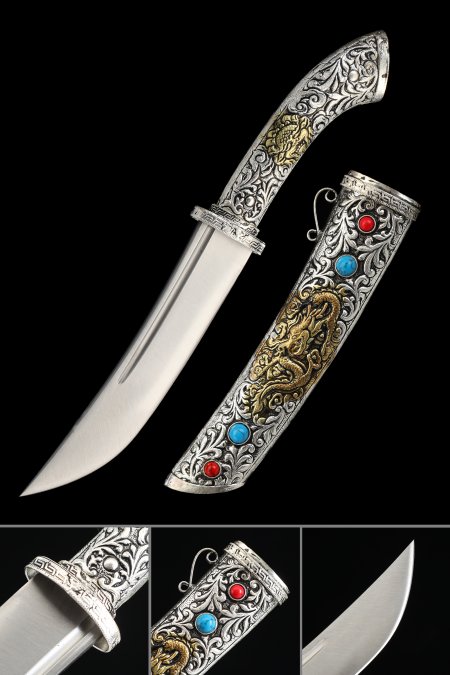
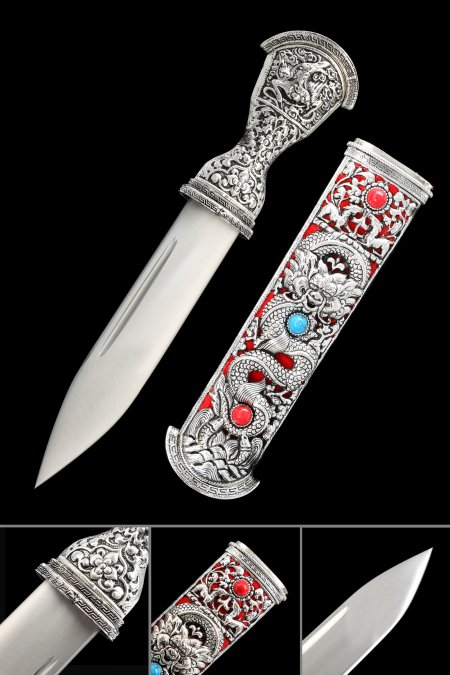
These handcrafted 1095 carbon steel Tibetan knives bring centuries of Himalayan artistry into the modern collector's display. Each piece features authentic details — silver and gold sheaths, turquoise and coral gemstone inlay, dragon motifs, and blackwood handles — faithfully reproducing the ornate aesthetic of traditional Tibetan edged craftsmanship. Free shipping on all orders, with hassle-free returns for your peace of mind.
Showing 11 Products

Related Collections

Frequently Asked Questions

What makes 1095 carbon steel a good choice for Tibetan knife collectibles?
1095 carbon steel contains roughly 0.95% carbon, giving it a well-defined grain structure that responds predictably to hand-forging and traditional grinding techniques. For collectible Tibetan knives, this matters because the blade surface must accept the kind of fine finishing that allows decorative etchings and polished bevels to read clearly under display lighting. Spring steel, used on several pieces in this collection, offers similar workability with slightly more flex — a property that historically suited longer Tibetan broadsword forms. Neither alloy requires exotic heat treatment, which means skilled smiths can work them using time-honored methods rather than industrial processes, keeping the handcrafted character intact. From a collector's perspective, both steels develop a natural patina over time that adds visual depth and authenticity to the piece.
How do Tibetan knives differ from Chinese dao or Japanese tanto?
The most immediate difference is ornamental density. Chinese dao and Japanese tanto are typically defined by restrained hardware — ray skin, simple iron guards, lacquered wood. Tibetan knives invert that aesthetic entirely: the sheath and handle often carry more visual complexity than the blade itself, with silver filigree, coral, turquoise inlay, and embossed dragon motifs covering nearly every surface. The blade geometry also differs — Tibetan forms frequently feature a slight recurve or a pronounced tip flare that reflects regional design traditions distinct from East Asian conventions. Culturally, Tibetan edged pieces were as much ceremonial and status objects as anything else, which is why the metalwork surrounding the blade received such lavish attention. Collectors who display both traditions often find that Tibetan pieces provide strong visual contrast against the quieter lines of Japanese or Chinese blades.
What does turquoise inlay signify on traditional Tibetan blades?
Across the Himalayan plateau, turquoise has been regarded for centuries as a stone with protective and spiritual properties, closely associated with sky, water, and divine favor in Tibetan Buddhist tradition. On edged objects, turquoise inlay was not purely decorative — it communicated the owner's status, piety, and connection to sacred symbolism. High-ranking nobles and monastery officials carried blades with extensive gemstone work precisely because the stones carried meaning beyond aesthetics. In reproduction collectibles, authentic turquoise or high-quality turquoise-colored stone inlay maintains that visual and cultural reference, making the piece more resonant for collectors interested in Himalayan art history rather than just metallurgy. Coral, which appears on several pieces in this collection, carries similar symbolic weight in Tibetan iconography.
How should I care for a carbon steel Tibetan knife on long-term display?
Carbon steel is reactive to moisture and airborne contaminants, so consistent light maintenance is the key to preserving both blade and finish. Apply a thin coat of camellia oil or food-grade mineral oil to the blade surface every two to three months — more frequently in coastal or high-humidity environments. For the metalwork on the sheath and handle fittings, a dry microfiber cloth removes fingerprint oils without scratching polished silver or gold surfaces. Avoid abrasive cleaners near gemstone inlay, as they can dislodge adhesive and dull stone surfaces. Store the knife inside its sheath to protect both blade and sheath metalwork from accidental contact. If wall-mounted, keep the piece away from HVAC vents and windows where temperature cycling can stress the metalwork joints over time.
Are these Tibetan knives suitable as display gifts for collectors?
They make particularly distinctive gifts precisely because Tibetan edged pieces are underrepresented in mainstream collector markets — most enthusiasts focused on Japanese or European traditions have never owned one, which means the gift carries genuine novelty alongside cultural depth. The variety of sizes in this collection, from compact 7-inch pieces to full 31-inch broadswords, allows you to match the scale of the gift to the recipient's available display space. Shorter pieces with ornate silver-and-turquoise sheaths work beautifully in a desk or cabinet display, while longer broadswords make a strong statement on a wall mount. Collectors who appreciate this style of piece often also enjoy Antique Tibetan Daggers, making a paired dagger-and-broadsword set a memorable combination for anyone building a Himalayan-focused collection.

Customer Reviews

Cart 0 Items

Your cart is empty