What makes an aikuchi different from a standard tantō mounting?
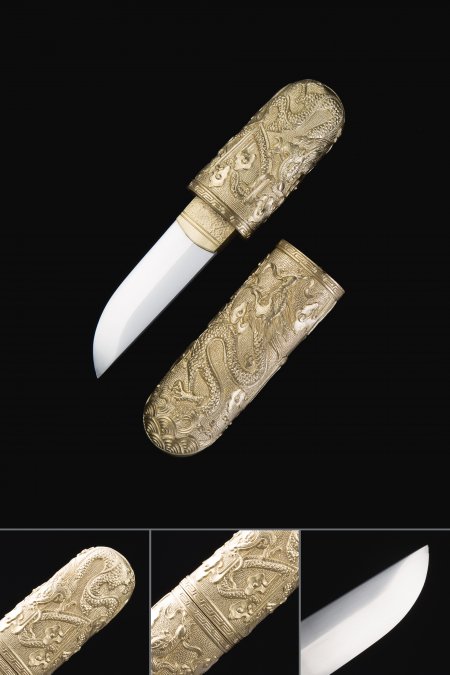
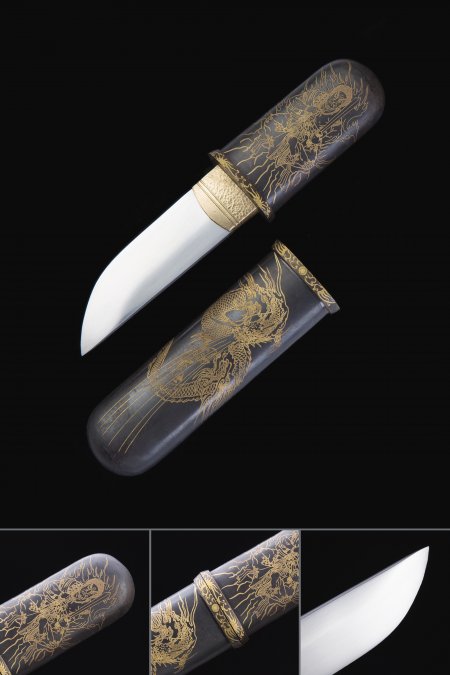
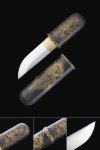
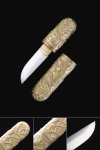
The defining feature of an aikuchi mounting is the complete absence of a tsuba, or hand guard. In a conventional tantō, the guard creates a visible break between the handle and the scabbard. With an aikuchi, the handle fits flush against the mouth of the saya, producing a clean, uninterrupted line from tip to pommel. This guardless style was historically associated with courtly and civilian wear in Japan, where subtlety of form was prized over martial utility. For display collectors, the aikuchi silhouette reads as particularly refined and cohesive—the eye travels the full length of the piece without interruption, making it an excellent focal point in a framed or boxed display.
Why is manganese steel used in these collectible tanto blades?
Manganese steel is an alloy that includes manganese as a primary additive, which increases the hardness and surface durability of the finished blade compared to basic carbon steel. For collectibles intended for long-term display, this matters because the blade holds its finish better over time and resists the minor surface wear that can occur during handling, photography, or repositioning on a stand. It also gives the blade a convincing weight and visual density that distinguishes it from the lightweight alloys used in purely decorative novelties. Collectors who appreciate the tactile quality of a well-constructed display piece will notice the difference immediately when handling a manganese steel example.
How should I care for a copper saya to preserve its finish?
Copper and copper-alloy scabbards are susceptible to oxidation over time, which can shift a gold-tone finish toward a darker, greenish patina or cause a black finish to develop uneven spots. To slow this process, avoid touching the copper surfaces with bare hands during display—skin oils accelerate oxidation. When repositioning the piece, use a soft cotton glove or a lint-free cloth. For light cleaning, a dry microfiber cloth is usually sufficient. If the scabbard is stored rather than displayed, wrap it loosely in acid-free tissue paper inside a sealed container with a silica gel packet to control humidity. Avoid liquid metal polishes unless you intend to intentionally alter the patina, as they can strip lacquer coatings applied during finishing.
Is a full-tang construction important for a display collectible?
For purely wall-hung decorative pieces, tang construction is less critical—but for collectors who handle, photograph, or rotate their pieces regularly, full-tang design makes a meaningful difference. When the steel extends through the entire length of the handle, the piece has a noticeably different balance point and a solidity that partial-tang or rat-tail constructions simply cannot replicate. This translates directly to how the aikuchi looks and feels during close examination or in hand photography. Full-tang collectibles also tend to hold their handle fittings more securely over years of display, reducing the risk of loosening at the habaki or handle collar—a common issue with lighter construction methods.
Do dragon motifs on Japanese blades have historical precedent?
Yes, dragon imagery has a well-documented history in Japanese blade furniture and mountings. Dragons—known as ryu in Japanese—appear frequently on tsuba, fuchi-kashira sets, menuki, and scabbard fittings from the Edo period onward, often executed in shakudo, shibuichi, or copper alloys. The motif was considered auspicious and was associated with water, clouds, and protective spiritual force rather than destruction. High-ranking samurai families and wealthy merchants commissioned dragon-adorned fittings as status symbols. Contemporary collectibles that incorporate dragon imagery into copper saya continue this decorative tradition, giving the motif a legitimate historical context that makes it more than simple fantasy ornamentation.