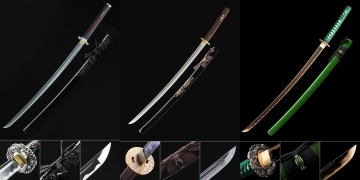
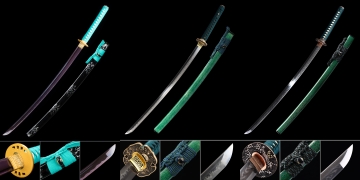
What makes an aikuchi different from a standard tanto?
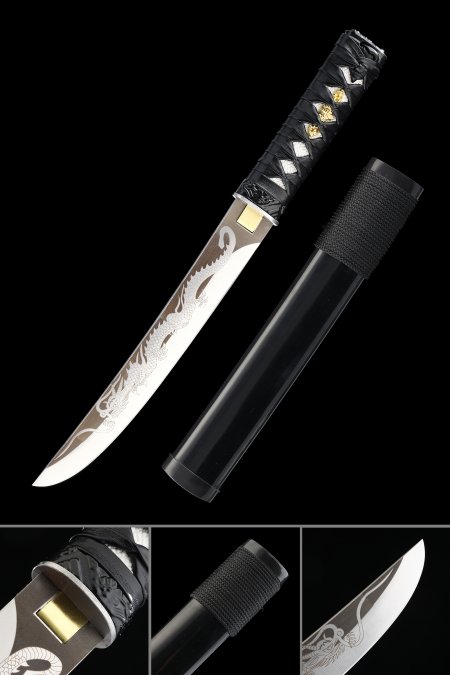
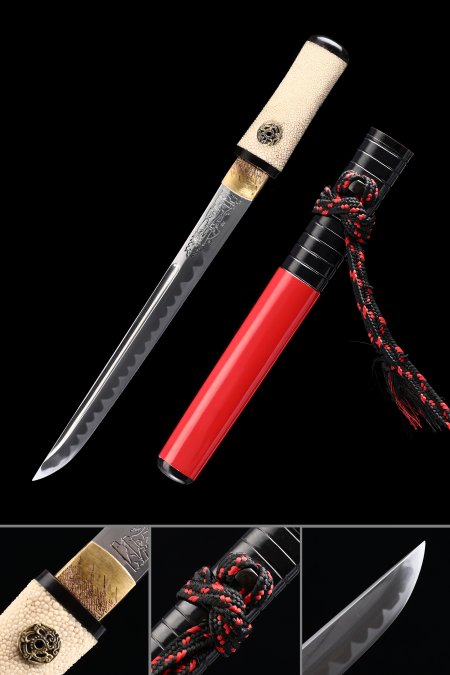
The defining difference is the absence of a tsuba, or hand guard. A standard tanto mounting includes a guard that separates the blade from the hilt, while an aikuchi fits the handle directly against the saya mouth with no guard at all. This creates an unbroken, seamless profile from pommel to scabbard tip. Historically, the aikuchi was associated with civilian and court dress rather than military use, which is precisely why it developed such a strong tradition of decorative embellishment. For collectors today, that guardless design reads as visually elegant and immediately distinctive from other Japanese short-blade formats.
What is Damascus steel and how does it differ from stainless steel in these pieces?
Damascus steel in modern collectible bladesmithing refers to pattern-welded steel - multiple layers of different steel alloys folded and forged together, then acid-etched to reveal the flowing grain pattern on the surface. Each blade displays a unique visual fingerprint of swirling lines created by the layering process. Stainless steel, by contrast, is a single-alloy material prized for its resistance to surface oxidation and its bright, mirror-capable finish. The stainless steel aikuchi in this collection holds a cleaner, more uniform appearance that showcases engraved linework with sharp contrast, while the Damascus variant emphasizes organic texture and depth. Neither is inherently superior - they represent two distinct aesthetic traditions within the collectible blade world.
What does the dragon engraving symbolize on Japanese blades?
In Japanese tradition, the ryū - the dragon - is not a destructive creature but a divine one. It governs rivers, rainfall, and the sea, and was historically associated with imperial authority and spiritual protection. When engraved onto blade furniture or the blade itself, the dragon motif was intended to invoke those protective and auspicious qualities. On aikuchi collectibles, dragon engraving typically appears along the flat of the blade or on the fittings, and the style can range from fine hand-cut line engraving to bold relief work. The combination of the celestial subject and the intimate aikuchi format makes these pieces particularly expressive as display objects or decorative arts acquisitions.
How should I care for a lacquered saya on a display piece?
Lacquered saya require a few simple precautions to maintain their appearance over time. Avoid direct sunlight, which causes the lacquer to fade and can eventually cause cracking or flaking in the surface layer. High humidity is equally problematic - it can cause the wooden core beneath the lacquer to swell, potentially warping the fit between blade and scabbard. Store the piece in a stable, climate-controlled environment, ideally in a display case rather than open-air mounting. Clean the exterior only with a soft, dry cloth. Never use chemical cleaners or polish on lacquered surfaces. With proper storage, the rich gloss finish on a quality lacquered saya can remain vibrant for decades.
Are these aikuchi pieces suitable as gifts for Japanese culture enthusiasts?
They make a compelling gift choice for anyone interested in Japanese decorative arts, blade culture, or East Asian history. The aikuchi format is less commonly known than the katana, which gives it genuine conversation value for someone with existing knowledge of the subject. The dragon motif adds a layer of symbolic meaning that resonates across a wide range of interests - from collectors focused on Japanese iconography to those drawn to the aesthetic of traditional craftsmanship. The pieces arrive with lacquered saya, making presentation an event in itself. Pairing one of these with a dedicated blade stand elevates the display potential considerably and creates a complete decorative arrangement.