What is a hamon and how does it form on a carbon steel tanto?
Updated Feb 2026
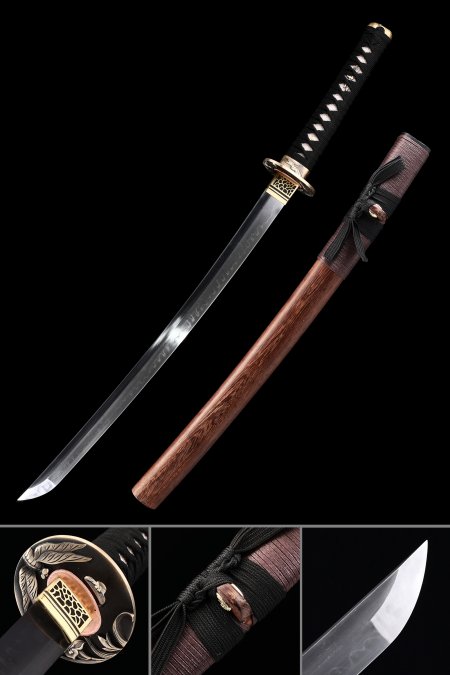
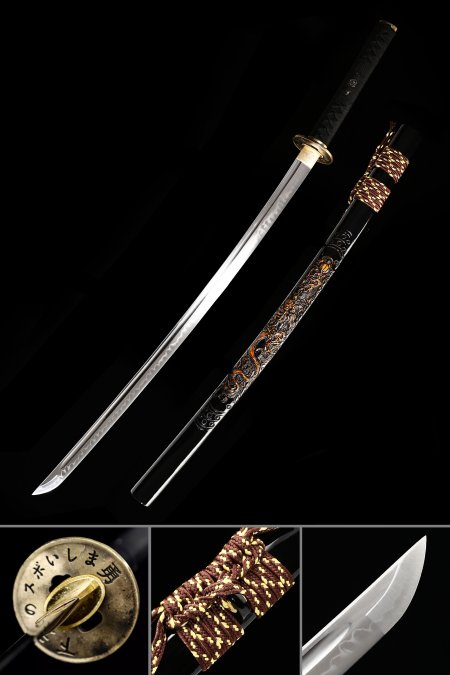
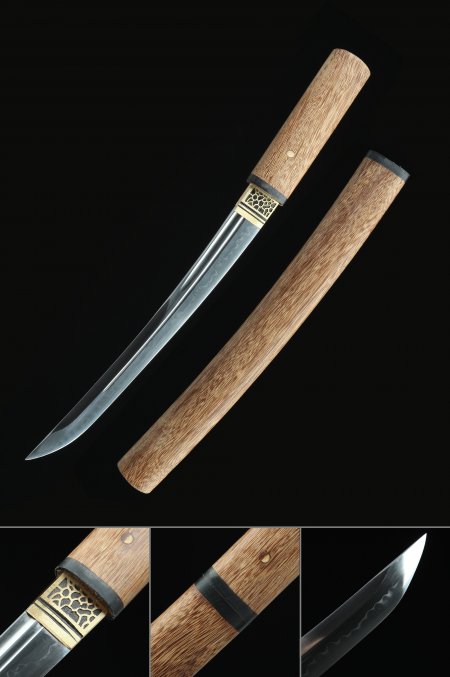
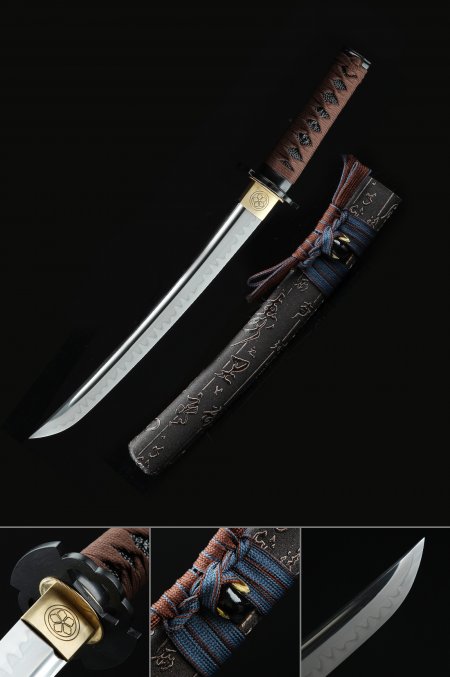
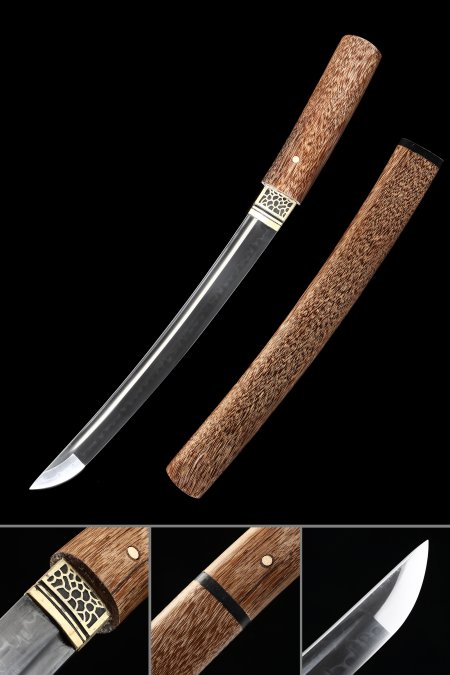
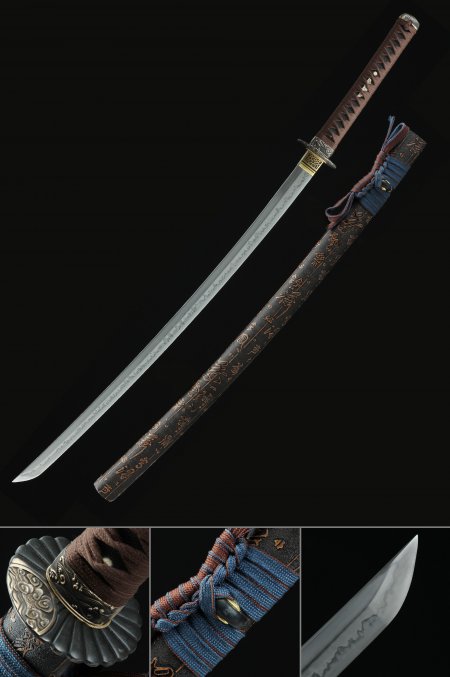
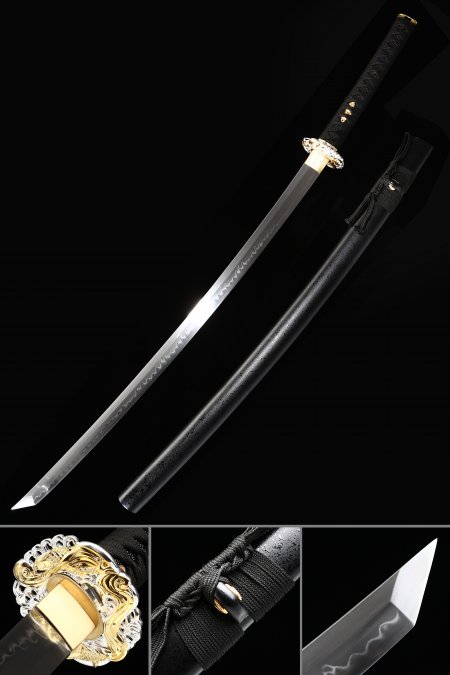
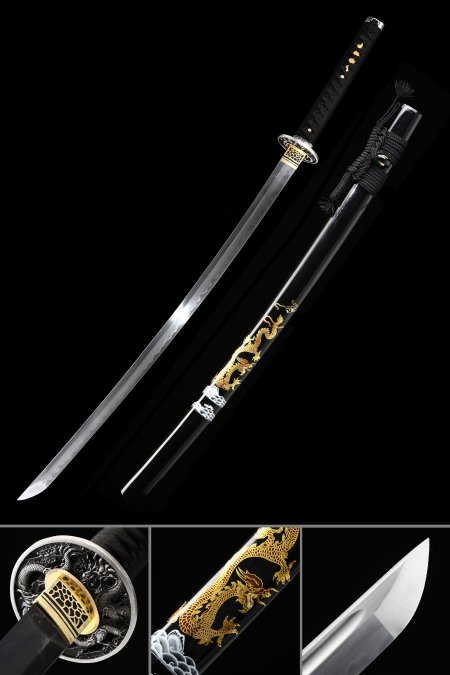
A hamon is the visible temper line that forms along the edge of a carbon steel blade during differential heat treatment - the wave-patterned boundary between the hard edge zone and the tougher spine zone that results from clay-tempered quenching. During the clay-tempering process, a layer of clay is applied to the blade spine before the blade is brought to critical temperature and quenched. The clay insulates the spine area, causing it to cool more slowly than the unprotected edge. The edge zone, cooling rapidly, transforms into a hard martensite structure; the spine, cooling slowly, retains a tougher but softer pearlitic structure. The boundary between these two zones is where the hamon forms, visible as a milky or clouded line in the steel that follows the contour of the clay application. On a T10 tanto, the hamon typically shows visible activity within the transition zone - crystalline structures called nie and nioi - that experienced collectors evaluate as indicators of the heat treatment quality and the skill of the smith. The hamon's specific pattern is unique to each blade, making T10 clay-tempered tanto individually distinctive.