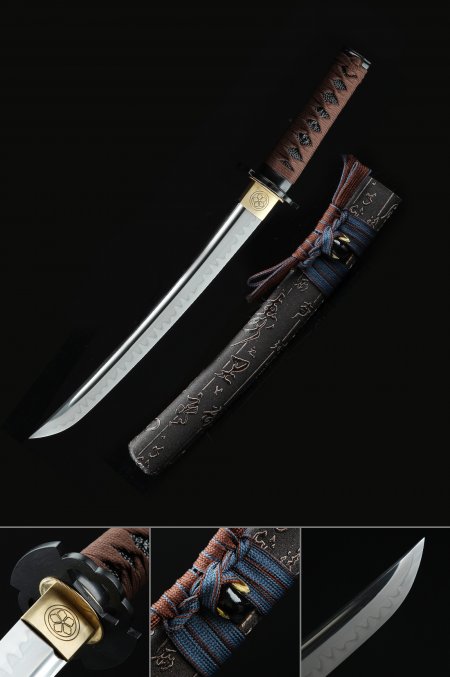
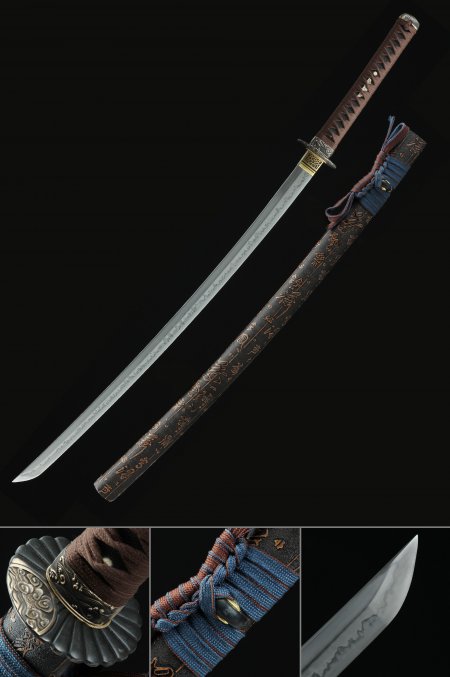
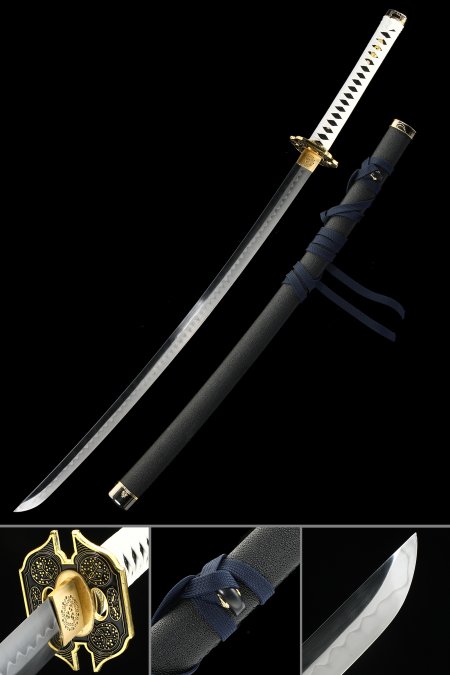
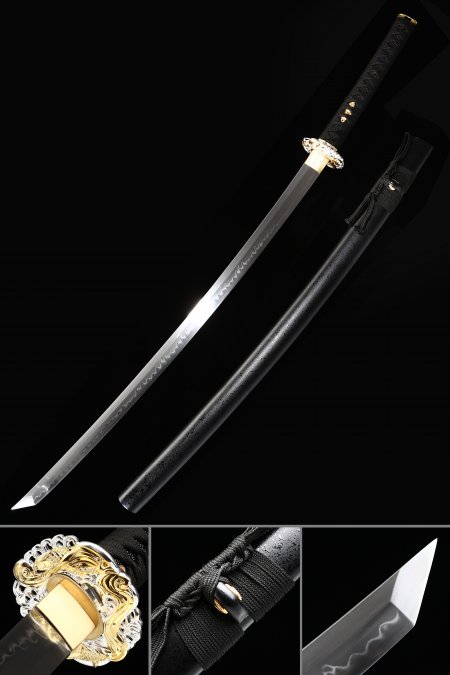
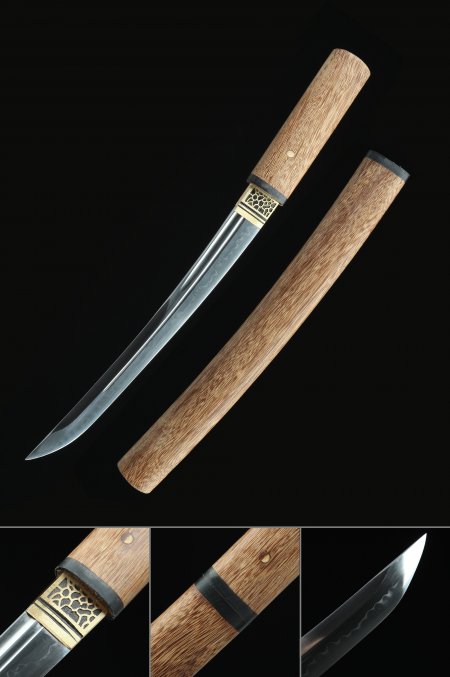
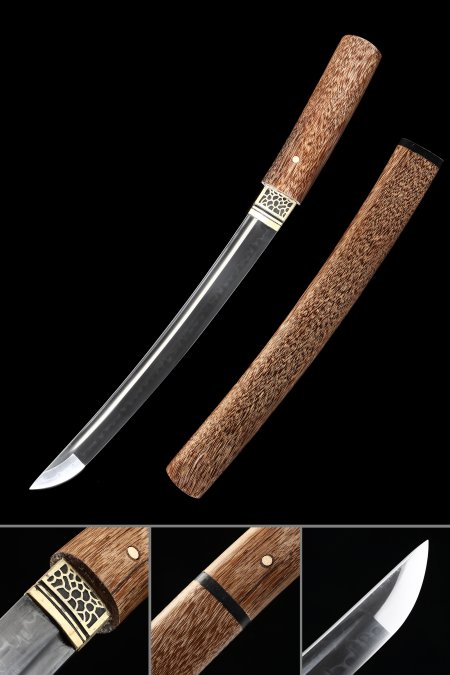
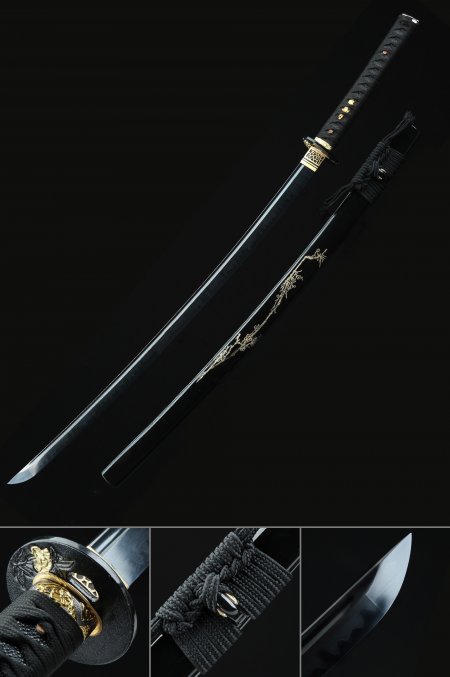
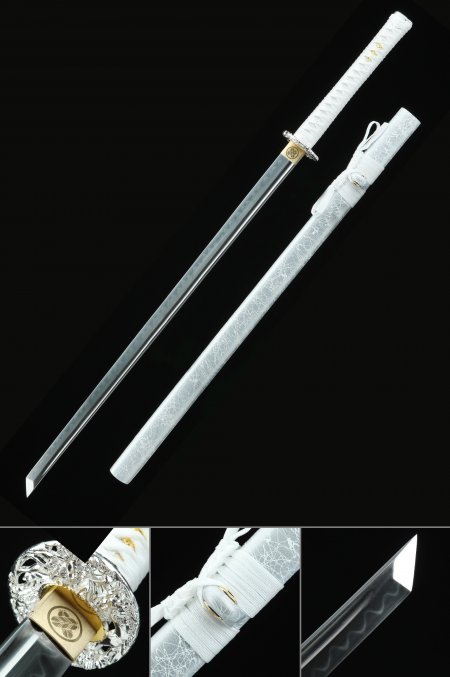
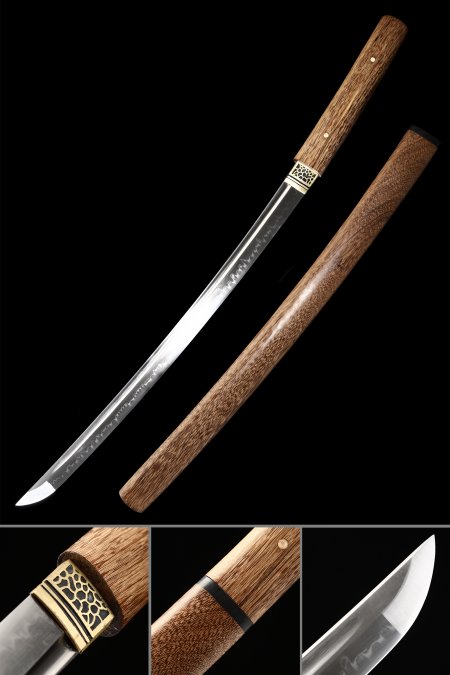
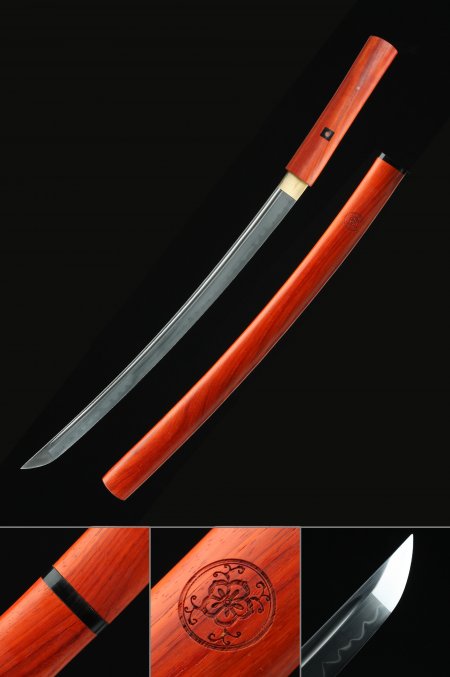
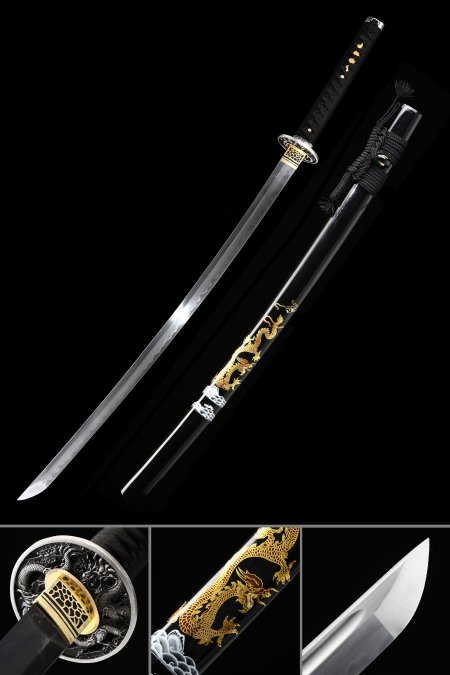
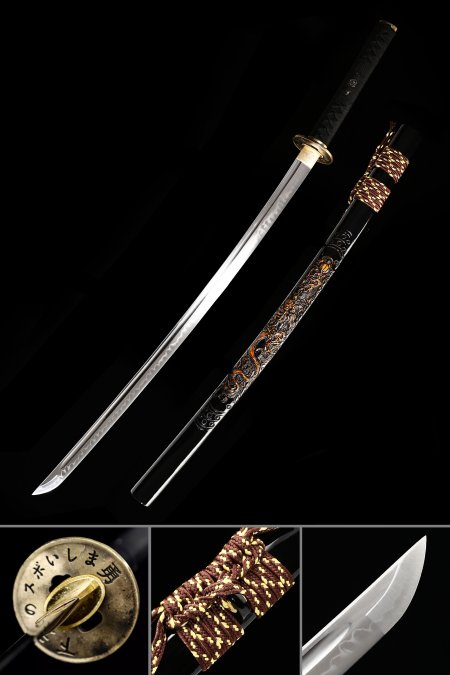
Are the hamon lines on these tachi natural or artificially etched?
Updated Mar 2026
The hamon on T10 tachi produced through proper clay tempering is a genuine metallurgical boundary formed during the quench process - not an acid-etched or wire-brushed simulation. You can distinguish a real hamon by its depth: when examined under raking light or a strong flashlight, an authentic hamon shows a three-dimensional transition zone called the nie and nioi, which appear as a misty or crystalline boundary rather than a flat surface line. Artificially etched hamon, common on lower-end decorative pieces, appear as a uniform dark band without this internal luminosity. Every tachi in this Black T10 collection is differentially clay-tempered, so the hamon you receive is structurally inherent to the blade itself.