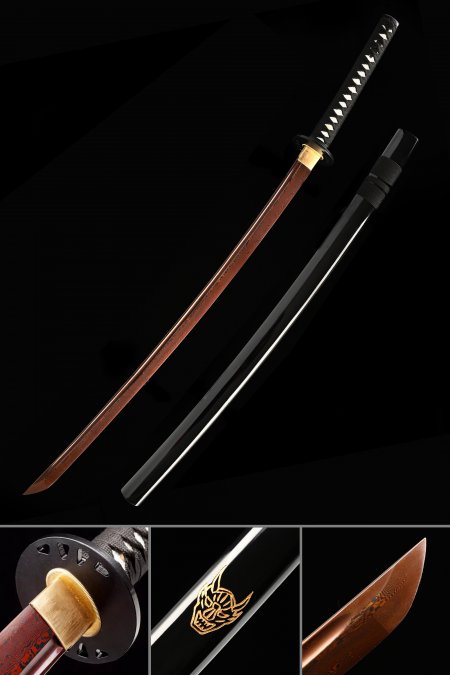
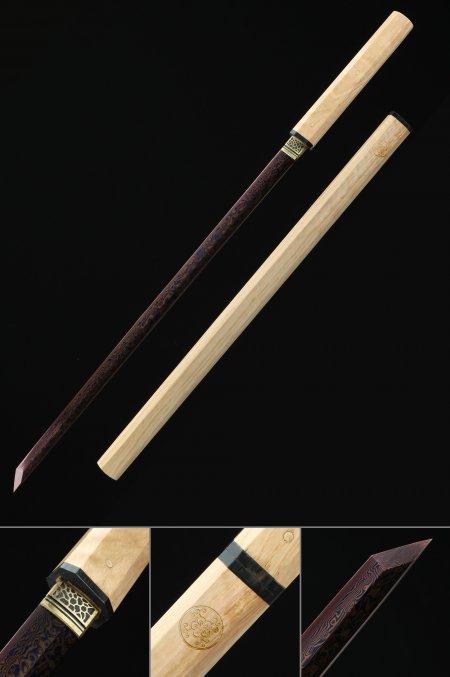
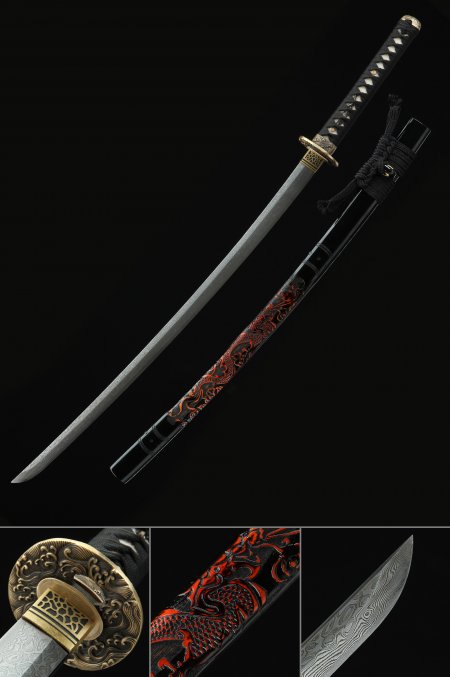
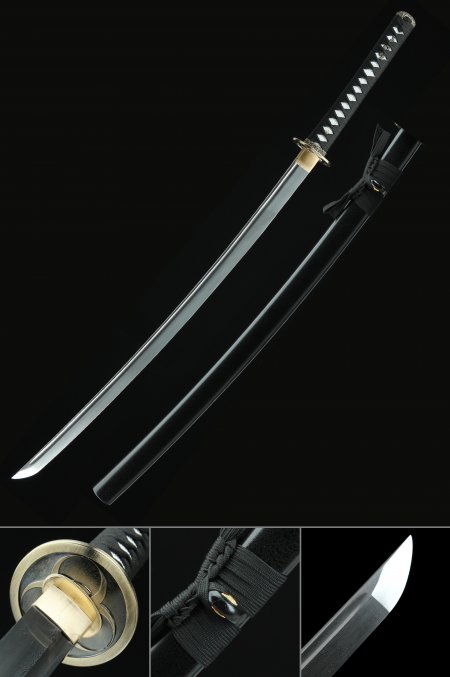
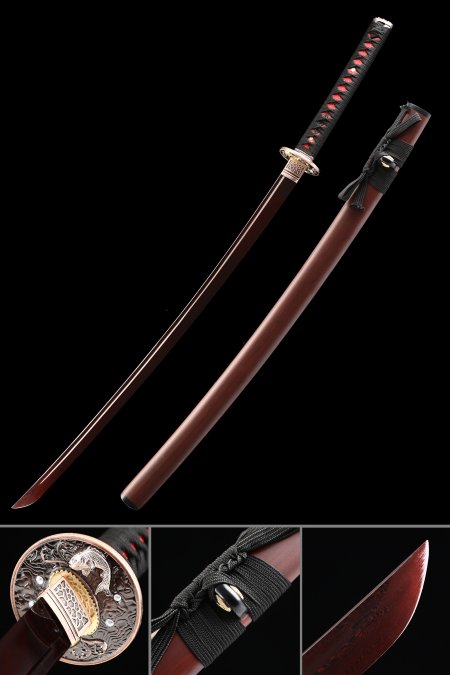
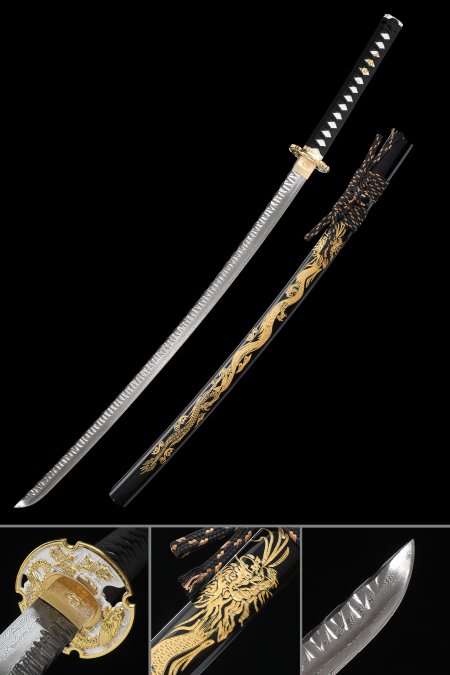
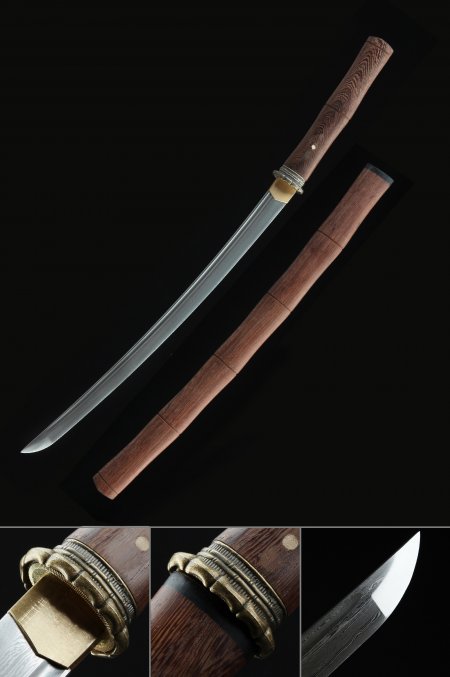
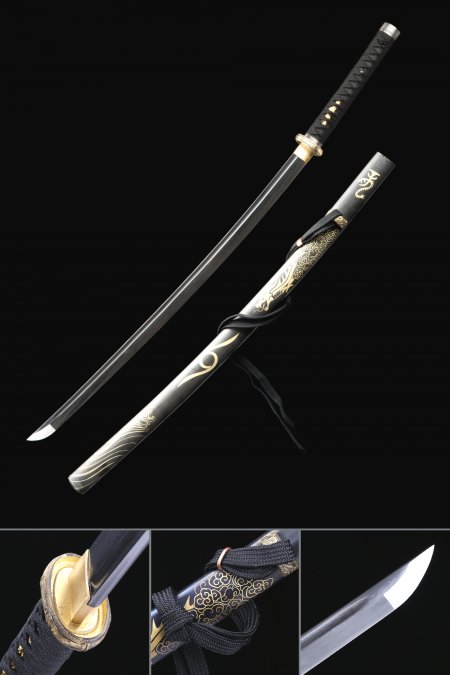
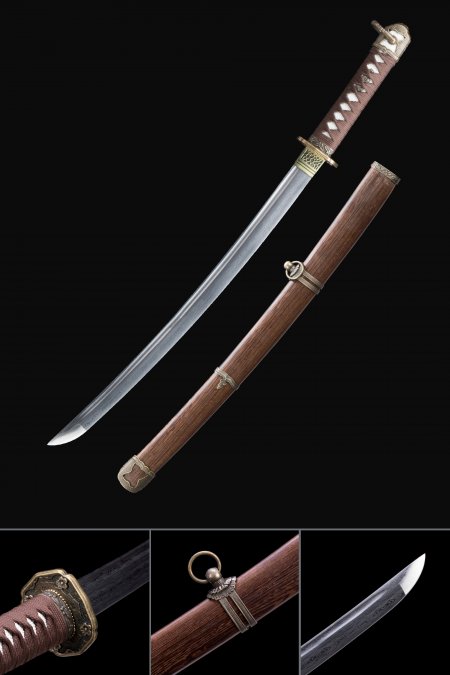
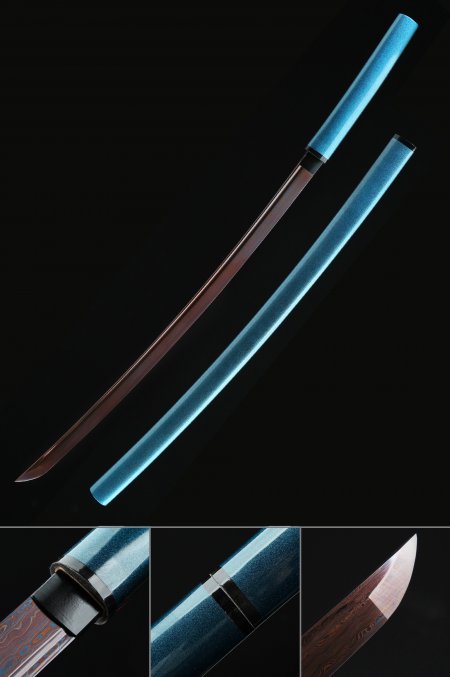
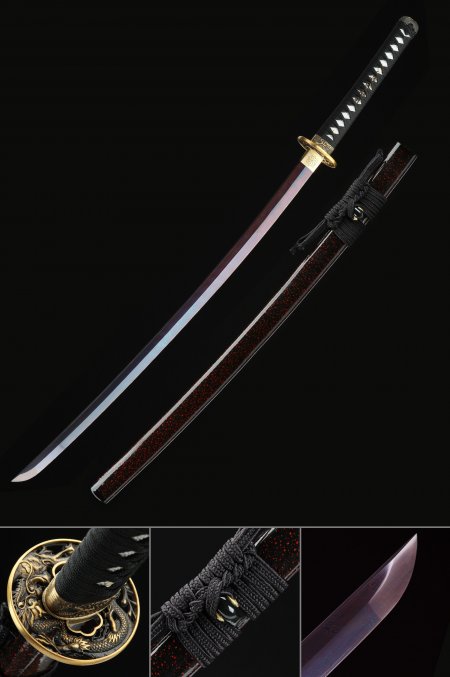
How is Damascus steel different from monosteel in these tachi blades?
Updated Mar 2026
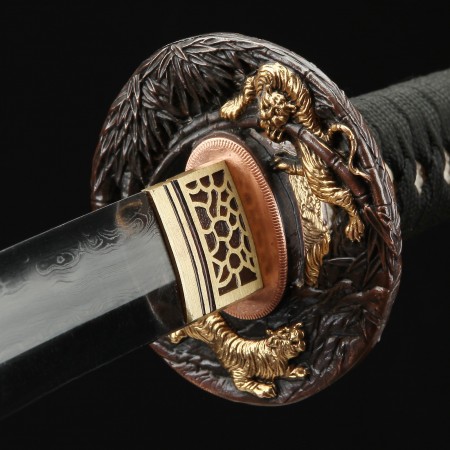
Damascus steel — also called pattern-welded steel — is produced by forge-welding multiple layers of high- and low-carbon steel, then folding and drawing them out repeatedly. The alternating carbon content creates the distinctive flowing grain pattern visible on the finished blade. In practical terms for a collectible, this means the surface character is structural rather than cosmetic: the pattern you see reflects the actual internal layer architecture of the steel. Monosteel blades, by contrast, are forged from a single homogeneous bar and achieve their visual interest primarily through the hamon produced during clay tempering. Both methods are legitimate expressions of Japanese blade craft; Damascus construction tends to emphasize visual complexity and layered texture, while clay-tempered monosteel emphasizes the hamon line as the focal point of the blade's aesthetic. Collectors often distinguish between the two based on which visual language appeals to their display preference.