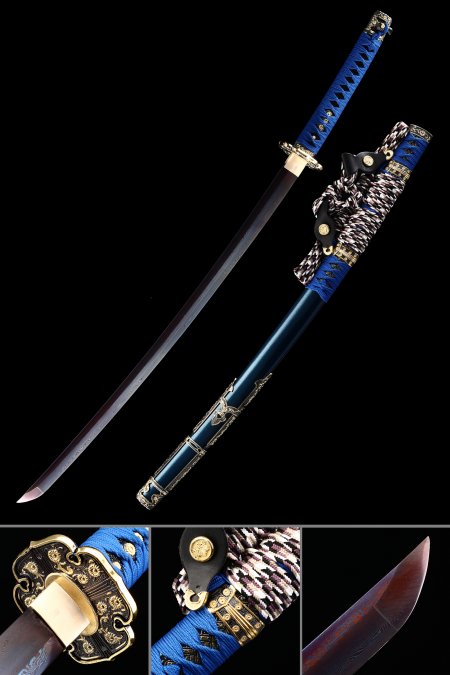
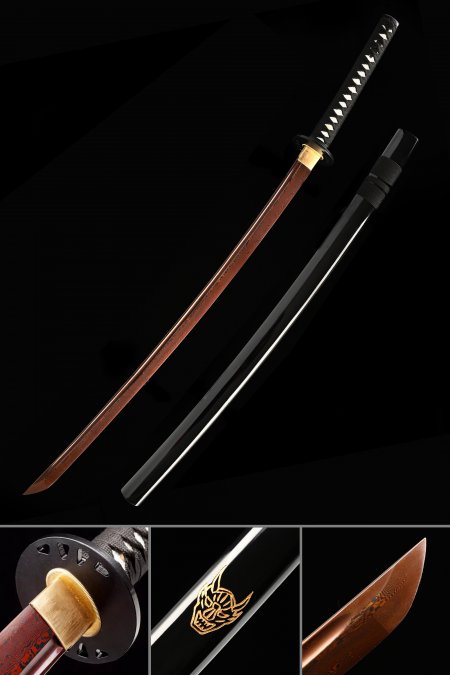
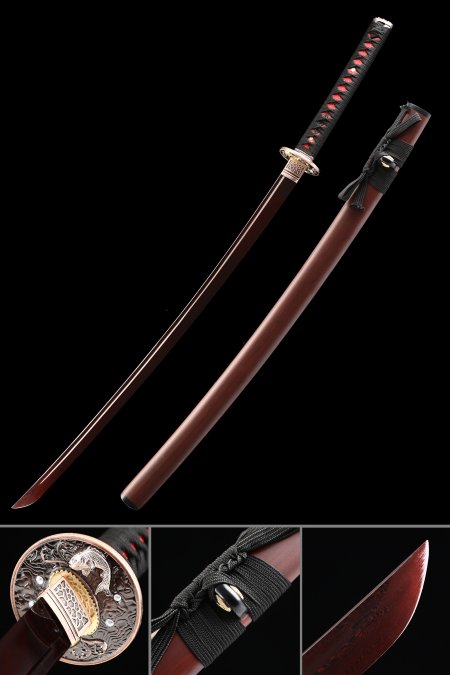
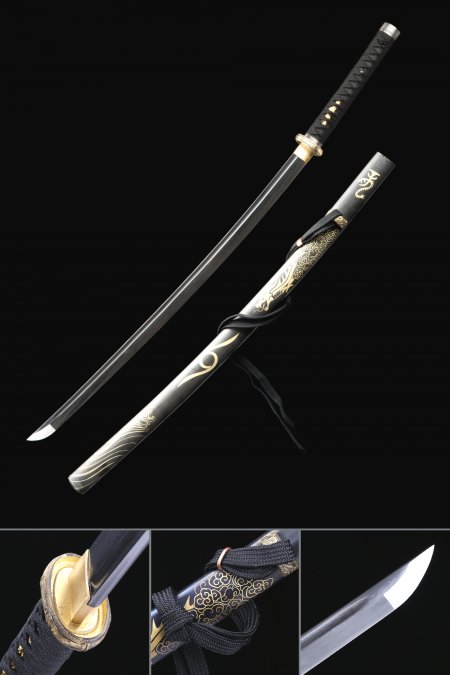
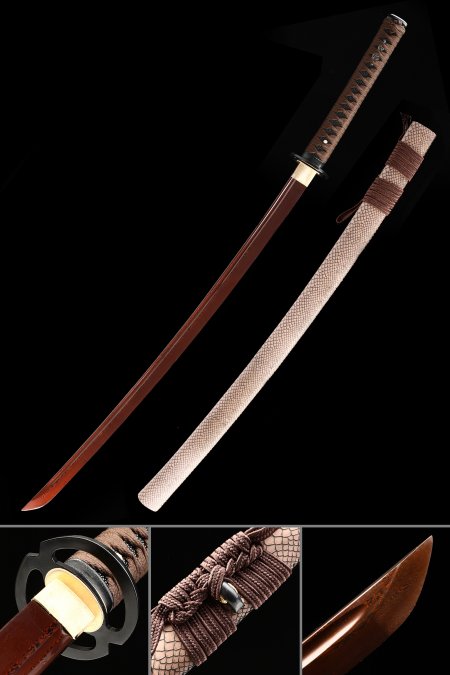
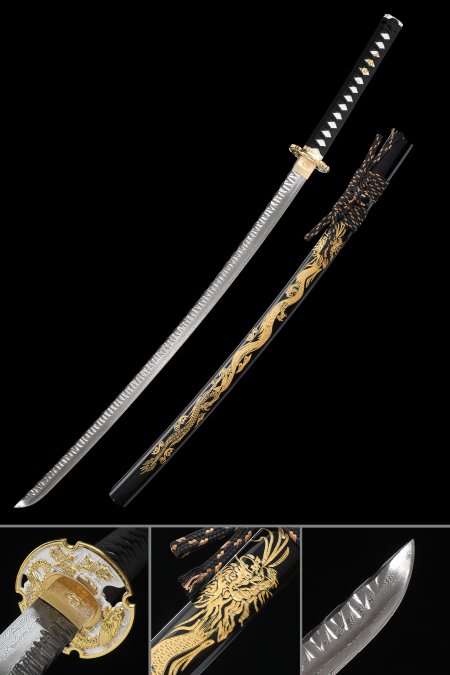
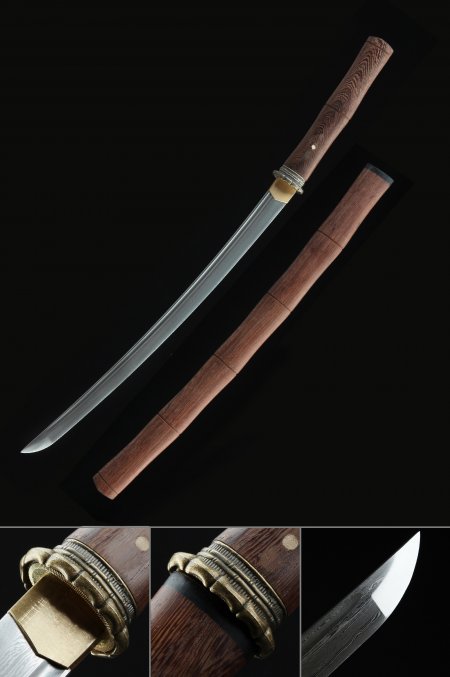
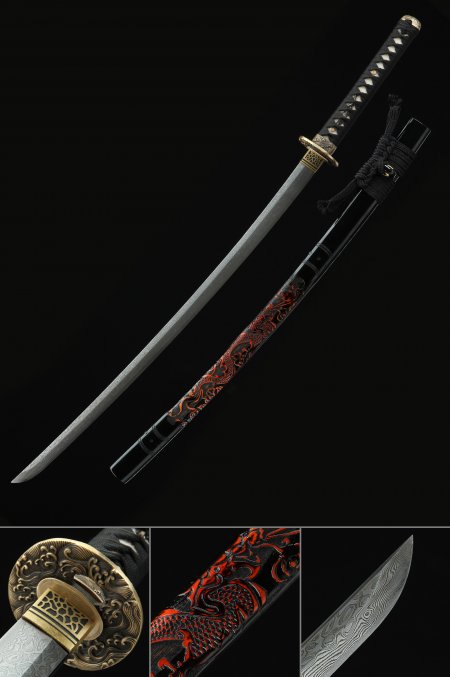
How does T10 carbon steel compare to Damascus in these katana?
Updated Mar 2026
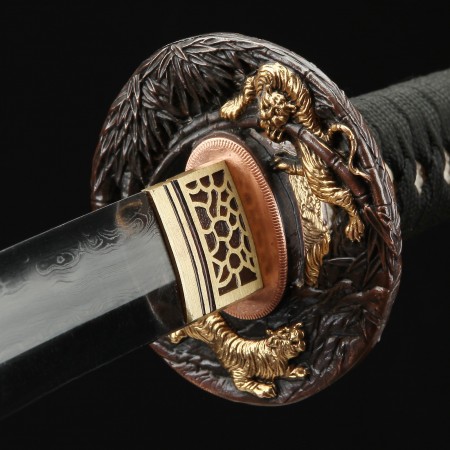
T10 tool steel is a high-carbon mono-steel prized for its consistent grain structure and its responsiveness to clay tempering. When a T10 blade is differentially hardened, the resulting hamon — the temper line between the hardened edge and the softer spine — is crisp and defined, often showing rich activity in the transition zone called the nie and nioi layer. Damascus, or pattern-welded steel, is created by folding and forge-welding two or more steel types together. Its appeal is primarily visual: the etching process after forging reveals flowing grain patterns across the entire blade surface, giving each blade a unique fingerprint. T10 offers a more classical, understated aesthetic where the hamon is the hero; Damascus offers a bolder, more visually complex surface where every inch of the blade tells the story of its making. Both are legitimate choices for a serious collector — the decision comes down to whether you value metallurgical purity or layered visual drama.