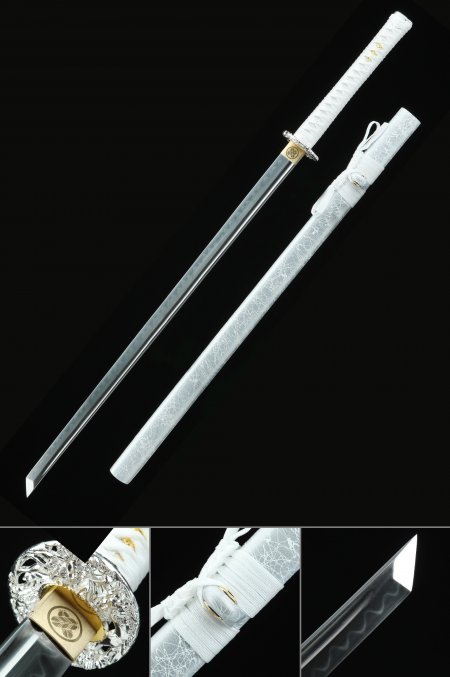
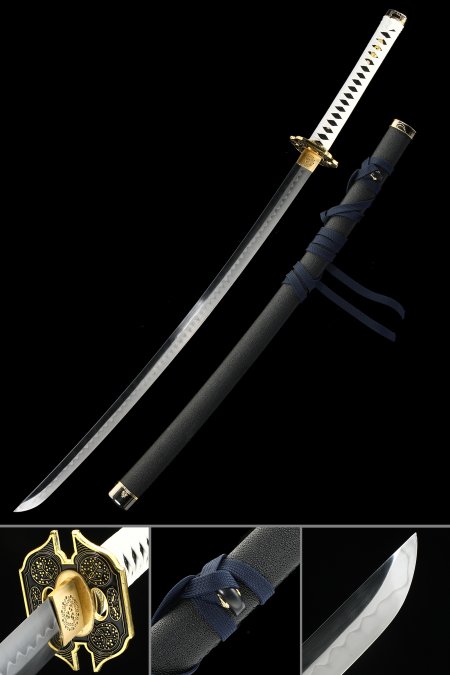
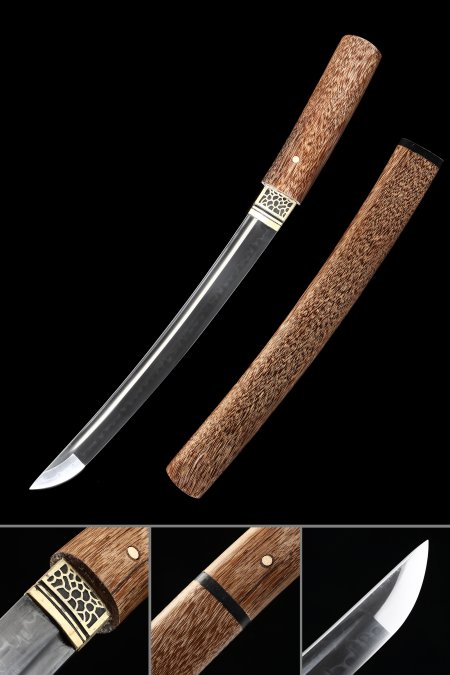
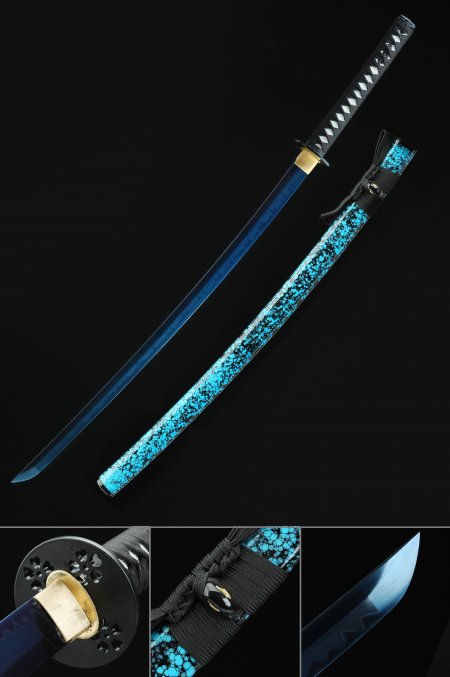
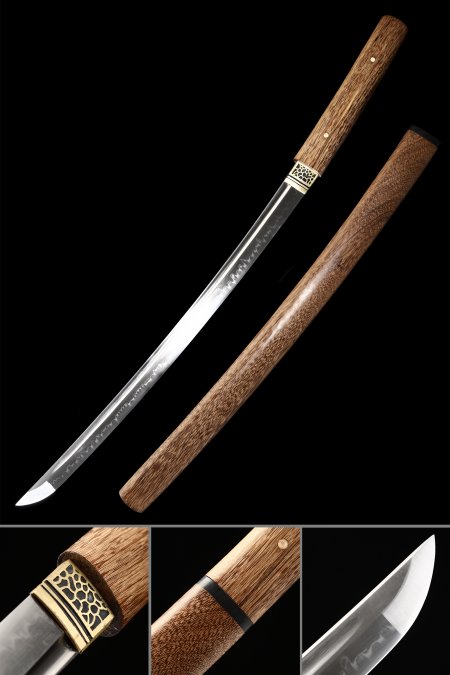
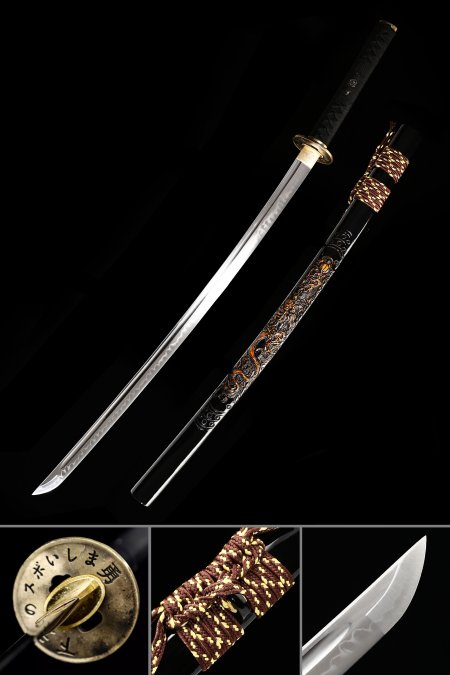
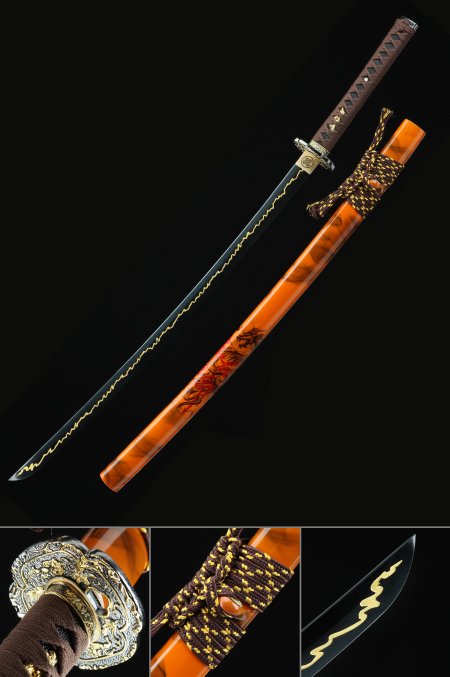
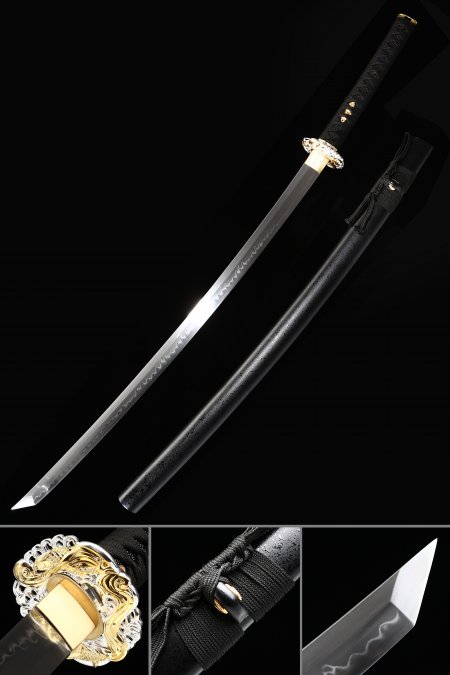
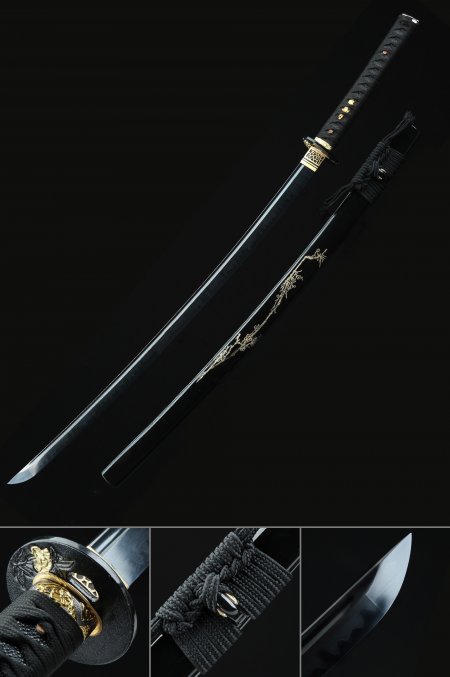
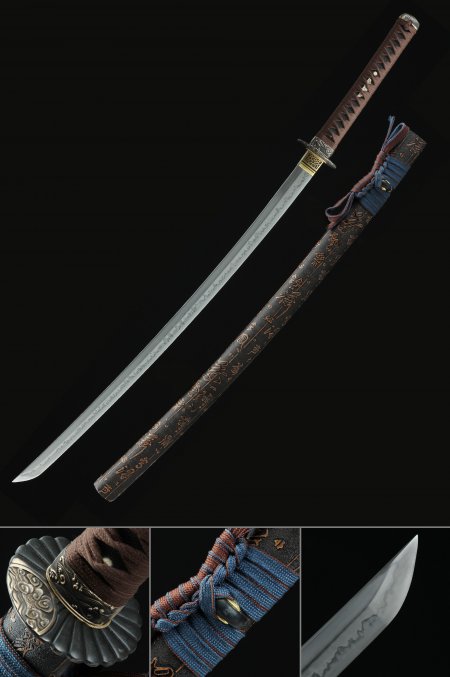
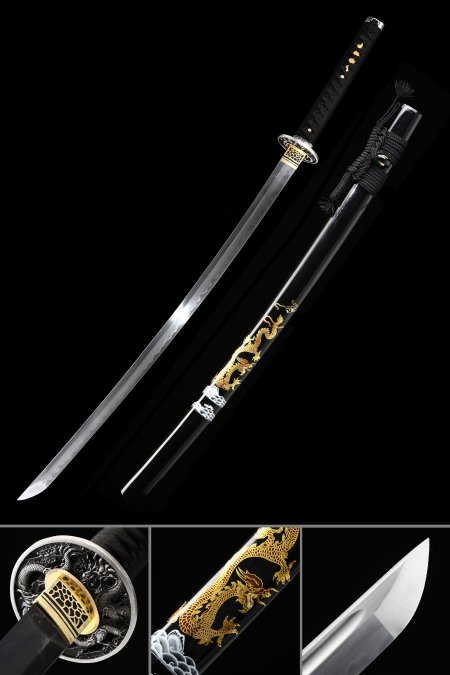
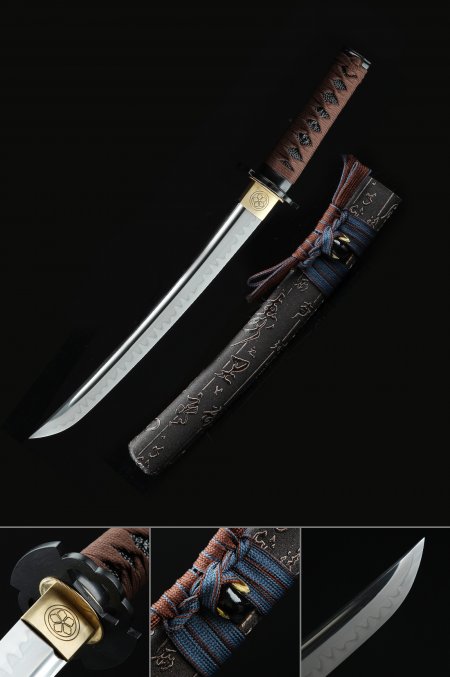
Is the hamon on these wakizashi real or just etched?
Updated Mar 2026
The hamon on T10 clay-tempered wakizashi in this collection is produced through actual differential heat treatment, not acid etching or grinding. During production, clay is applied thicker over the spine and thinner near the edge before quenching. The edge cools faster and becomes harder martensite, while the spine stays tougher. The visible boundary between those two zones is the hamon. Because it results from the steel's actual crystalline structure, it has depth and activity - visible cloud-like formations called nie and nioi - that etched lines simply cannot replicate. Under raking light, the difference is immediately apparent to any collector.