How is a real hamon formed on a T10 tanto blade?

 Updated Mar 2026

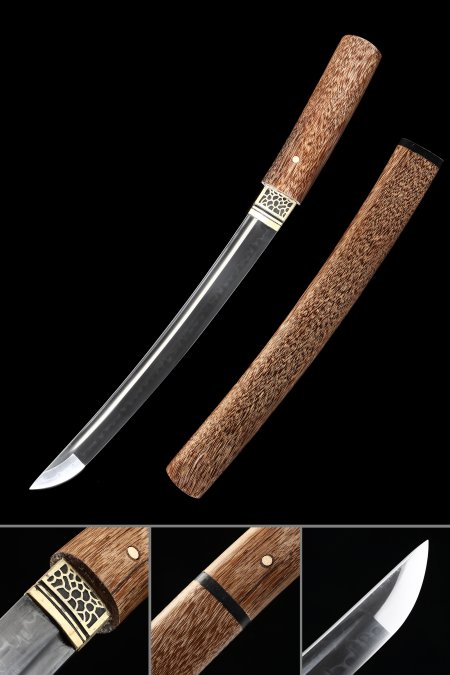
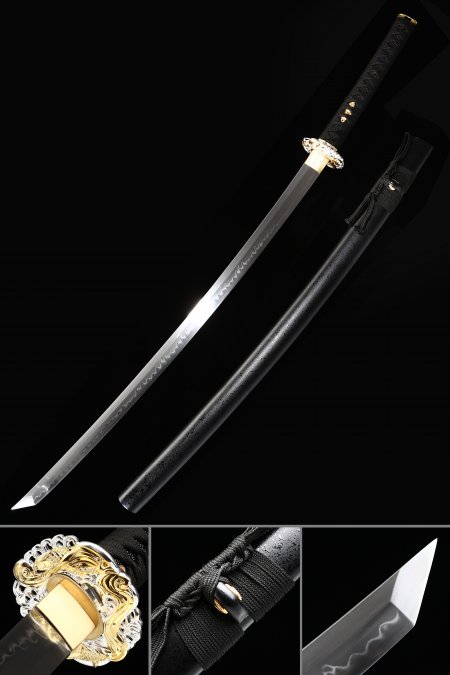
A real hamon is produced through clay tempering, a traditional heat-treatment technique. Before quenching, the smith applies a clay mixture to the blade - thicker along the spine, thinner near the edge. When the blade is heated and then submerged in water, the thinly coated edge cools rapidly, forming a hard martensitic structure. The clay-insulated spine cools more slowly, remaining comparatively softer and more flexible. The boundary between these two zones is the hamon. On T10 steel, which has a relatively high carbon content, this process produces a crisp, well-defined activity line that can show nie (fine crystalline particles) and nioi (a misty boundary effect) visible under good lighting. This is fundamentally different from an acid-etched hamon, which is simply a surface pattern applied chemically without any change to the steel's internal structure.
Popular Products

20% OFFchokuto sword
159.00 USD
199.00 USD
15% OFFwhite katana
209.00 USD
249.00 USD
20% OFFwakizashi sword
219.00 USD
279.00 USD
15% OFFtanto sword
149.00 USD
179.00 USD
20% OFFshirasaya katana
209.00 USD
259.00 USD
15% OFFshirasaya tanto
149.00 USD
179.00 USD
20% OFFjapanese katana
169.00 USD
209.00 USD
15% OFFblack katana
199.00 USD
229.00 USD
20% OFFblue katana
209.00 USD
259.00 USD
20% OFFjapanese katana
209.00 USD
259.00 USD
20% OFF
259.00 USD
329.00 USD
20% OFFshirasaya wakizashi
219.00 USD
269.00 USD
20% OFFchokuto sword
159.00 USD
199.00 USD
15% OFFwhite katana
209.00 USD
249.00 USD
20% OFFwakizashi sword
219.00 USD
279.00 USD
15% OFFtanto sword
149.00 USD
179.00 USD
20% OFFshirasaya katana
209.00 USD
259.00 USD
15% OFFshirasaya tanto
149.00 USD
179.00 USD
20% OFFjapanese katana
169.00 USD
209.00 USD
15% OFFblack katana
199.00 USD
229.00 USD
20% OFFblue katana
209.00 USD
259.00 USD
20% OFFjapanese katana
209.00 USD
259.00 USD
20% OFF
259.00 USD
329.00 USD
20% OFFshirasaya wakizashi
219.00 USD
269.00 USD

Explore Our Collections