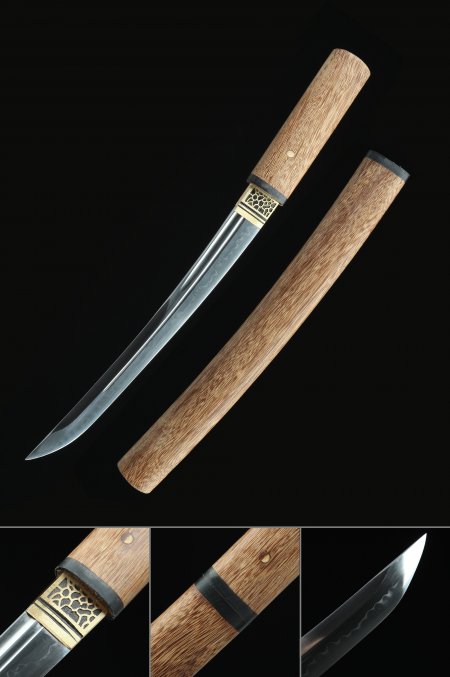
How does 1095 steel compare to T10 tool steel in a hand-forged tanto?
Updated Feb 2026
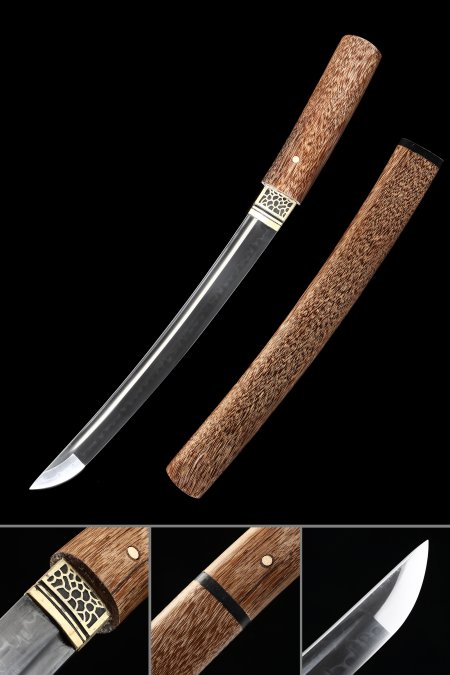
Both 1095 and T10 are high-carbon steels favored for hand-forged Japanese blades, but they differ in composition and performance characteristics. T10 contains a small amount of tungsten (around 0.5%), which improves wear resistance and allows the edge to hold up slightly longer under repeated use. 1095 is a simpler carbon steel without alloying elements, which makes it somewhat easier to forge and sharpen. In terms of visual result, both steels respond well to clay tempering and produce attractive hamon lines. T10 tends to be slightly tougher overall, while 1095 can achieve marginally higher hardness at the edge. For a display-focused collectible tanto, the practical differences are minimal — the choice often comes down to the specific blade’s aesthetics and craftsmanship rather than the steel alone.