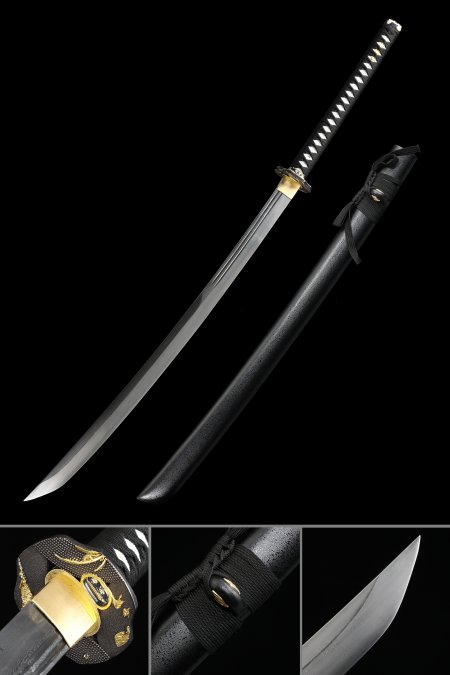
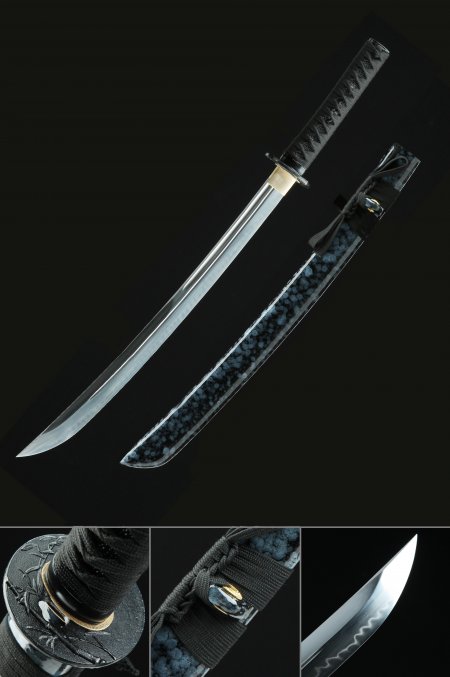
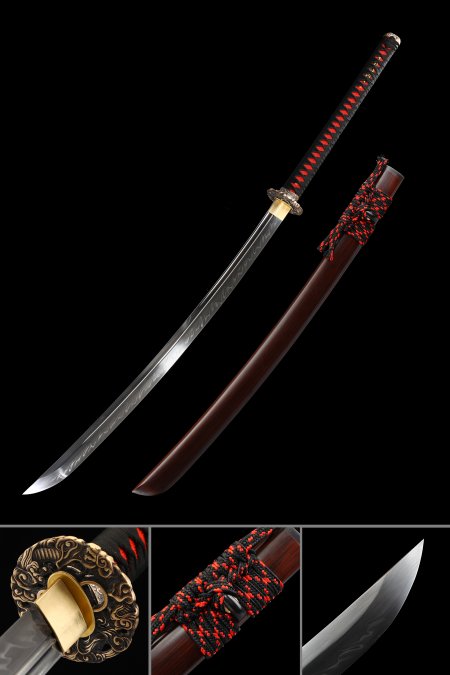
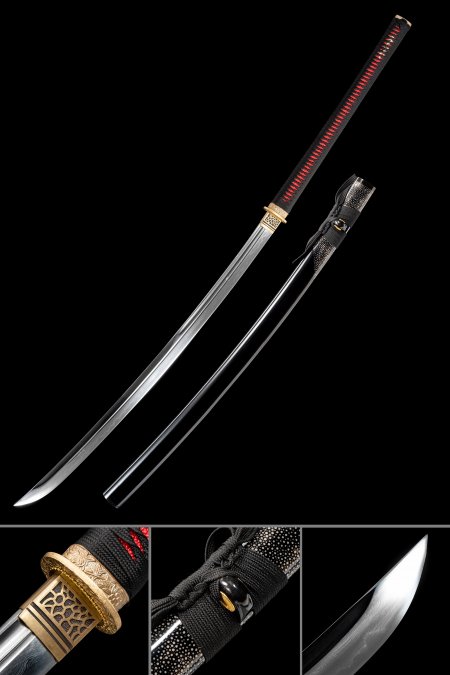
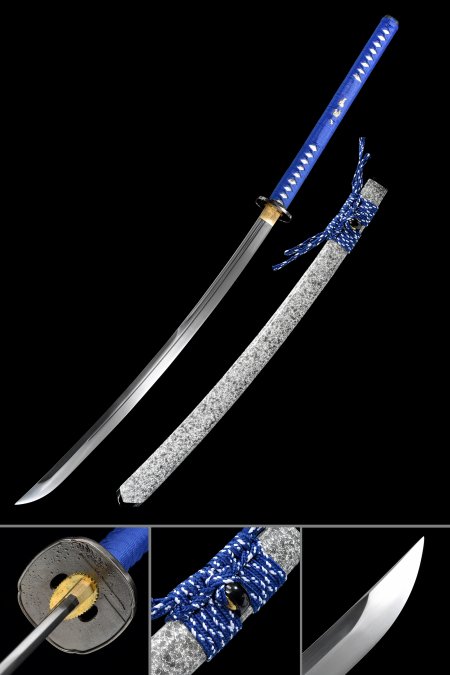
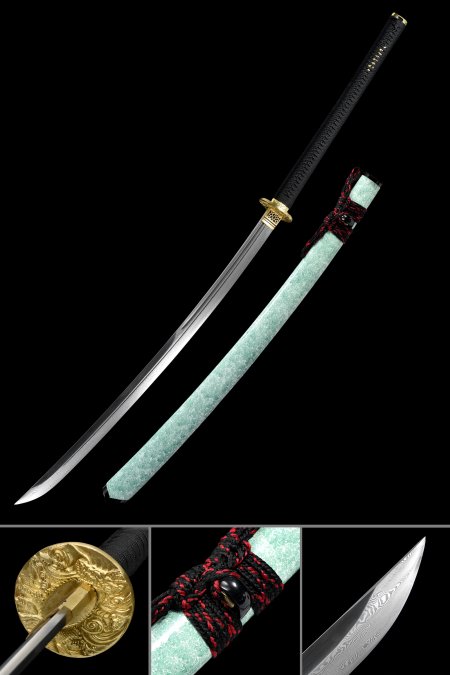
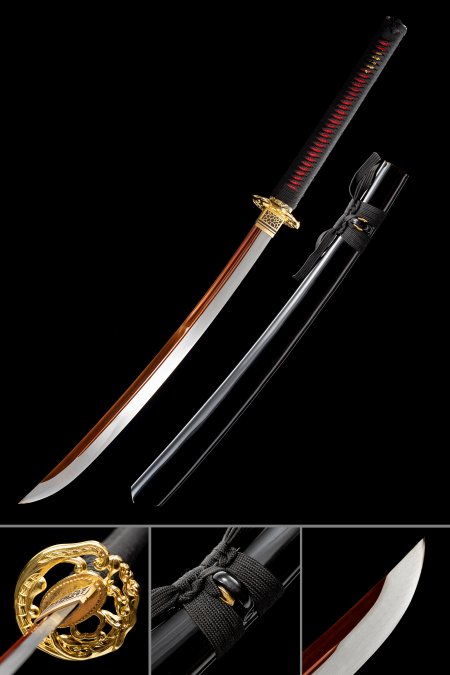
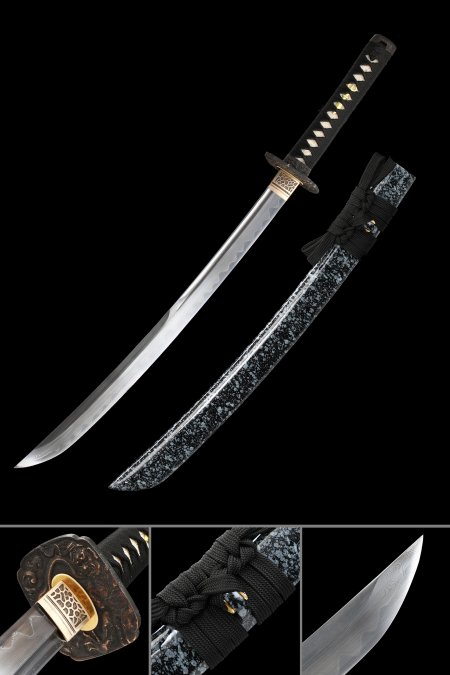
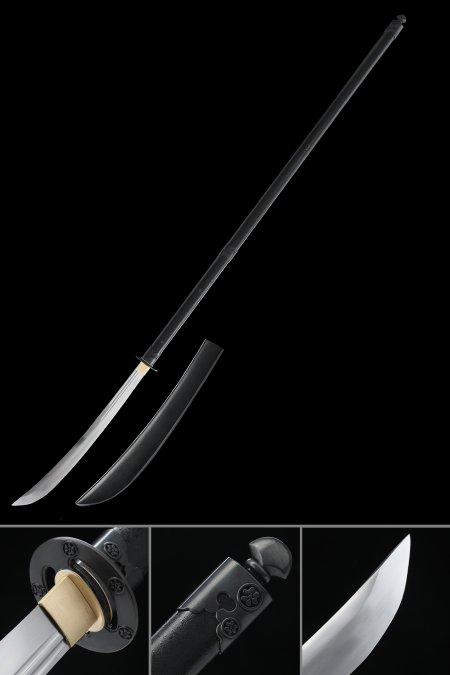
The tsuba on a naginata serves as the handguard positioned where the blade meets the handle, and a black finish — typically achieved through lacquering, blackening, or iron oxidation treatment — carries specific aesthetic weight in Japanese edged-polearm tradition. Historically, darker hardware was associated with restraint and martial refinement, as opposed to ornate gold or mixed-metal fittings used in ceremonial court pieces. For modern collectors, a black tsuba creates strong visual contrast against both bright steel and lacquered hardwood saya, making the overall display composition more cohesive. It also tends to photograph with greater definition under natural or gallery lighting, which is a practical consideration for collectors who document their pieces.