Can engraved hamon on manganese steel replicate the look of clay tempering?
Updated Mar 2026
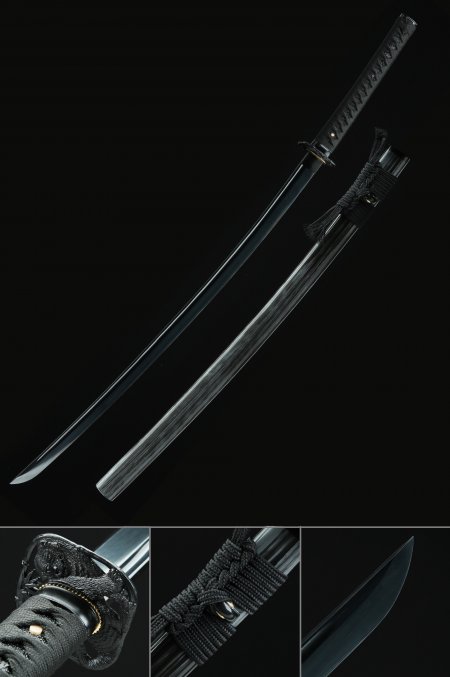
Engraved or etched hamon on manganese steel is a surface treatment rather than a structural feature, but skilled craftsmen can achieve a visual result that reads convincingly as differential hardening to the casual eye. The hamon is chemically etched or mechanically ground into the blade surface, then polished to contrast the lighter edge geometry against the darker body of the blade. The resulting line can replicate geometric patterns — suguha straight lines, notare gentle waves, or gunome repeating peaks — with a consistency that actual clay tempering rarely achieves. Collectors who understand the distinction tend to appreciate the honesty of the technique on a manganese steel piece, while those newer to Japanese blade aesthetics often find it a visually compelling entry point into understanding what hamon represents in classical sword-making tradition.