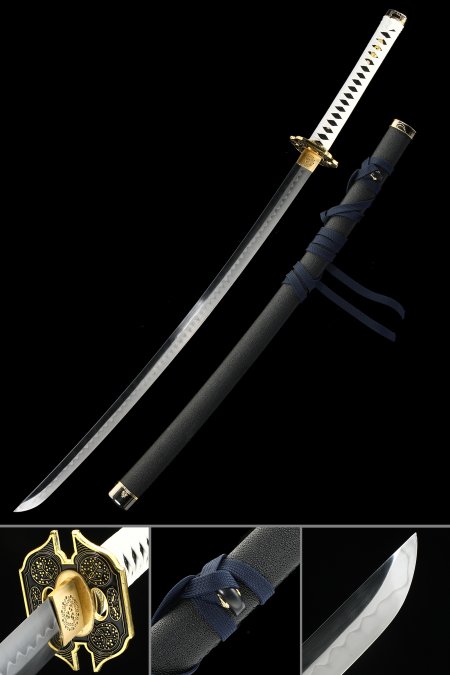
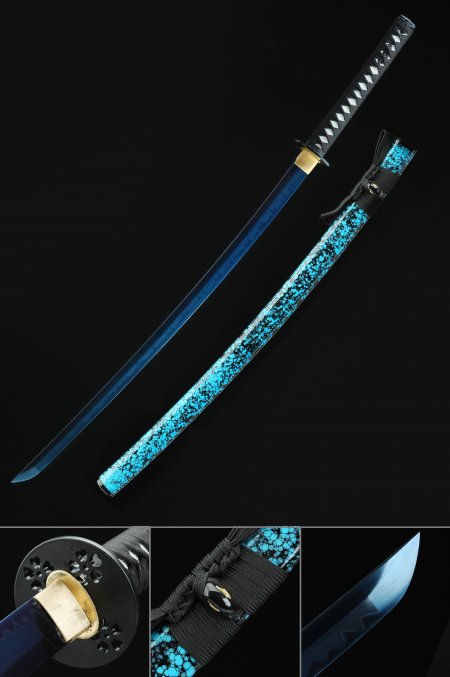
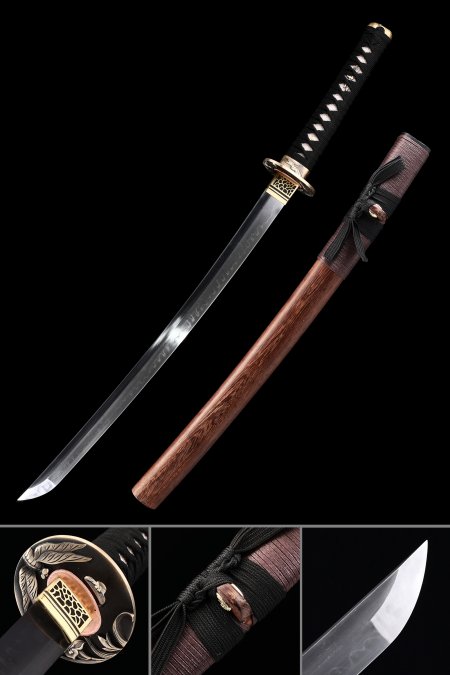
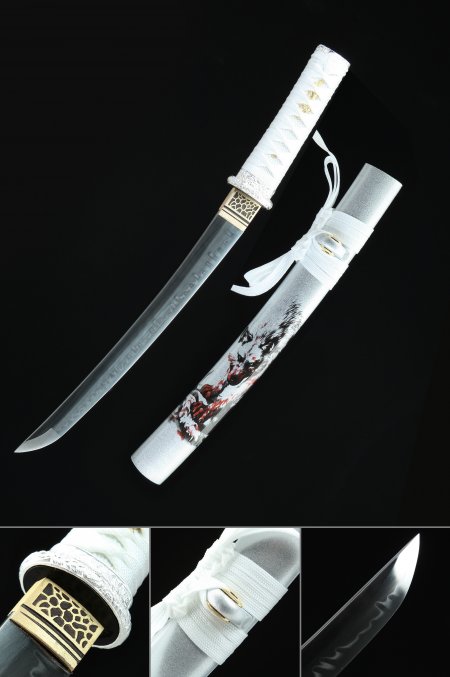
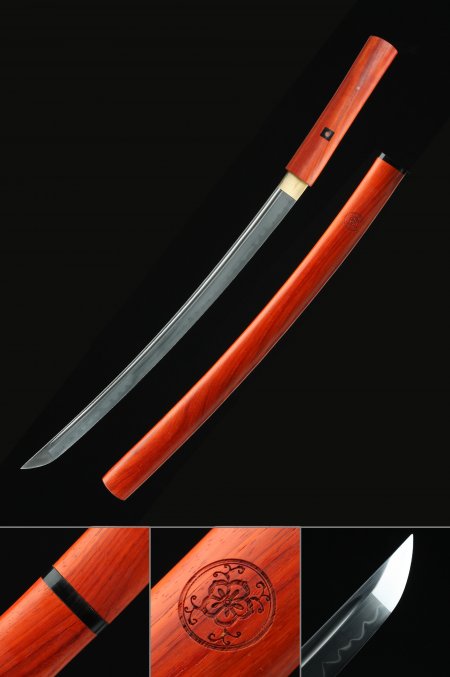
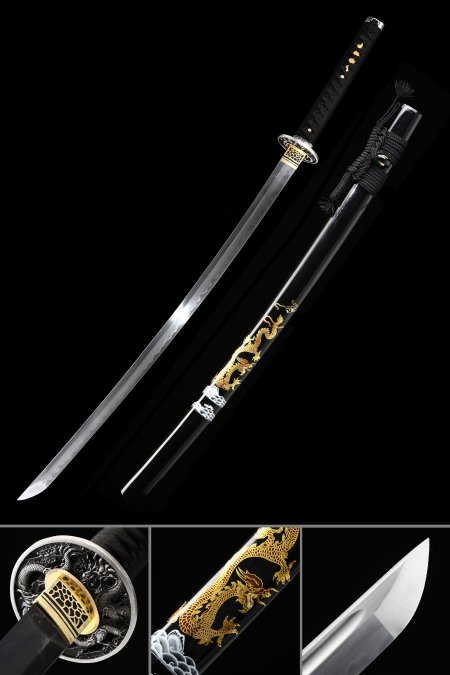
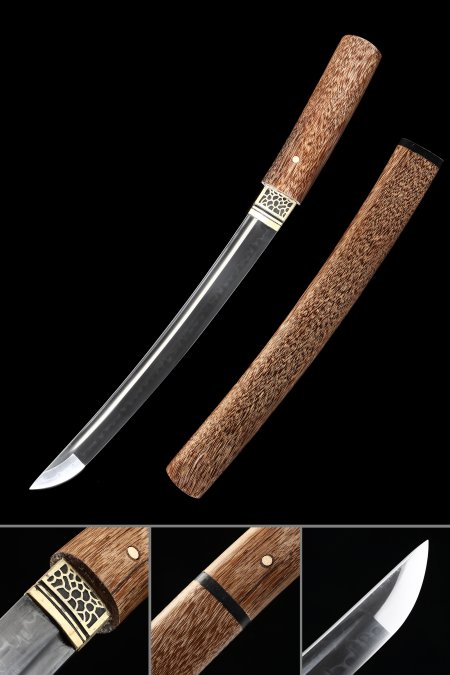
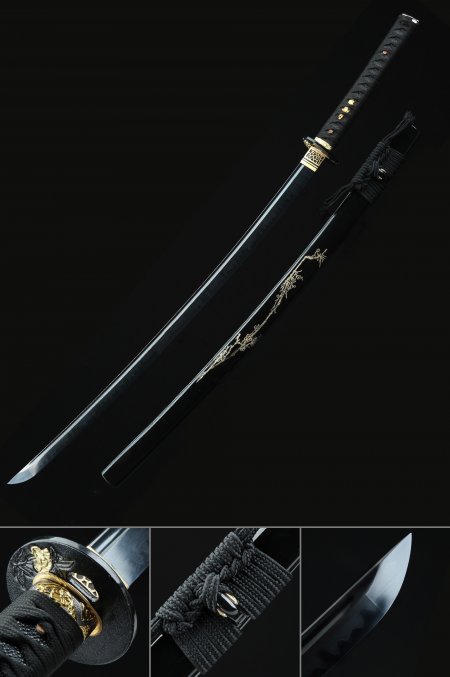
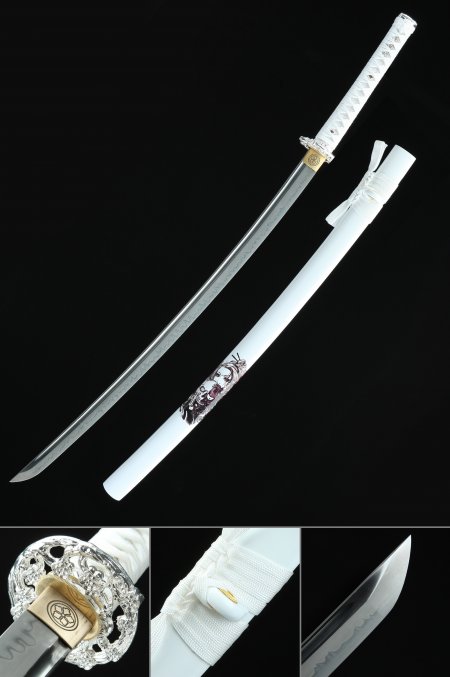
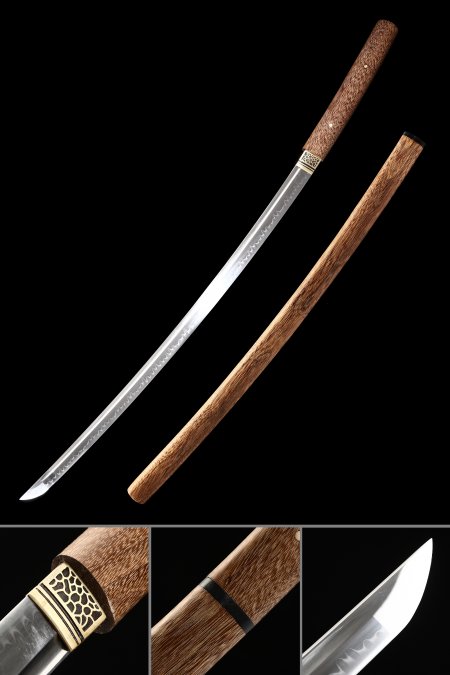
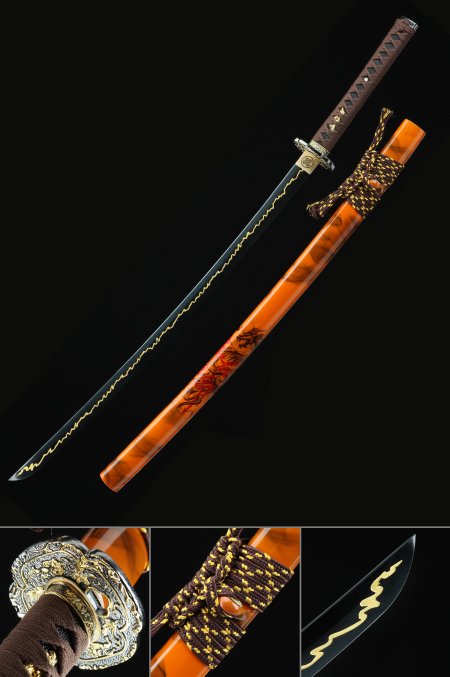
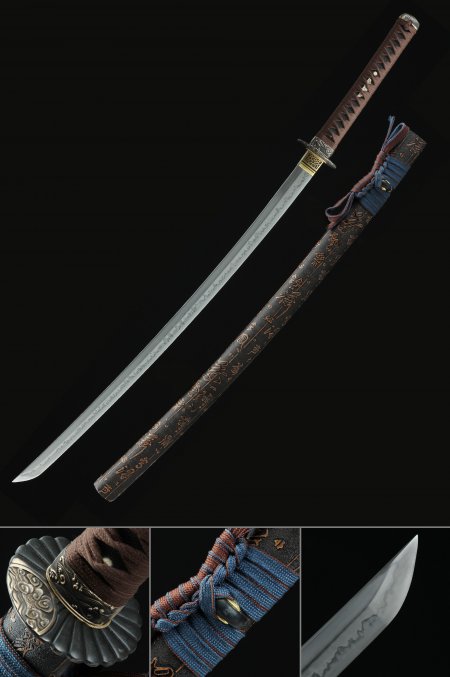
Several pieces in this collection, particularly those crafted in high manganese steel and T10 steel, feature a genuine hamon produced through the traditional clay tempering process known as tsuchioki. Clay is applied along the spine before the blade is quenched, creating a differential hardness zone that results in the organic, undulating temper line visible along the edge. This real hamon has subtle activity - nie and nioi - visible under good lighting that acid-etched faux hamon simply cannot replicate. Product descriptions specify whether each blade carries a real hamon, allowing collectors to make an informed selection based on their priorities.