Free Shipping
179.00 USD
ON SALE! 20% OFF
Was: 229.00 USD

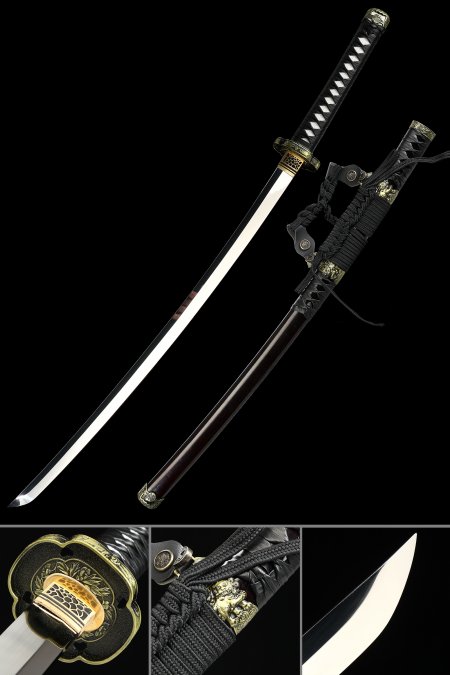
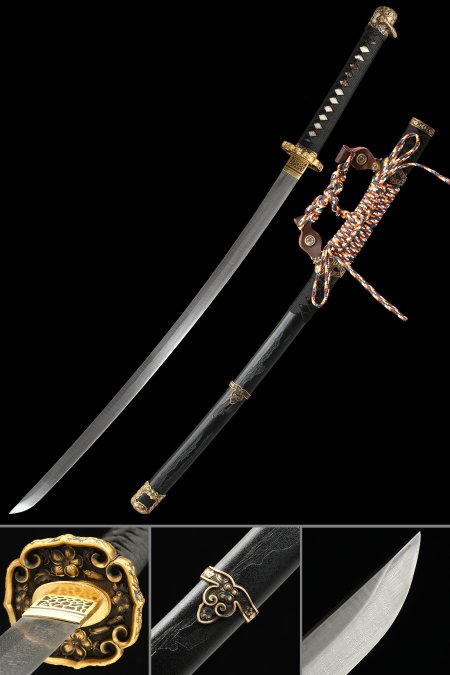
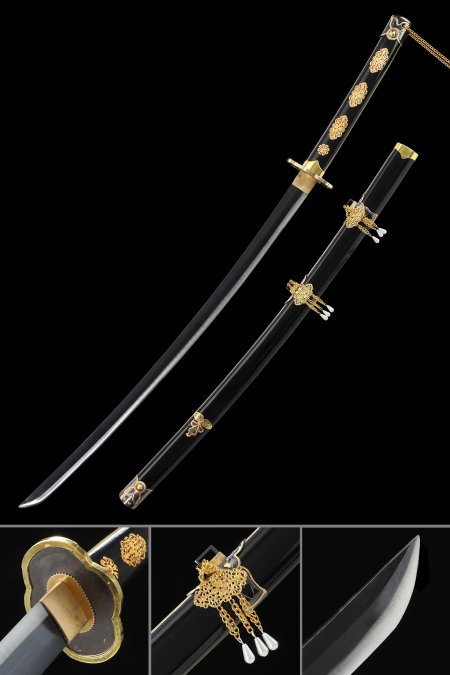
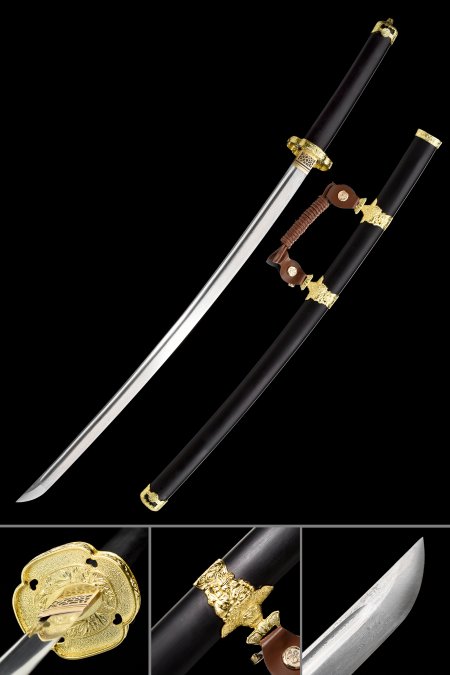
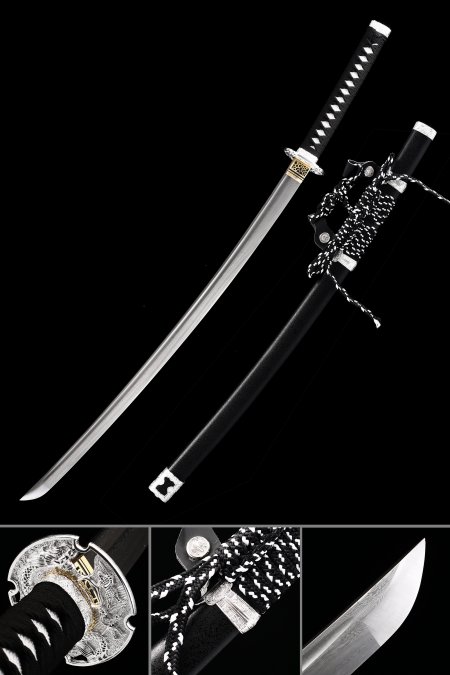
The Black Tachi Sword collection brings together hand-forged long blades defined by dramatic black lacquer saya, authentic hamon lines, and premium steel choices ranging from 1095 carbon to layered Damascus - each piece a serious statement for the discerning collector. Every sword in this lineup is crafted with full-tang construction, ornate tsuba, and meticulously wrapped tsuka, honoring the aesthetic traditions of feudal Japanese sword culture. Explore the collection and display a piece of history with confidence - all orders ship free with hassle-free returns.
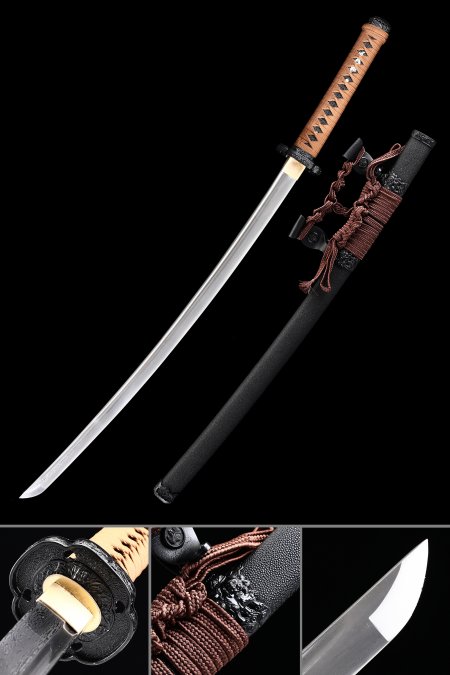
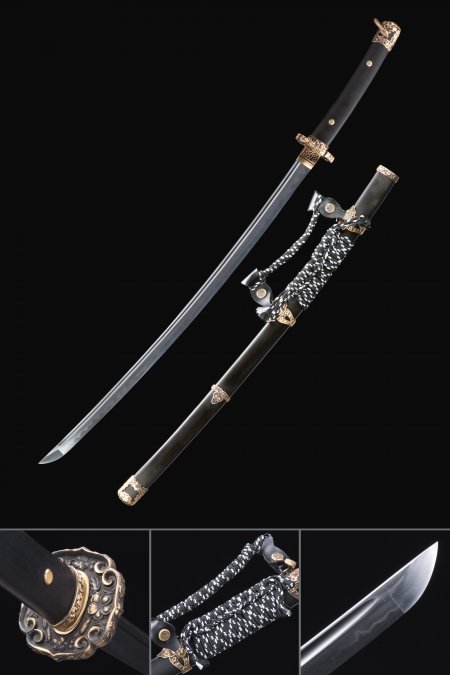
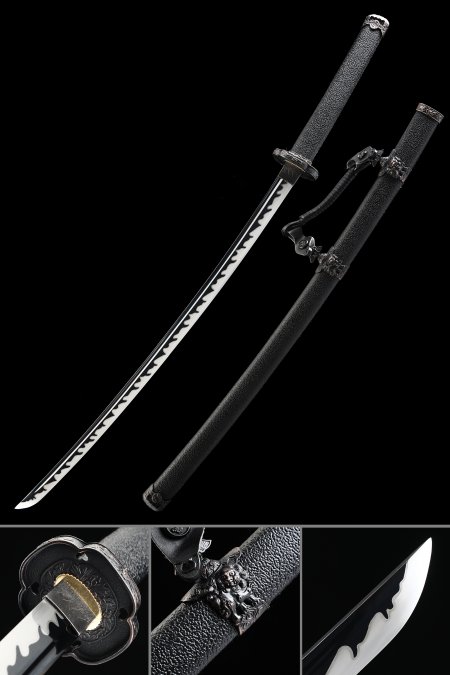
Really love the level of detail put into the blade.
 |
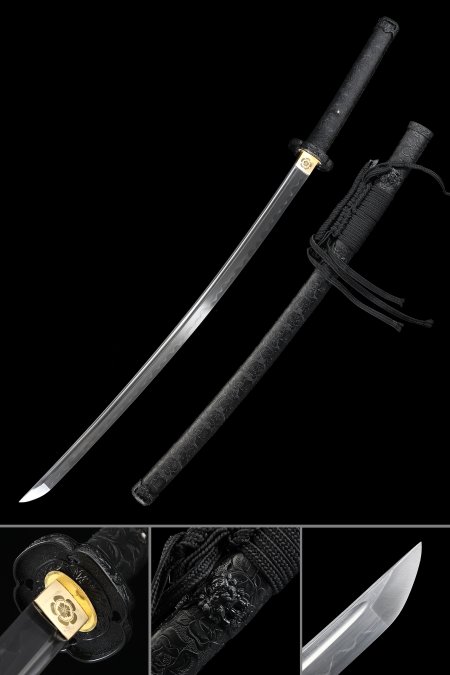
Clay Tempered Tachi Odachi Sword in High Manganese Steel with Real Hamon and Black Floral Saya |
Product is as advertised! Great craftsmanship, build and design. No flaws detected. AWESOME PRODUCT!! THANK YOU!
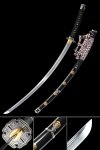 |
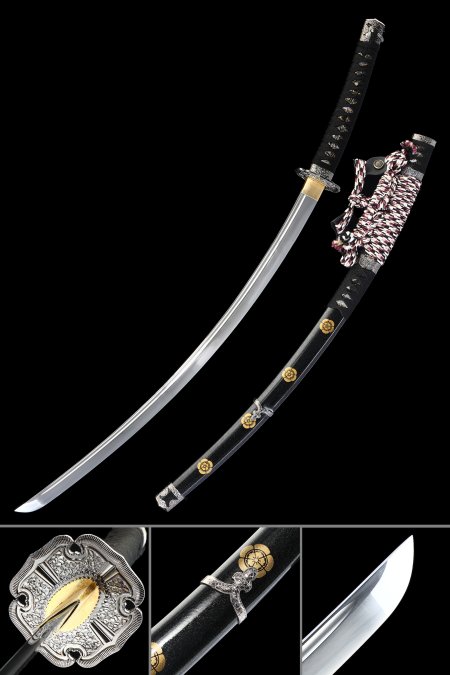
1095 Carbon Steel Odachi Sword Full Tang with Black Lacquer Saya and Silver Scroll Tsuba |
Had a slight tweak to it either from shipping or during the quenching process but very decent edge doesn't affect the cutting performance much hard to notice unless you point out the bend but its $230 so cant compalin to much it functions and holds strong
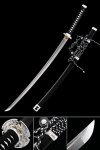 |
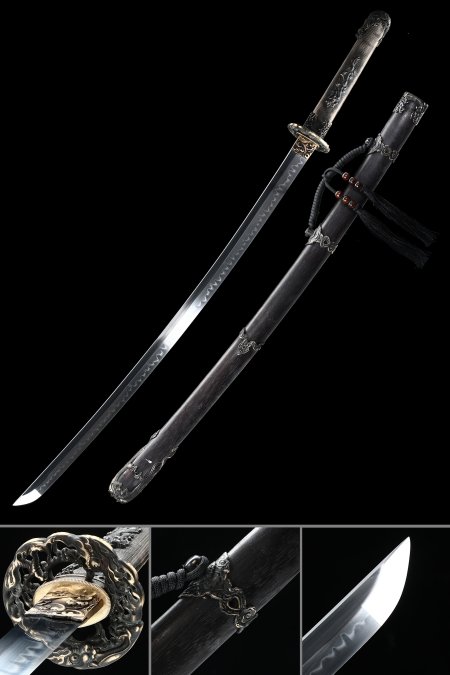
Damascus Steel Katana with Dragon Tsuba - Black Lacquer Saya, Black-White Ito Wrap |
I have purchased these three swords as samples to see if they would be a viable product line to offer in our businesses and martial art centers.
Here are my findings:
All three swords are aesthetically pleasing and the fittings are ornate. I feel these would be a pleasant addition to a display or collection or for a beginning practitioner.
For someone looking for a sword to practice or cut with regularly, the product we received may not be the best products. Here are some reasons for this.
Two of the three blades were noticeable sharpened on a belt grinder and the edge geometry was a bit inconsistent. 2 of the 3 passed a paper cut test.
The two "folded" blades (the katana and naginata) are not folded steel, even under magnification. We have also observed a few imperfections such as chipping, staining and rolled tips but those appear to only be cosmetic. While the folding is not critical with modern steel, the appearance it provides would help sell the product and was a reason we chose them. The unfolded T10 material would be functionally sufficient. Also note that the cost was higher for these "folded" versions.
The hamon on each blade was very light, though looks nice, does not carry the deep gray appearance despite the fine polish. I am concerned how sufficiently heat treated the edge may truly be.
The fitment of the habaki is fairly loose, only fitting the mune and ha properly.
The Tachi shares the same profile and curvature as the katana and is the same length despite being listed as a longer blade.
All three swords show some fitment issues where things are misaligned or roughly ground to fit. The koiguchi and shito-dome are prime examples of this on the naginata as they exhibit grinding or chisel marks of fitting the blade. The naginata Saya sticks at every insertion and retraction of the blade.
The tsuka profiles of each were a bit blocky and the tsuka-ito is fairly wide, adding bulk to the grip. Very much a factory made handle.
Each sword came with manual the states the blades should not be used for cutting. We were able to confirm with customer service that it was ok to perform tameshigiri with the blades. They expressed the manual was a meant to be more of a cautionary document than a disclaimer.
We completed testing the sample products. In short, they do cut but only ok. We performed 6 cuts with each blade on rolled tatami omote, mounted on a regulation stand, in a vertical fashion. The tatami was rolled tight with no center material such as bamboo to ensure consistency in each cut.
We observed some ha (edge) deformation and marks left on the hiraji and shinogi (angled blade body surface) but nothing substantial. This is likely due to the edge and blade geometry being fairly flat (vs more convex) and a maybe the blades not being heat treated as hard as they could be.
We also did notice the fuchi was loose on the katana after completing the cuts. This can be corrected easily but should not happen on a new blade.
For a newer practitioner, these swords would be fine.
I am a bit discouraged with the customer service when we provided similar feedback and asked about the katana and naginate not being folded. They were somewhat accusatory and reluctantly did provide an RMA stating that we could return the blades only if they were still in the original packaging and unused. In short, we opted not to return the swords due to the packaging being discarded and to continue our testing. Our intent is to keep these products as examples for our clients and students and to showcase features that may or may not be satisfactory.
For practitioners seeking a functional sword, there may be some value at investigating True Katana's performance line. My experience may not be inclusive to all their products but the customer service was disconcerting. I will recommend the hanwei product line before True Katana in the future.
|
Clay Tempered Tachi Odachi Sword in High Manganese Steel with Real Hamon and Black Floral Saya |
it’s pretty cool sword, looks pretty nice. i got it hanging in my room if anyone tries to break in my home. makes me feel like a japanese samurai
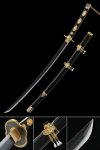 |
Tsurumaru Kuninaga Tachi Sword in 1060 Carbon Steel - Black & Gold Touken Ranbu Replica |
Amazing work on the blade, I just wish the guard was metal too, instead of plastic, other than that it’s pretty nice
|
Clay Tempered Tachi Odachi Sword in High Manganese Steel with Real Hamon and Black Floral Saya |
Great product with very nice steel! Probaly should have gotten a less flashy model but this one is very pretty. Long shipping process with an added shipping request that I flatly refused to pay. Thought that might wreck the deal but it still came in. I will buy matching shorter versions at some point.
|
Damascus Steel Katana with Dragon Tsuba - Black Lacquer Saya, Black-White Ito Wrap |
Item arrived on time very pleased with my purchase .just what I wanted a working man's sword.
|
Clay Tempered Tachi Odachi Sword in High Manganese Steel with Real Hamon and Black Floral Saya |