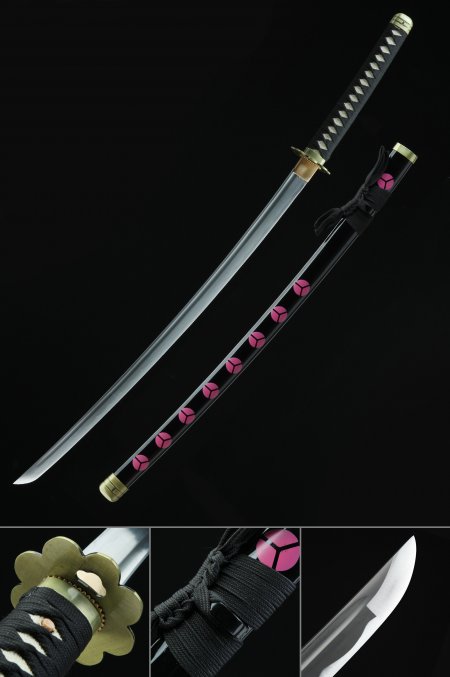
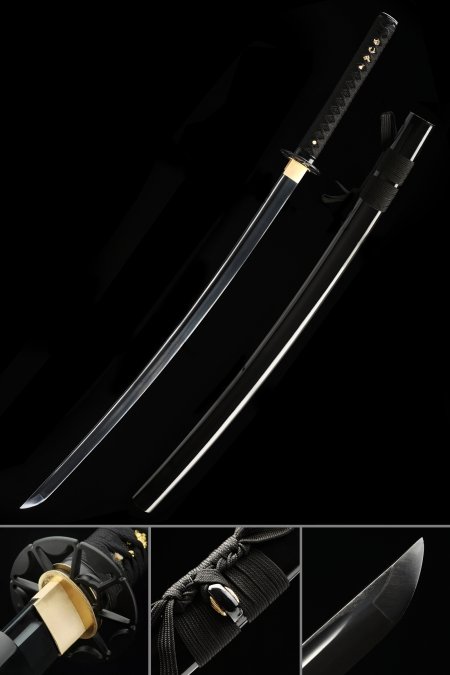
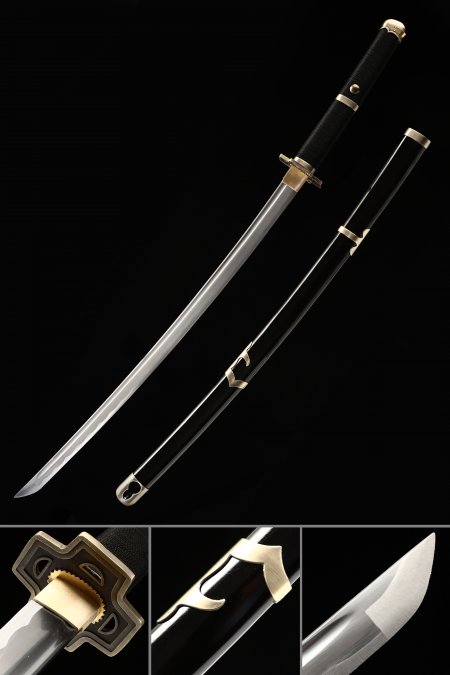
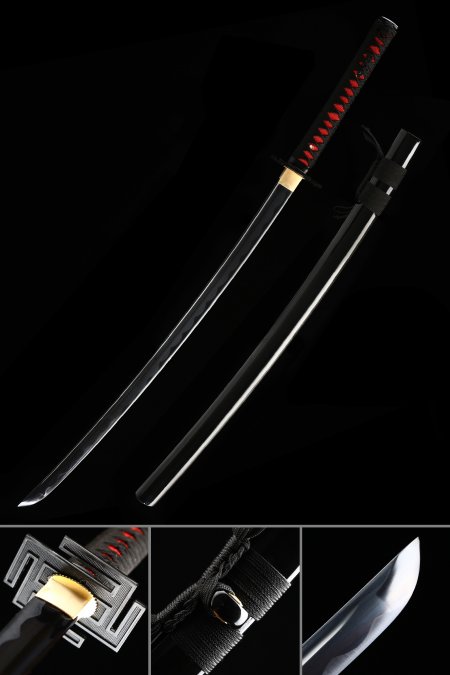
How is a real hamon different from an etched or acid-washed hamon?
Updated Mar 2026
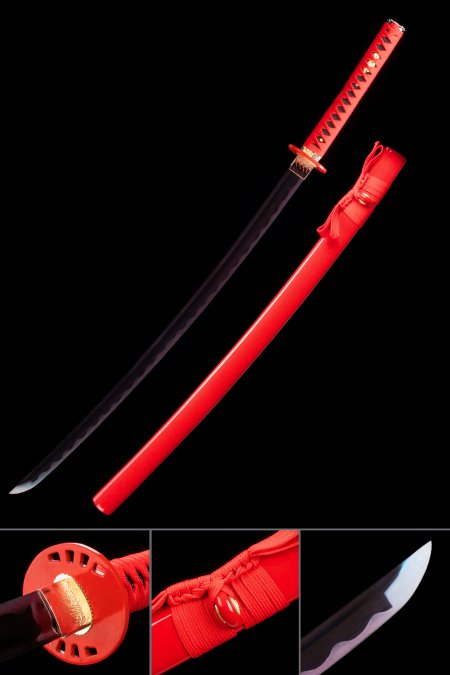
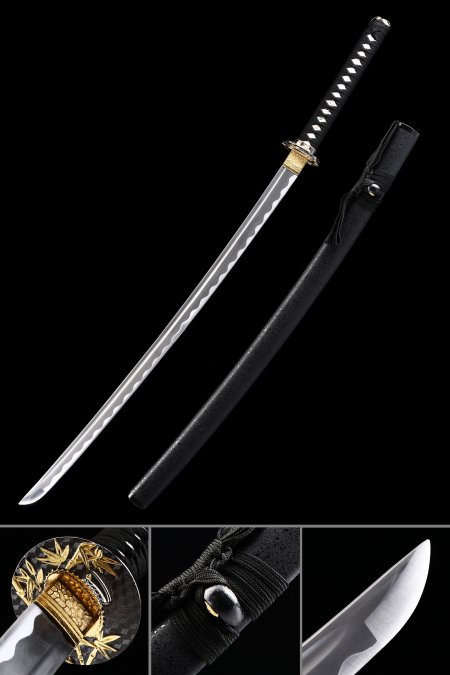
A real hamon is the direct visual result of differential clay tempering during the heat treatment process. Before quenching, a clay mixture is applied along the spine, leaving the edge area exposed. The unprotected edge cools faster, hardening into martensite, while the clay-covered spine cools slowly and remains tougher. The boundary between these two zones is the hamon. An etched or acid-washed hamon, by contrast, is applied after the fact with chemicals to simulate this appearance on a blade that was not clay tempered at all. On a genuine clay-tempered blade, the hamon will appear as a milky, active line with natural variation - nie (crystalline particles) and nie activity visible under good light - rather than a uniformly sharp, symmetrical line. Several pieces in this collection are explicitly noted as carrying real hamon, which is the correct term for this authentic tempering artifact.