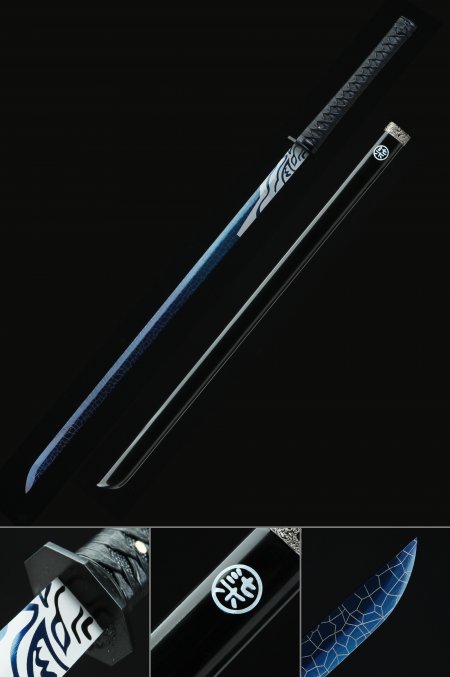
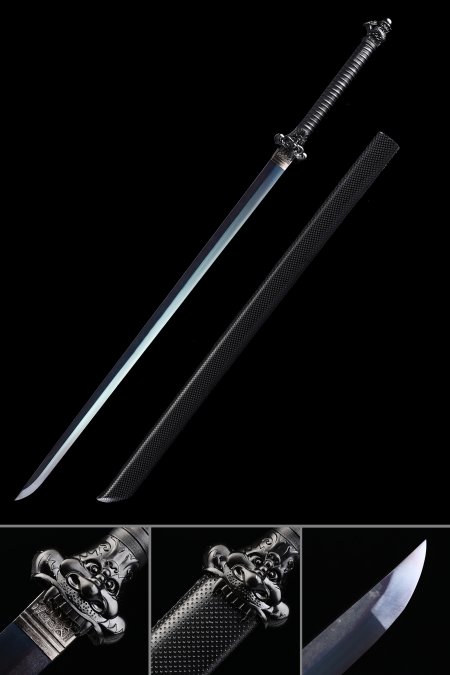
How does 1095 carbon steel compare to manganese steel in a ninjato?
Updated Mar 2026
Both materials are well-suited for display collectibles, but they behave differently in meaningful ways. 1095 carbon steel has a higher carbon content - roughly 0.95% - which produces a denser grain structure, supports a more defined hamon after differential heat treatment, and takes a sharper edge geometry. It is the preferred choice for collectors who want a blade that closely mirrors traditional Japanese forging aesthetics. Manganese steel, by contrast, trades some of that edge hardness for significantly higher tensile strength and flexibility. It resists deformation under lateral stress better than standard high-carbon stock, which makes it an excellent choice for pieces that will be handled frequently, displayed without a saya, or mounted horizontally over long periods. For a purely display-oriented collector, the choice often comes down to finish preference and whether the hamon line is a priority feature.