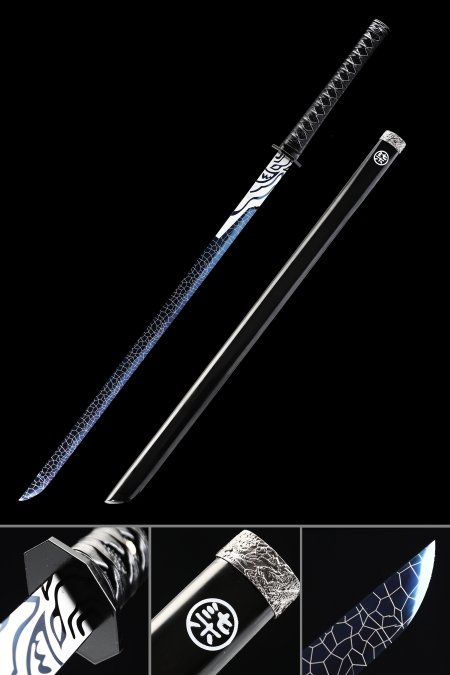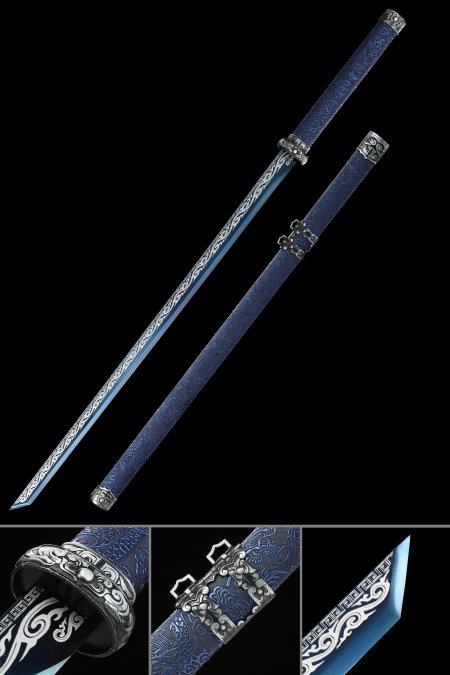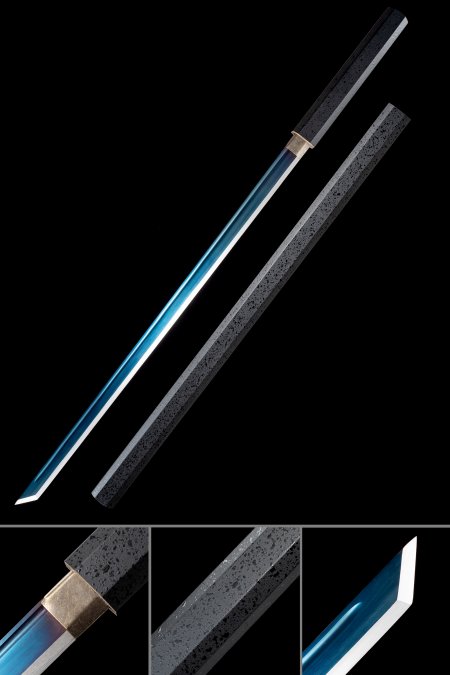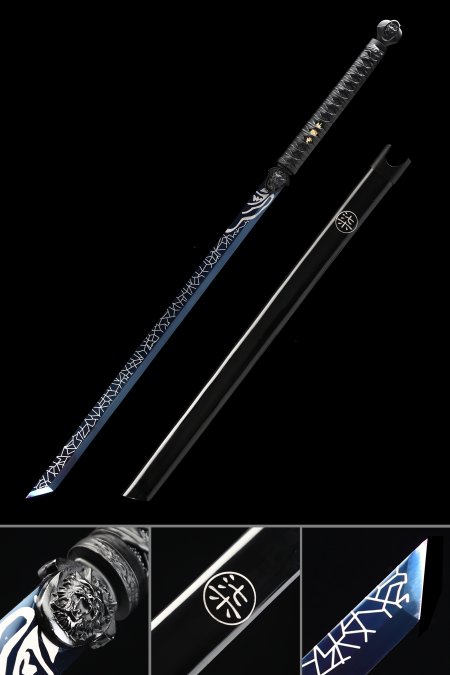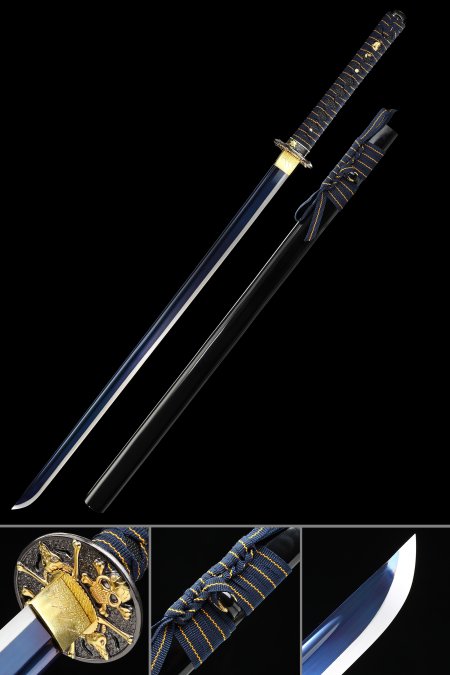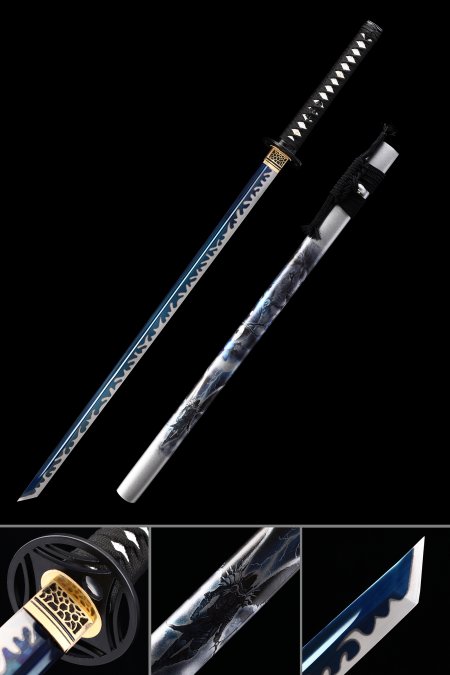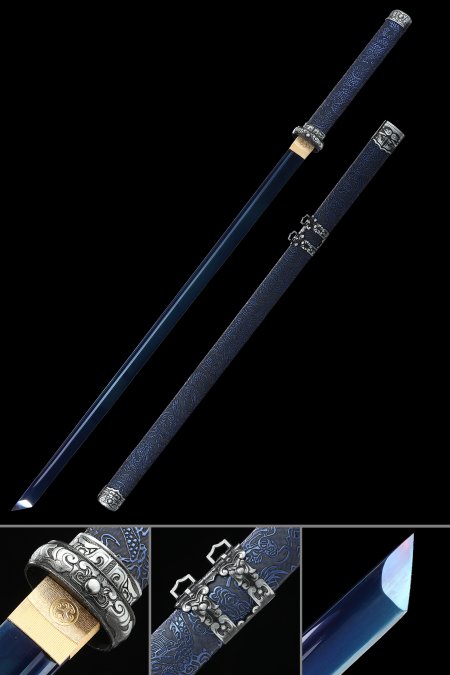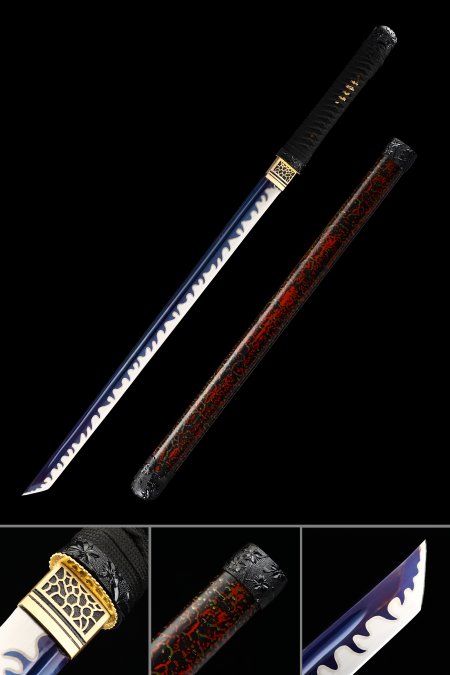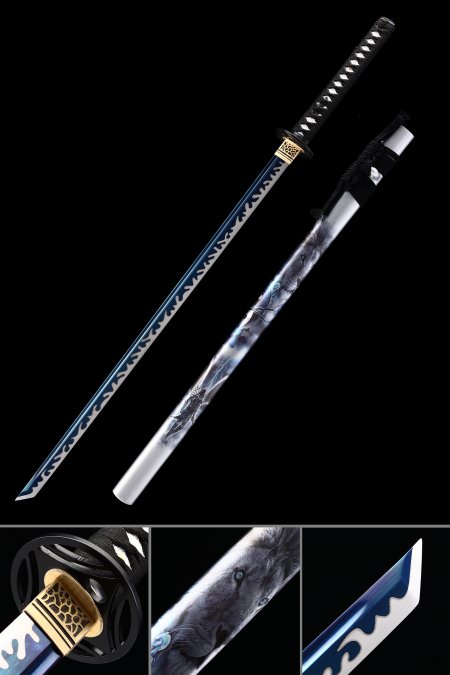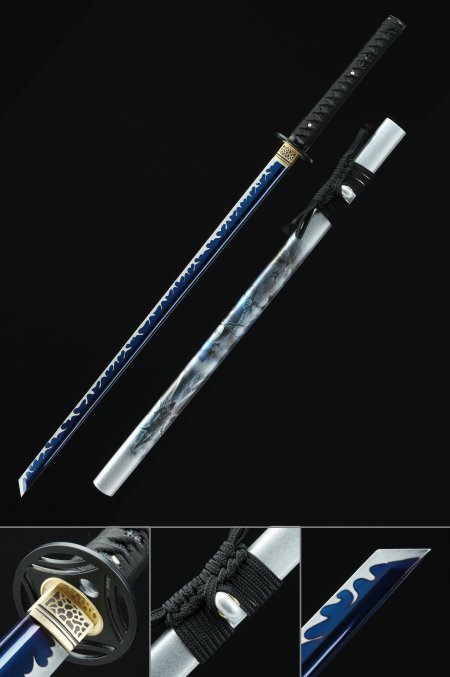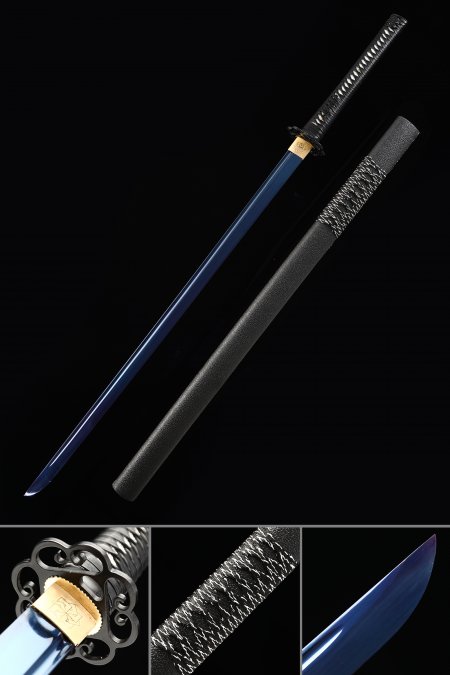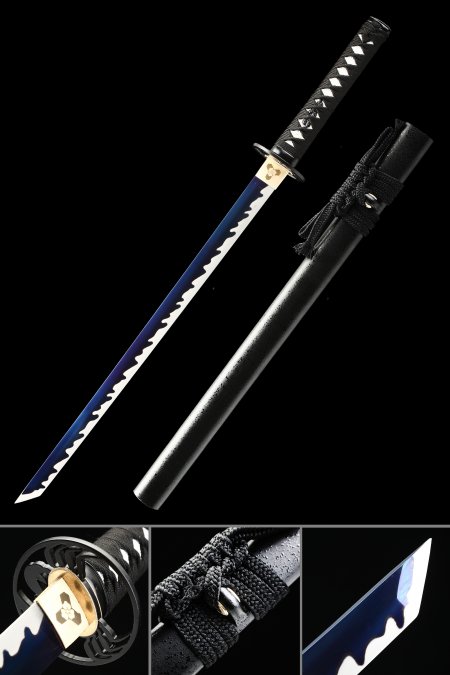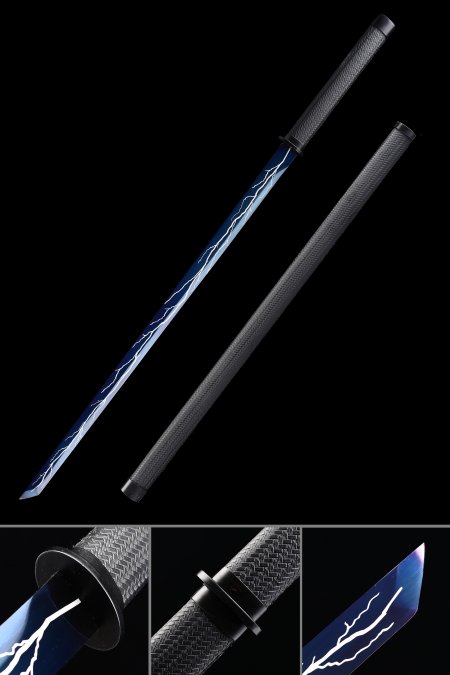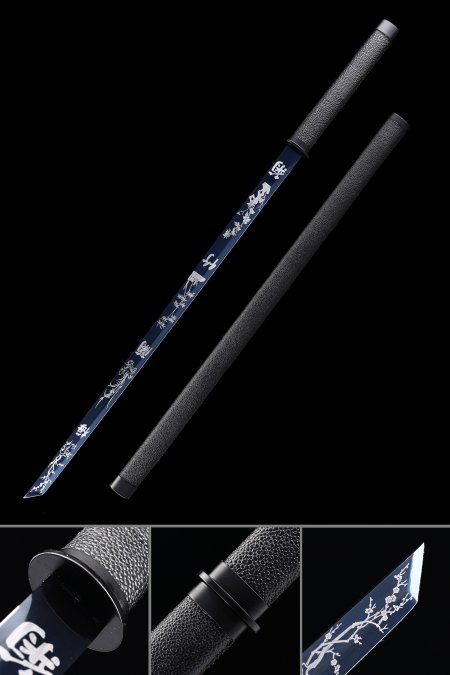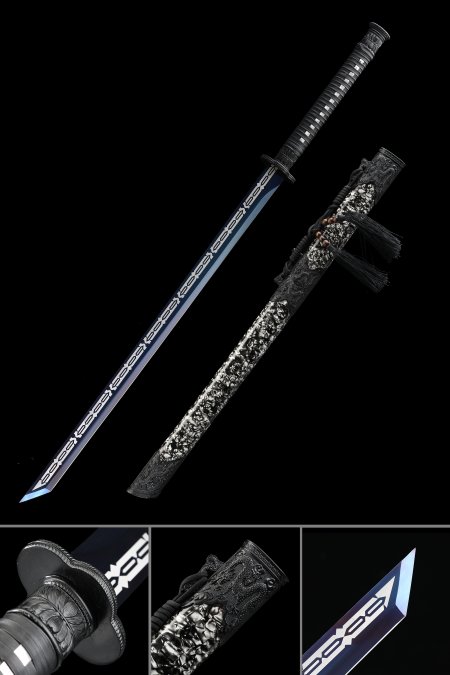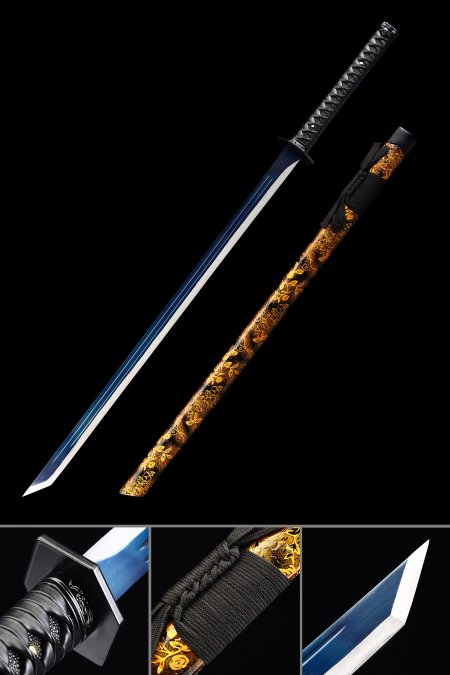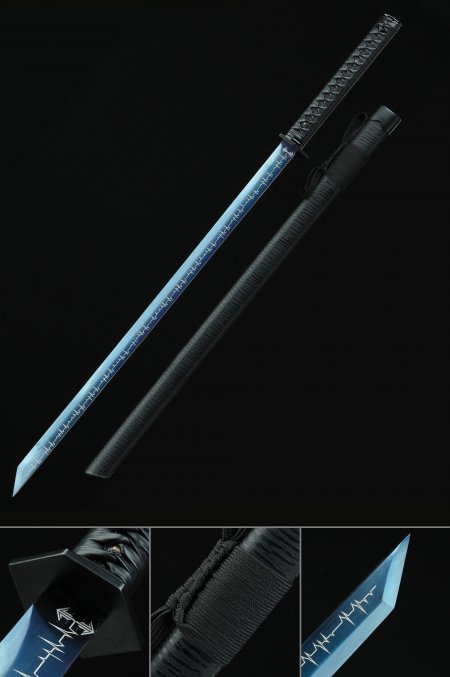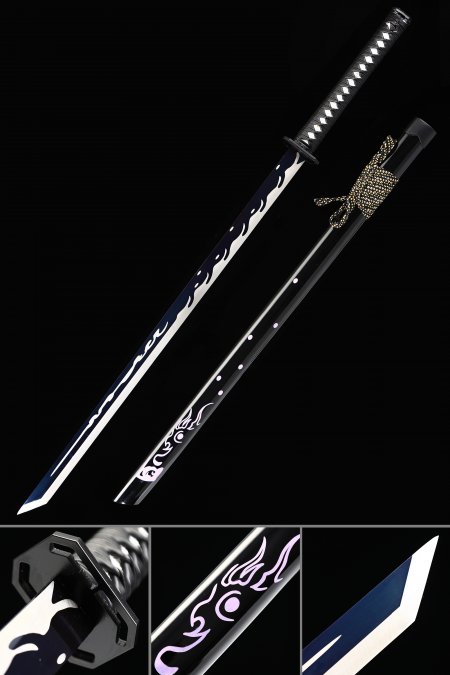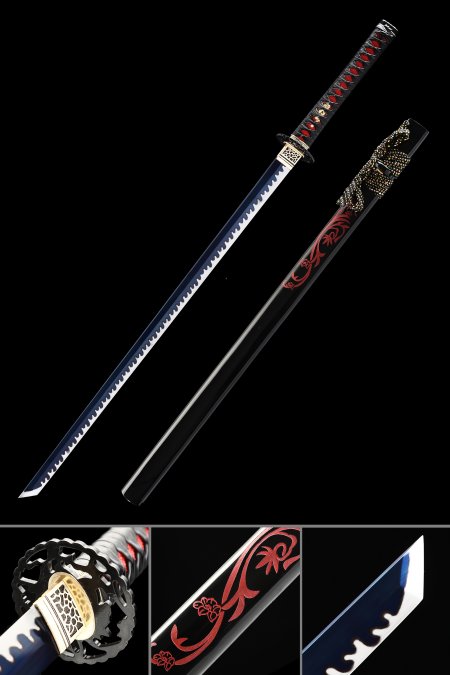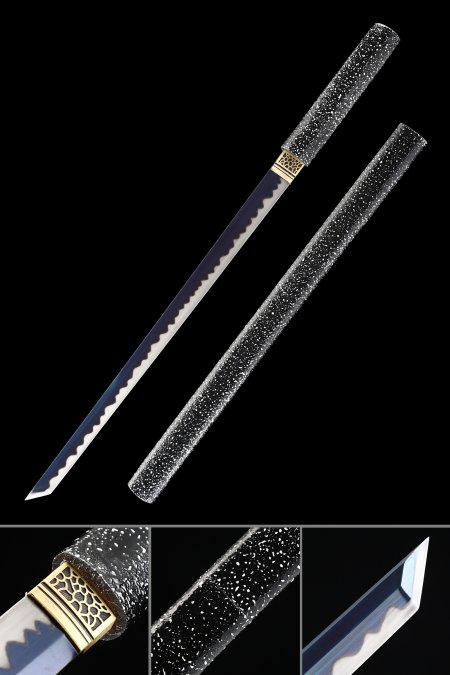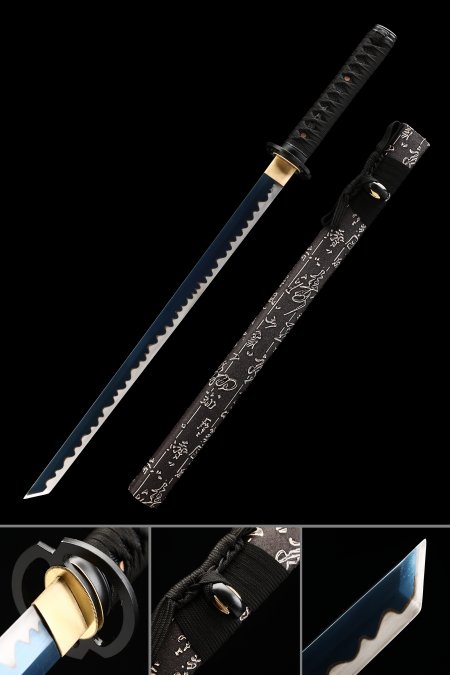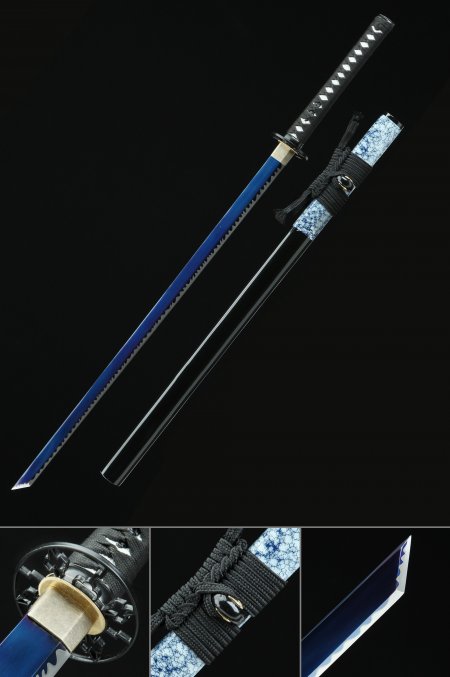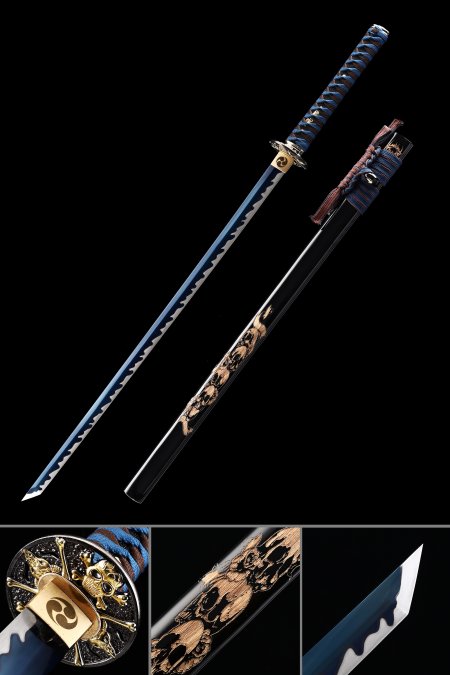
Blue Blade Ninjato

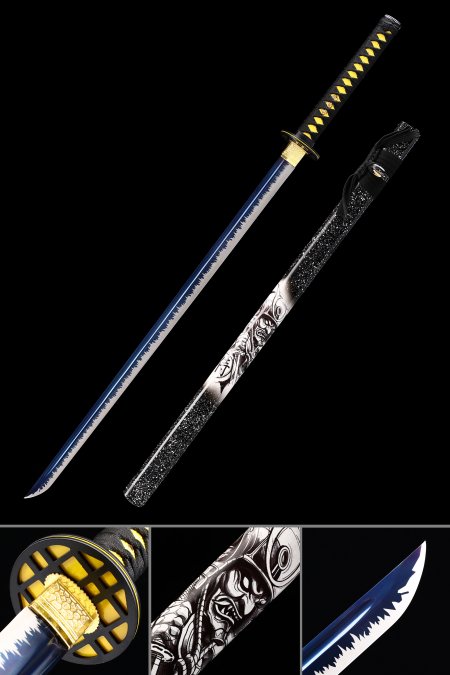
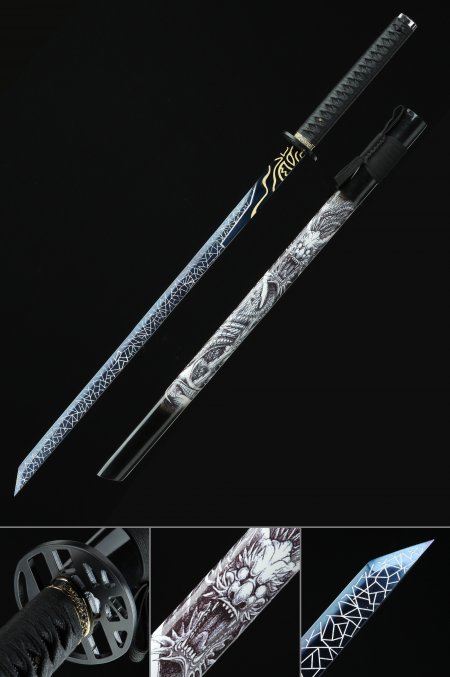
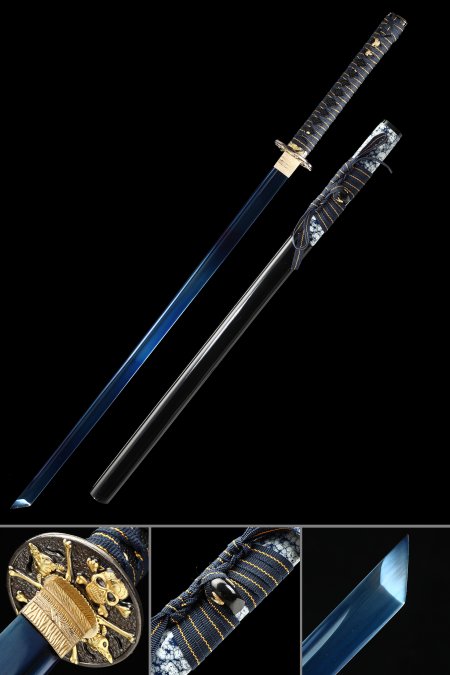
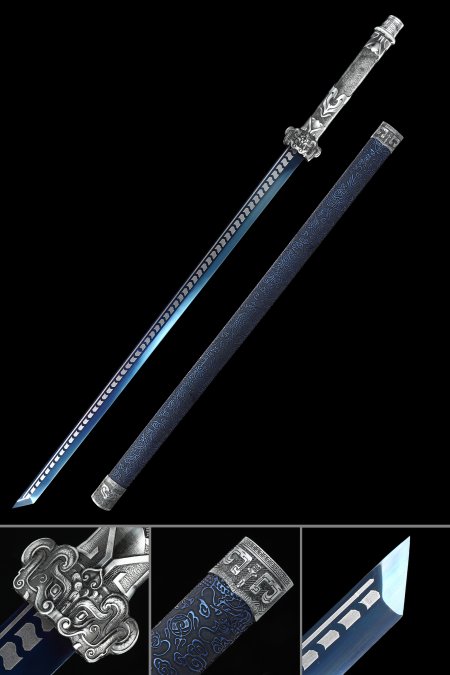
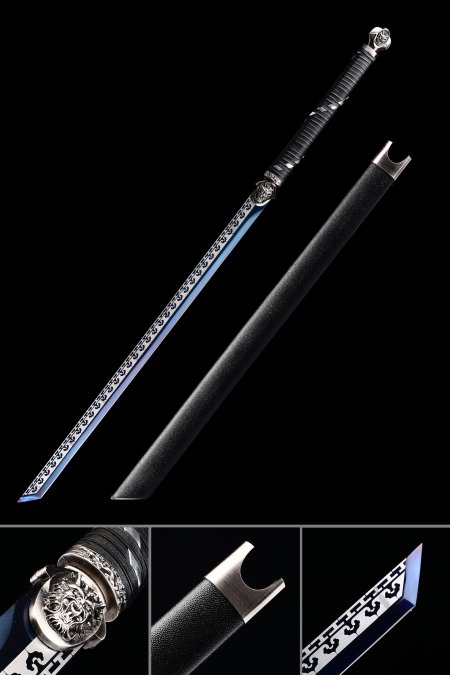
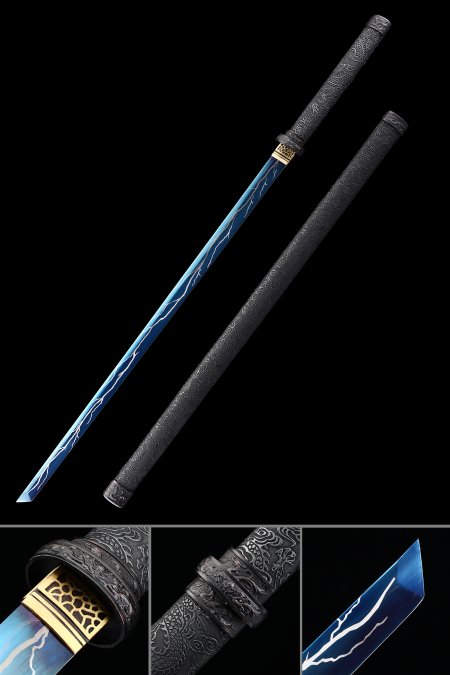
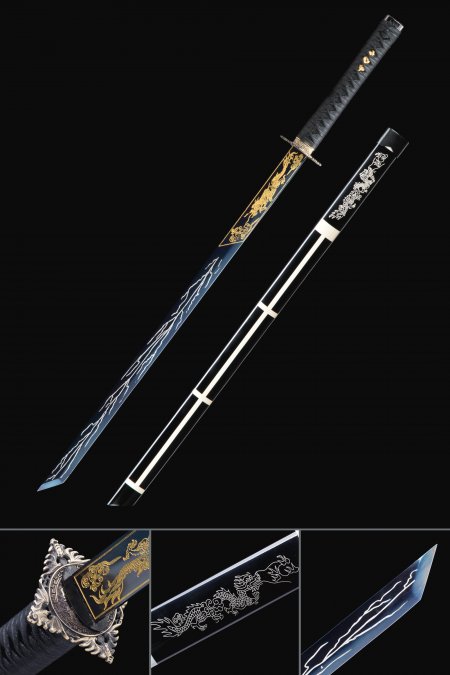
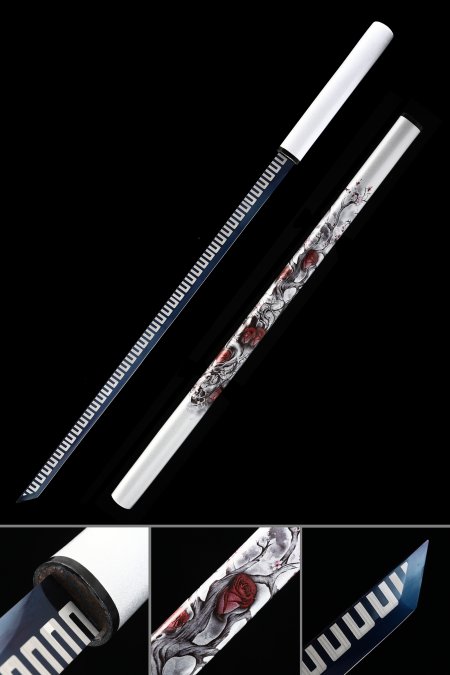
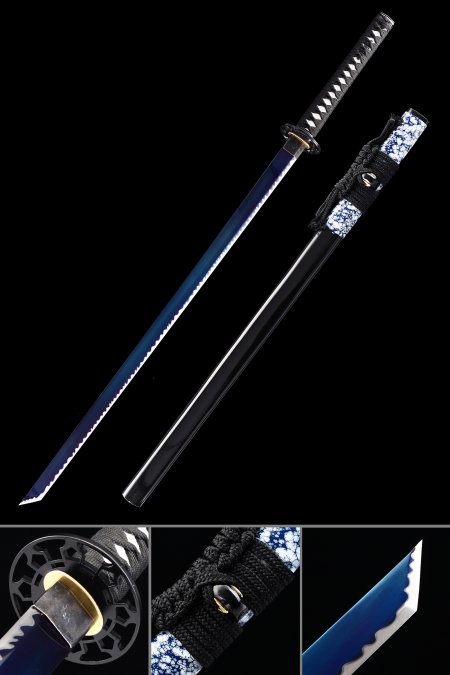
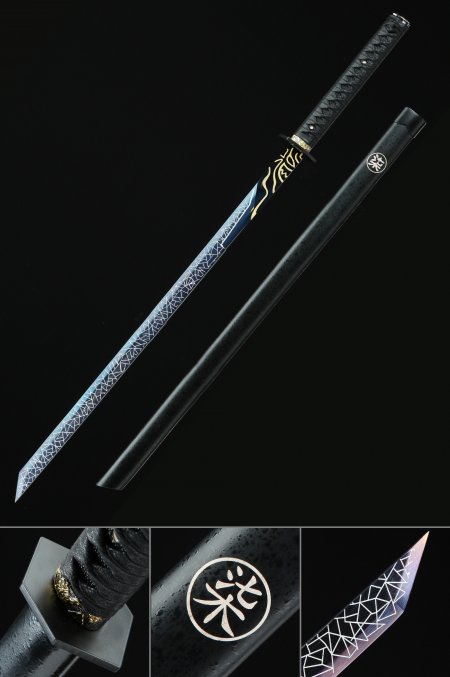
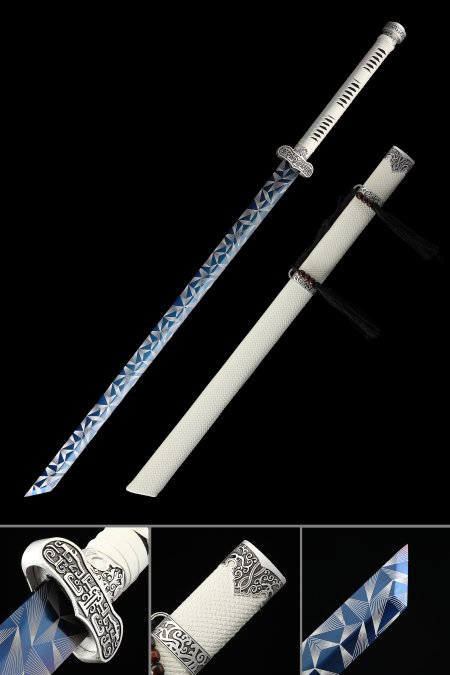
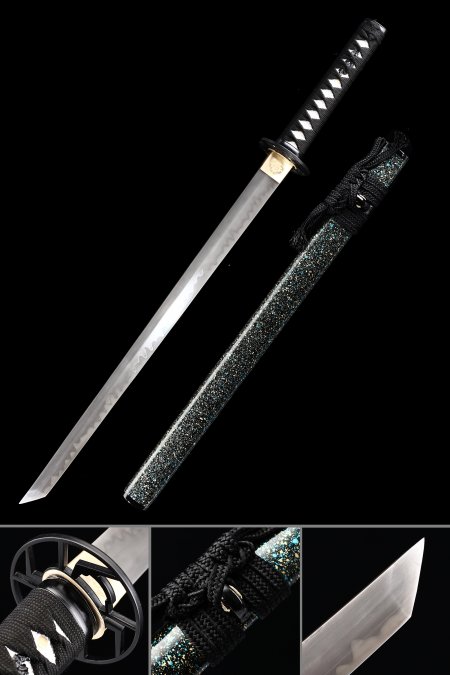
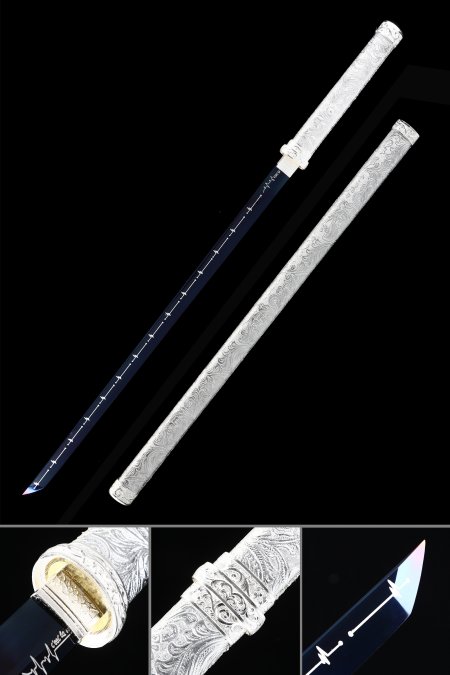
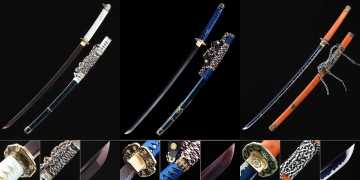
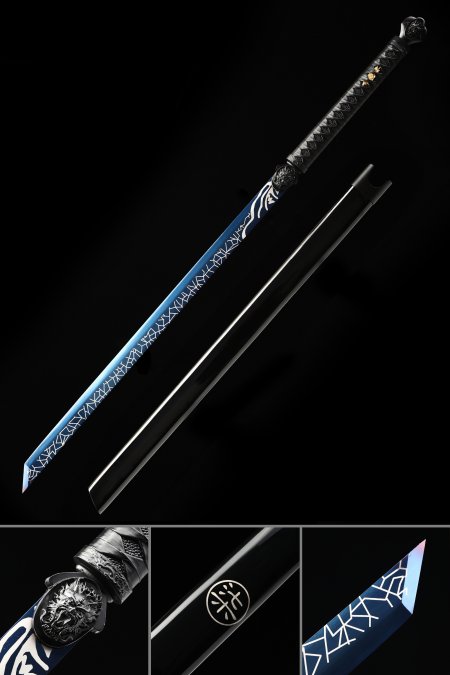
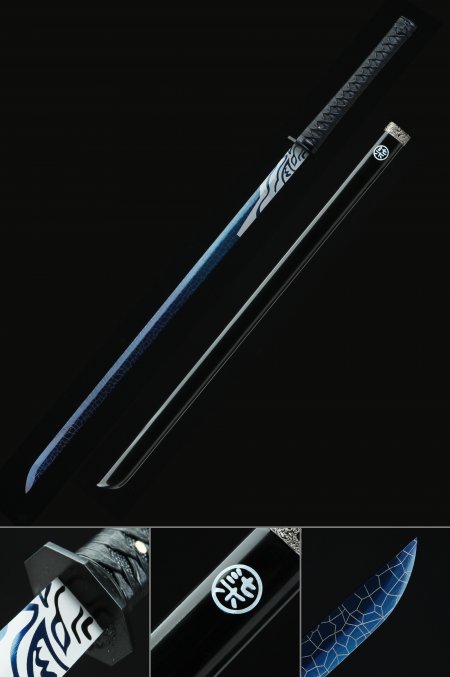
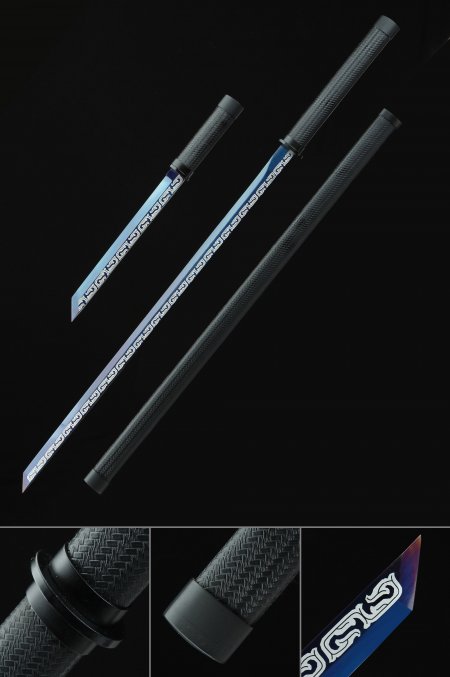
A blue blade ninjato occupies a rare intersection of visual drama and traditional craftsmanship - the distinctive coloration achieved through controlled heat treatment or chemical finishing gives each straight-profiled blade a character entirely its own. Every piece in this collection is hand-forged with full-tang construction, finished with period-inspired fittings, and built to stand as a serious display collectible. Free standard shipping is included on all orders, backed by our hassle-free return policy.
Showing 39 Products

Related Collections

Blue Katana84 items


639 Reviews

Blue Wakizashi7 items


19 Reviews

Blue Tanto10 items


68 Reviews

Blue Odachi4 items


16 Reviews

Frequently Asked Questions

What gives a ninjato blade its blue color?
The blue finish on these ninjato blades comes from controlled oxidation or chemical bluing processes applied after the blade is ground and heat-treated. In controlled bluing, the steel surface is exposed to specific chemical solutions or heat cycles that produce a stable iron oxide layer - magnetite (Fe₃O₄) - which registers as a deep blue or blue-black depending on thickness and steel composition. This layer is not paint or coating in the conventional sense; it bonds at the surface level and offers a degree of corrosion resistance while preserving the underlying steel's structural properties. On high-carbon steel blanks like 1095, the finish tends to show more depth and contrast, especially near the hamon line. On manganese steel, the finish appears more uniform and slightly darker. Regular light oiling helps maintain the finish quality over time, particularly in humid storage environments.
How does 1095 carbon steel compare to manganese steel in a ninjato?
Both materials are well-suited for display collectibles, but they behave differently in meaningful ways. 1095 carbon steel has a higher carbon content - roughly 0.95% - which produces a denser grain structure, supports a more defined hamon after differential heat treatment, and takes a sharper edge geometry. It is the preferred choice for collectors who want a blade that closely mirrors traditional Japanese forging aesthetics. Manganese steel, by contrast, trades some of that edge hardness for significantly higher tensile strength and flexibility. It resists deformation under lateral stress better than standard high-carbon stock, which makes it an excellent choice for pieces that will be handled frequently, displayed without a saya, or mounted horizontally over long periods. For a purely display-oriented collector, the choice often comes down to finish preference and whether the hamon line is a priority feature.
What should I look for in ninjato fittings as a collector?
Fittings - tsuba, habaki, handle assembly, and saya - are where a ninjato's collectible identity is most legible. On the tsuba, look for consistent casting definition if it is a sculpted piece (lion, skull, dragon motifs) or clean machining lines if it is a geometric iron or brass guard. A well-fitted habaki should seat flush against the tsuba with no lateral play. For handle assemblies, ito-wrapped handles should show even spacing between cord passes with no fraying at the wrap terminations; leather-wrapped handles should feel firm without any give near the pommel. The saya is often underexamined - a quality scabbard fits the blade with light resistance on draw and produces a clean click at full seat. Lacquered wood saya should show no cracking at the koiguchi. These details distinguish a carefully finished collectible from a piece where the fittings were treated as secondary to the blade.
How should I store a blue blade ninjato to preserve the finish?
Blue-finished blades require the same core storage discipline as any polished steel collectible, with a few additional considerations. First, always apply a thin coat of high-quality blade oil - camellia oil is traditional, but modern microcrystalline wax works equally well - before storage. Fingerprints are a particular concern on blued surfaces because skin oils are slightly acidic and can etch the magnetite layer over time, creating dull patches. Store the piece horizontally or at a slight angle with the edge facing upward to avoid saya pressure on the finish. Avoid sealed plastic cases without desiccant packs, as trapped humidity accelerates oxidation on carbon and manganese steel alike. A temperature-stable environment with relative humidity between 40-55% is ideal. Inspect the blade surface every two to three months and re-oil as needed.
Does a full-tang ninjato make a better display piece than a partial-tang?
From a structural and long-term collectibility standpoint, yes. Full-tang construction means the steel billet extends the entire length of the handle, secured by handle scales or a wrapped assembly - as opposed to a rat-tail or partial tang that terminates partway through the grip. For a display collectible, this matters because full-tang pieces maintain their handle integrity over years of handling, repositioning, and environmental humidity cycling without the loosening that can develop in partial-tang assemblies as wood or resin handle materials expand and contract. It also means the piece holds its balance point authentically along the blade-to-handle transition, which is immediately perceptible when the sword is lifted. Collectors who intend to display a piece for decades - or pass it to another collector - should treat full-tang construction as a baseline specification rather than a premium feature.

Customer Reviews

Cart 0 Items

Your cart is empty