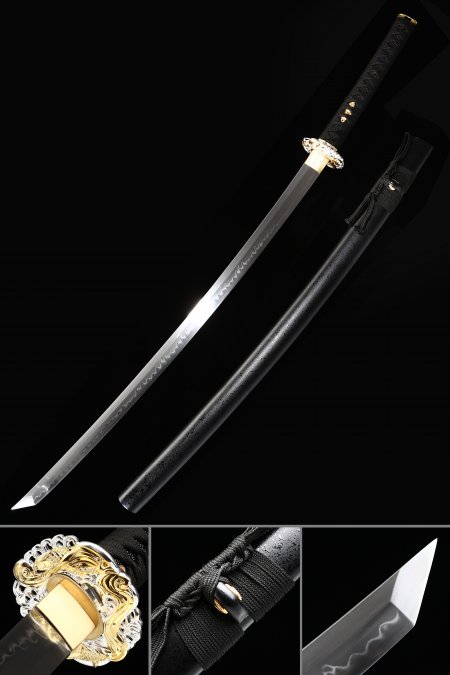
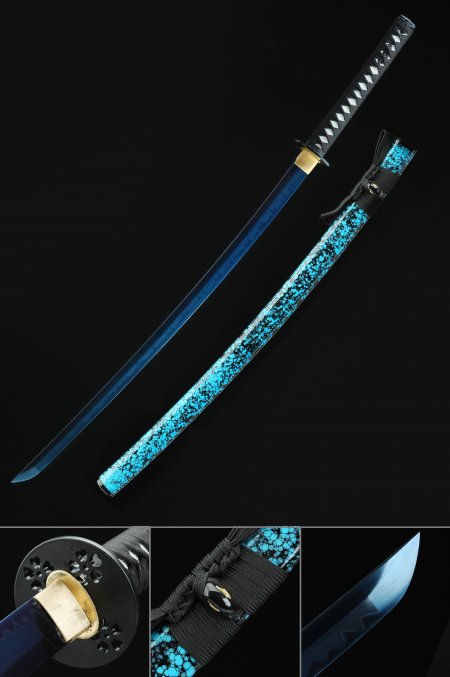
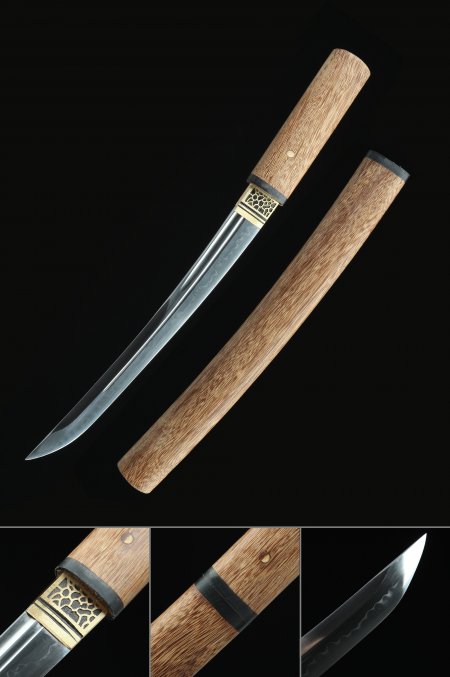
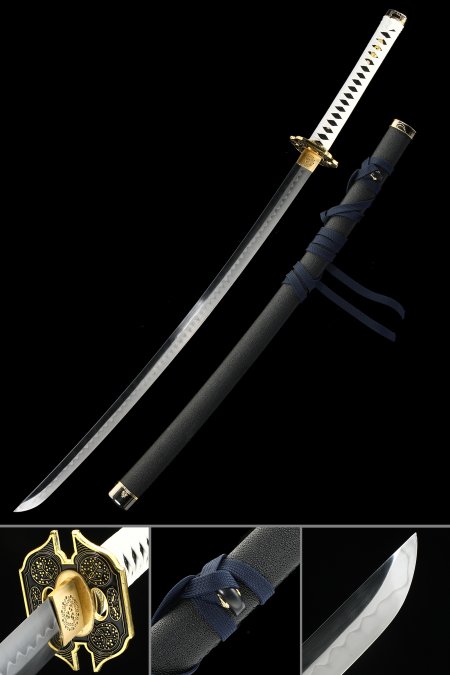
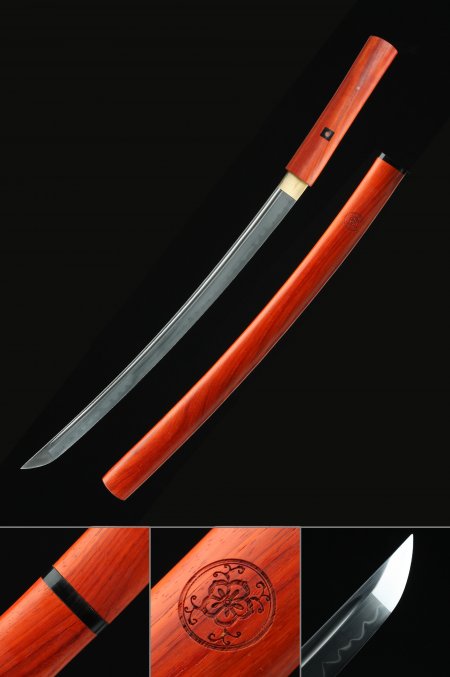
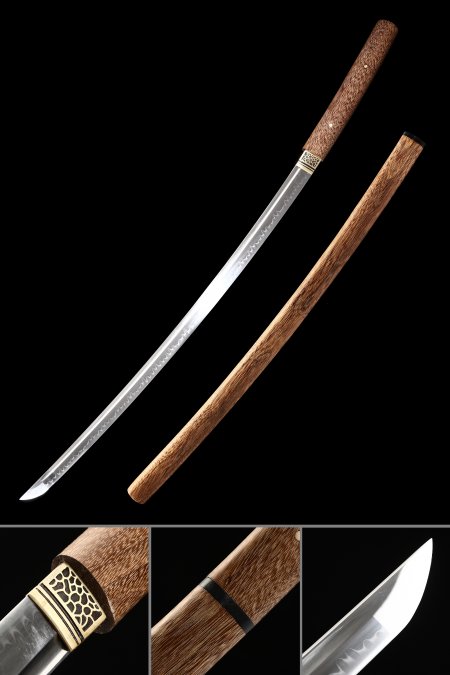
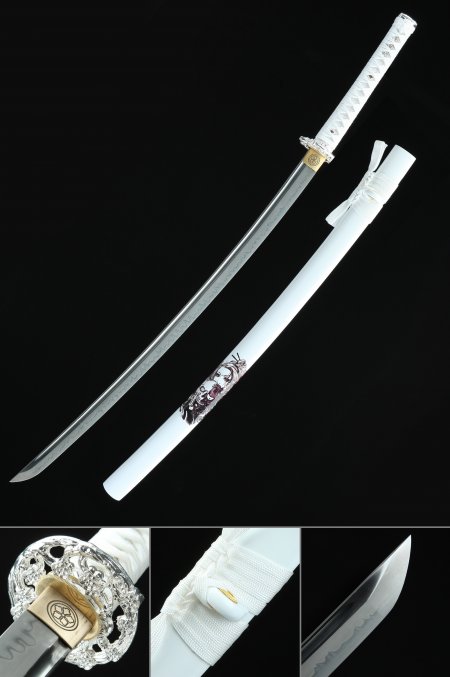
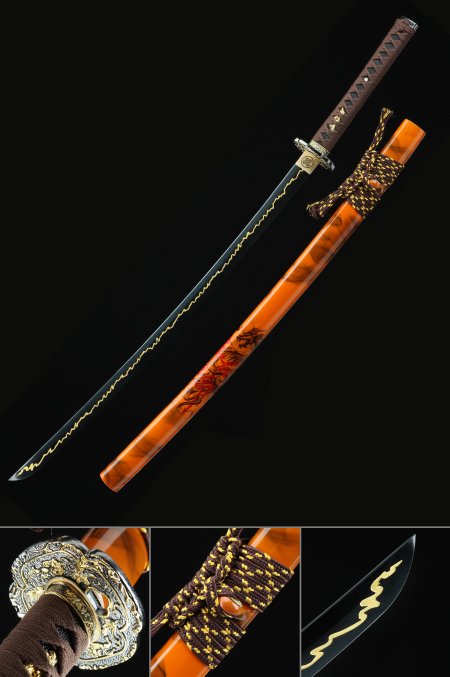
Is the hamon on these katanas real or acid-etched?
Updated Mar 2026
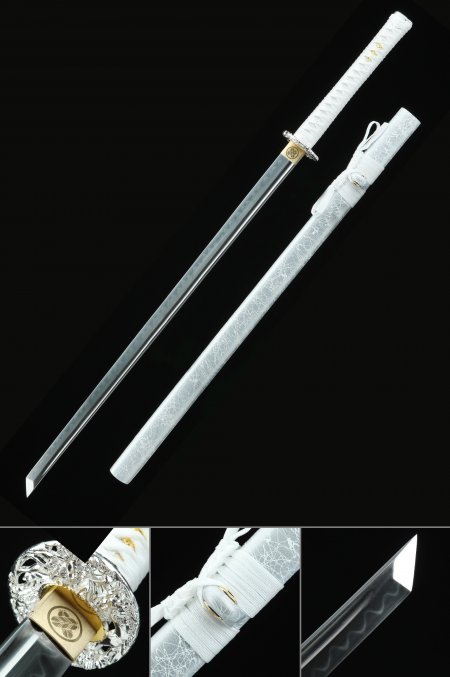
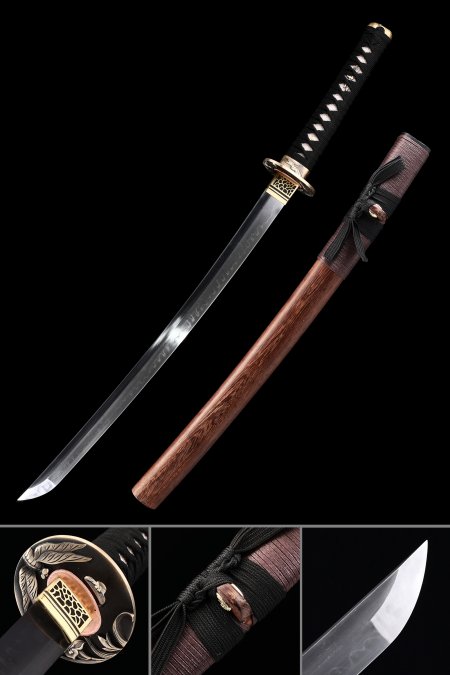
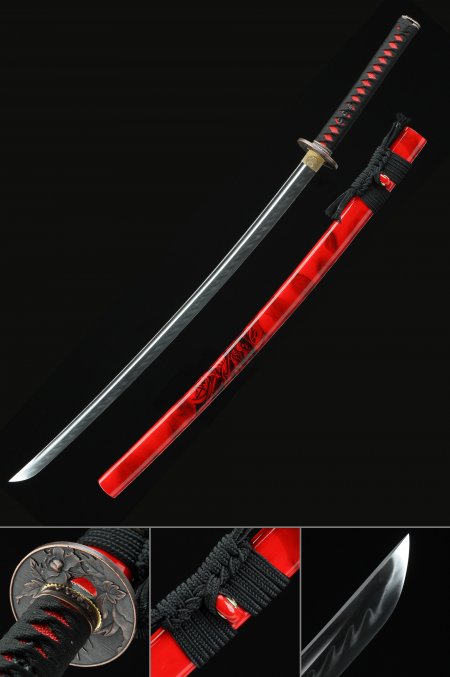
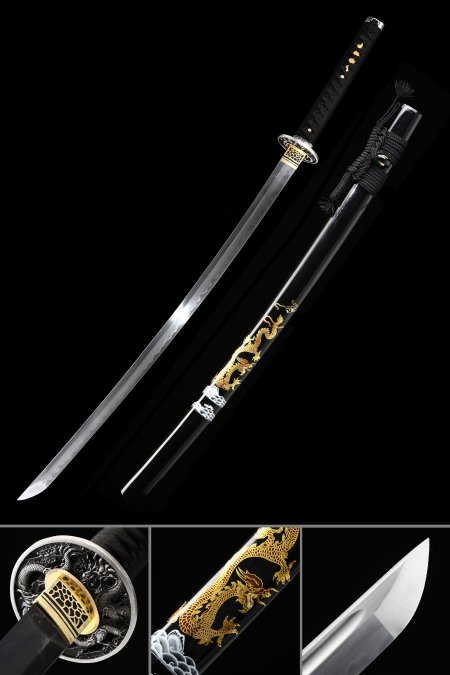
The clay-tempered pieces in this collection - including those made from T10 and manganese steel - feature genuine hamon produced through differential hardening. During this process, a layer of clay is applied along the spine of the blade before the steel is heated and quenched. The clay insulates the spine, allowing it to cool slowly and remain relatively soft, while the exposed edge cools rapidly, forming the hard martensitic zone visible as the hamon line. The result is a temper line with natural activity - irregular, flowing, and responsive to light in a way that changes depending on viewing angle. This contrasts with acid-etched hamon, which is a surface pattern only, with no corresponding change in the steel's internal hardness. Collectors who are familiar with nihonto (traditional Japanese swords) will immediately recognize the difference.