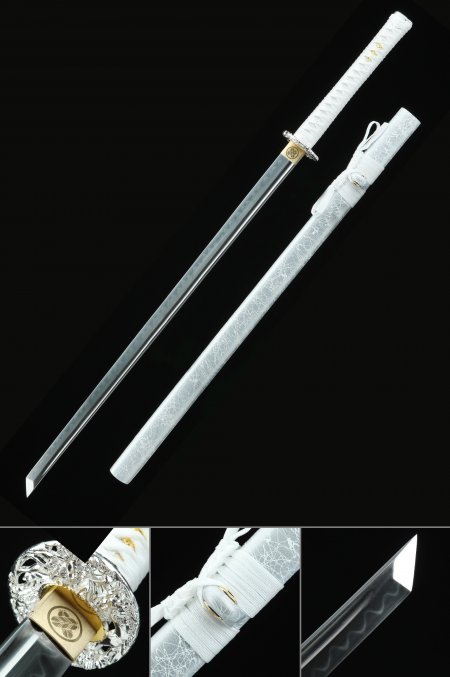
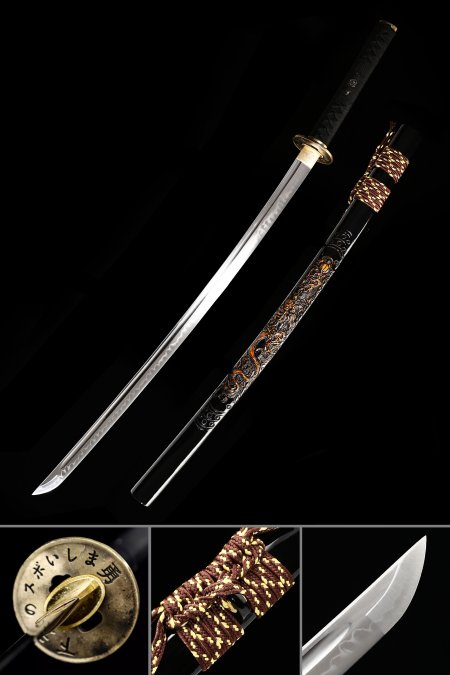
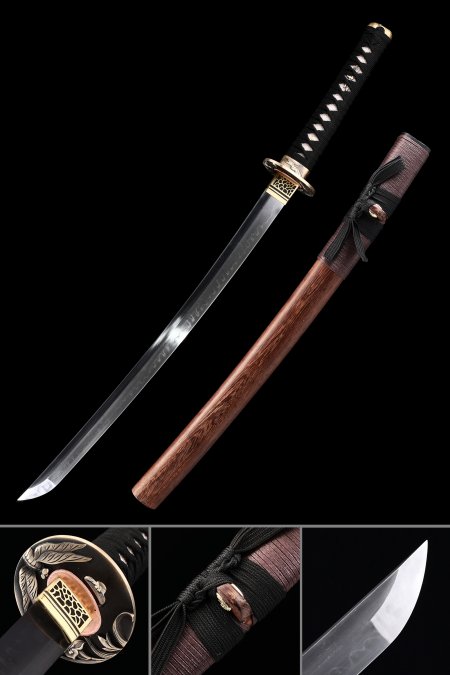
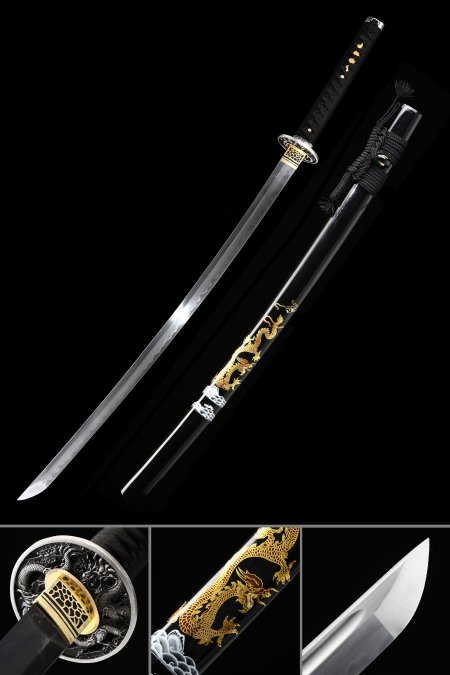
What makes a T10 clay-tempered katana different from 1060 steel?
Updated Mar 2026
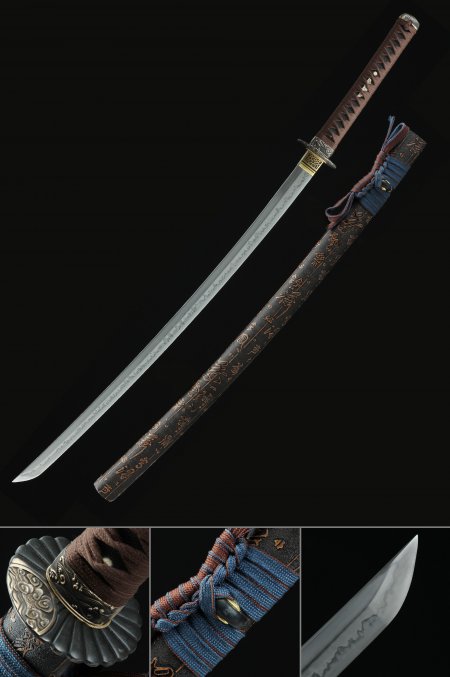
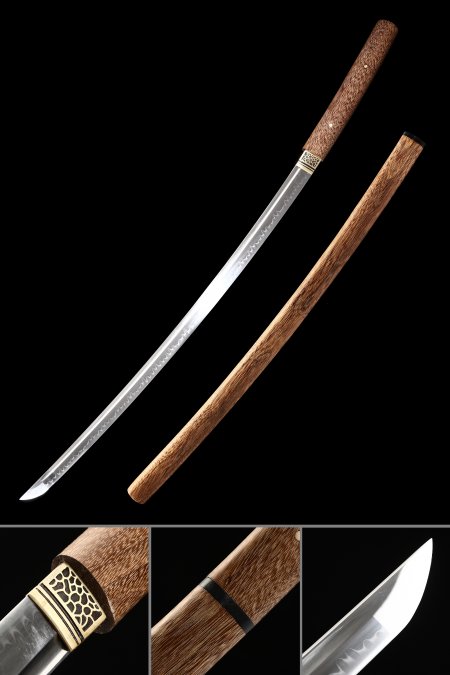
The key difference lies in the heat-treatment process and its visible outcome. A 1060 carbon steel katana is typically through-hardened — the blade is quenched uniformly, producing consistent hardness throughout. T10 tool steel used in clay-tempered pieces goes through differential hardening: clay is applied along the spine before the quench, insulating that section and leaving it softer and more flexible, while the uncoated edge hardens fully. The boundary between these two zones forms the hamon — a naturally occurring temper line with a cloudy, activity-rich appearance that collectors study closely. Each hamon is unrepeatable, which is precisely why T10 clay-tempered katana carry higher collectible distinction than standard carbon steel pieces.