What is a real hamon and why does it matter to collectors?
Updated Mar 2026
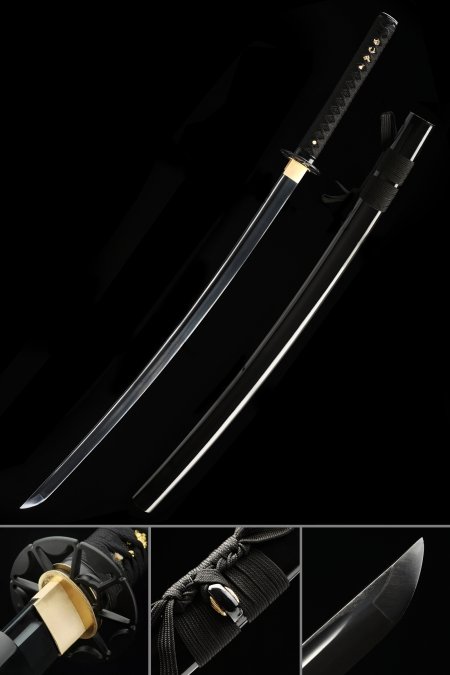
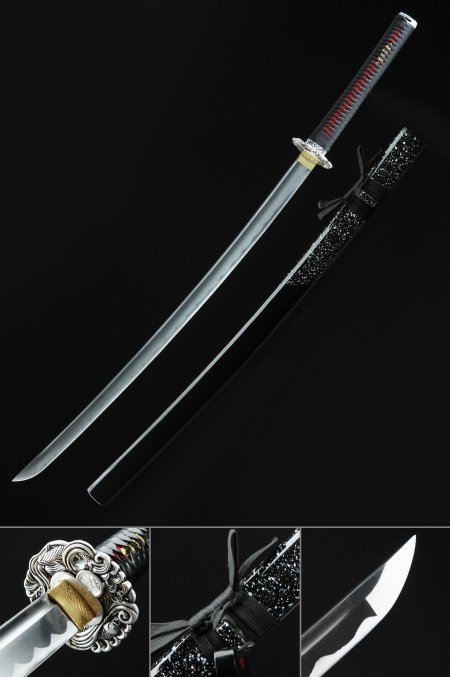
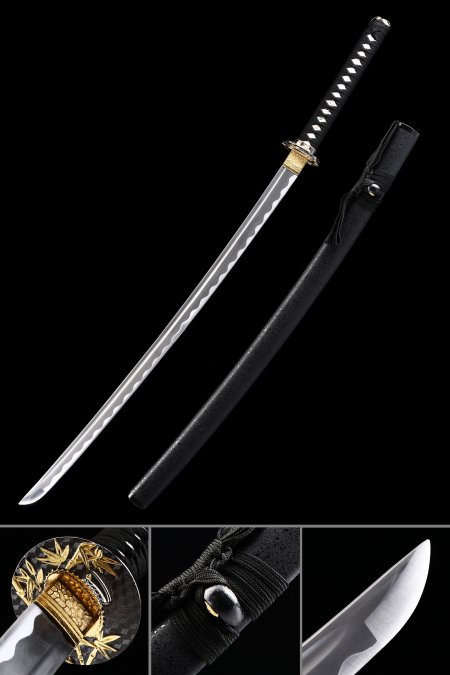
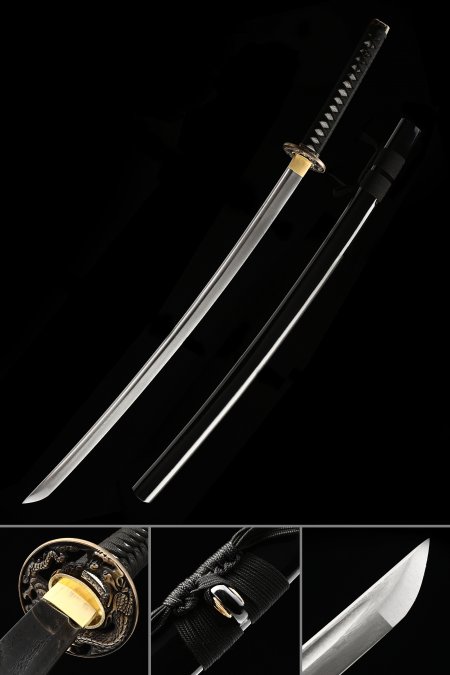
A hamon is the visible boundary line between the hardened edge zone and the softer spine of a Japanese blade, created during the clay-tempering process. Before quenching, a swordsmith applies a clay mixture in a specific pattern along the blade - thicker near the spine, thinner near the edge. The differential cooling rate during quenching causes the edge to form martensite (hard) while the spine remains pearlitic (tough and flexible). This boundary appears on the polished blade as a misty, undulating line with activity such as nie (coarse crystalline sparkle) or nioi (hazy cloud-like texture). A real hamon formed this way is entirely unique to each blade and cannot be identically reproduced. Acid-etched pseudo-hamon, by contrast, is a surface pattern applied chemically after grinding - it has no relationship to the steel's internal structure. Collectors specifically seek real hamon because it is direct physical evidence of authentic clay-tempering craft.