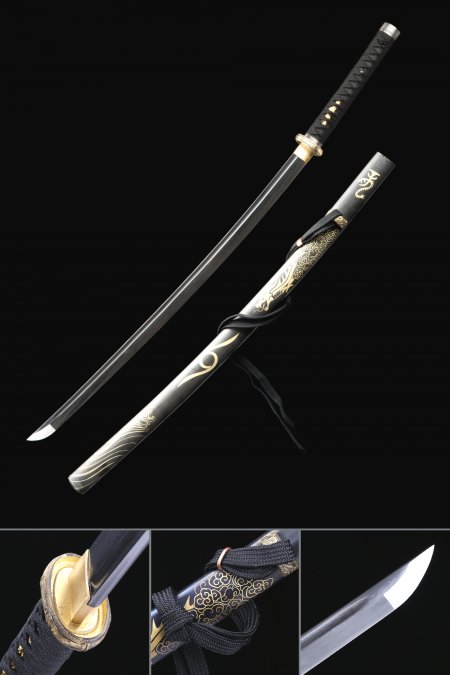
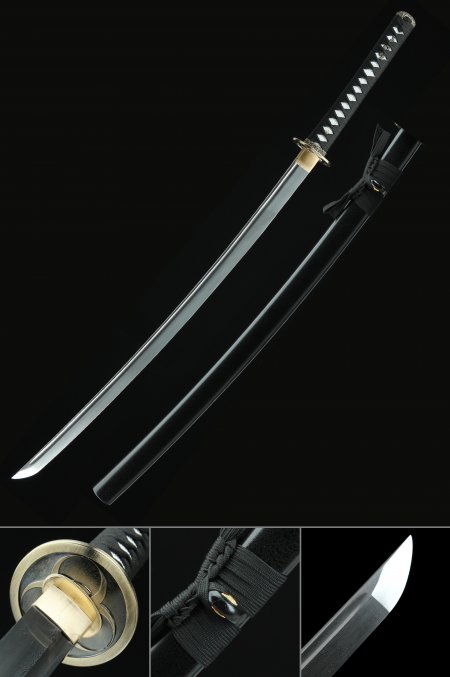
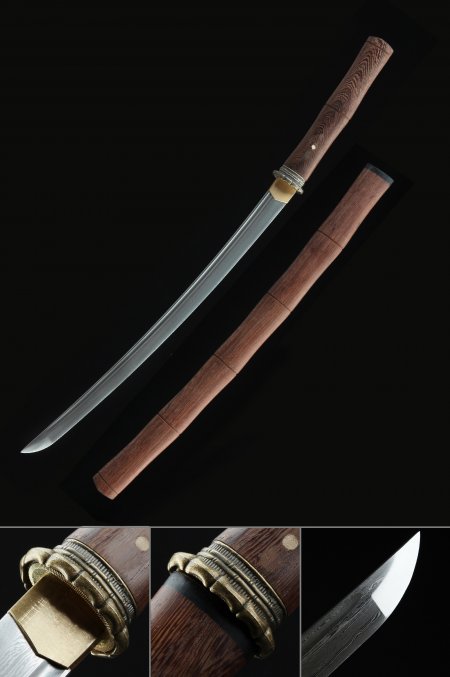
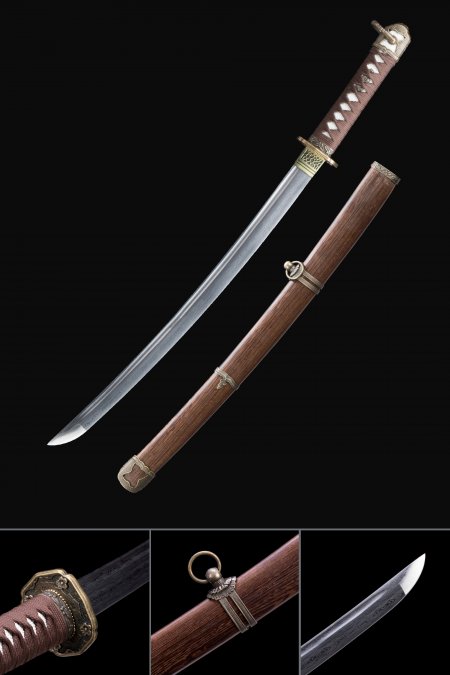
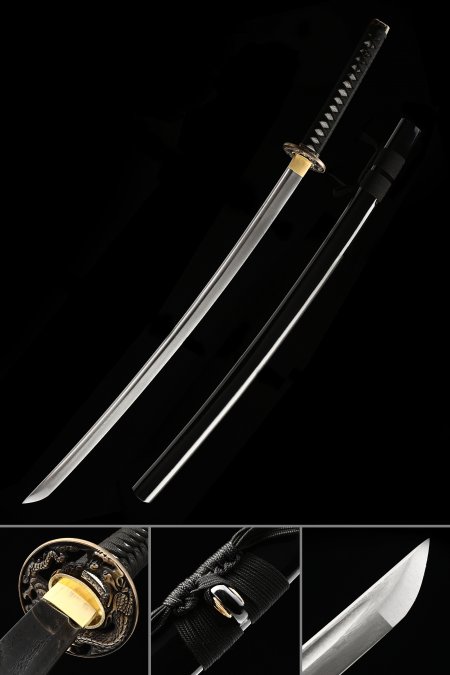
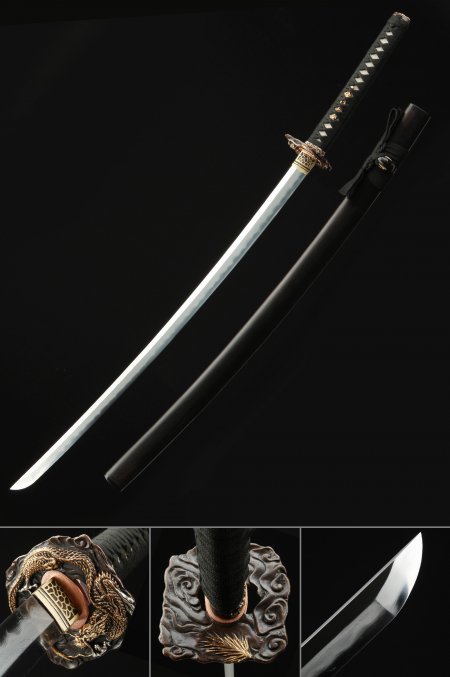
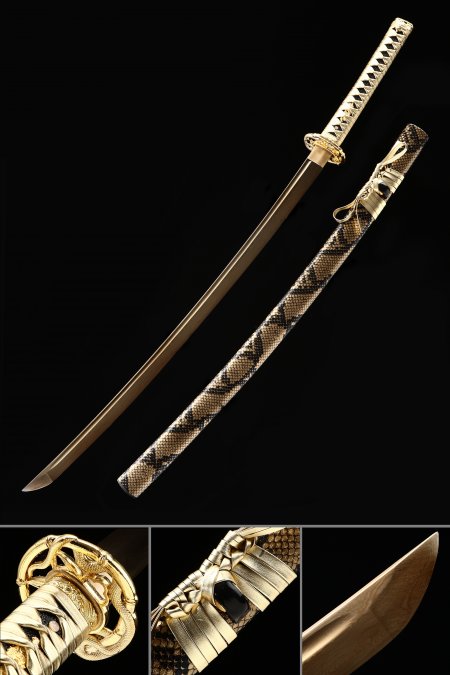
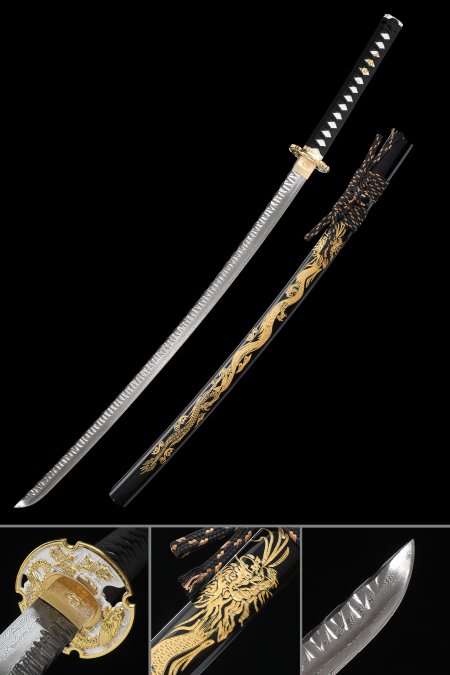
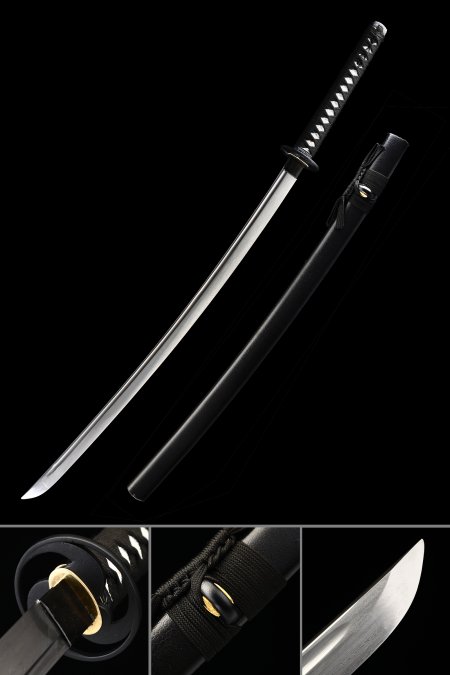
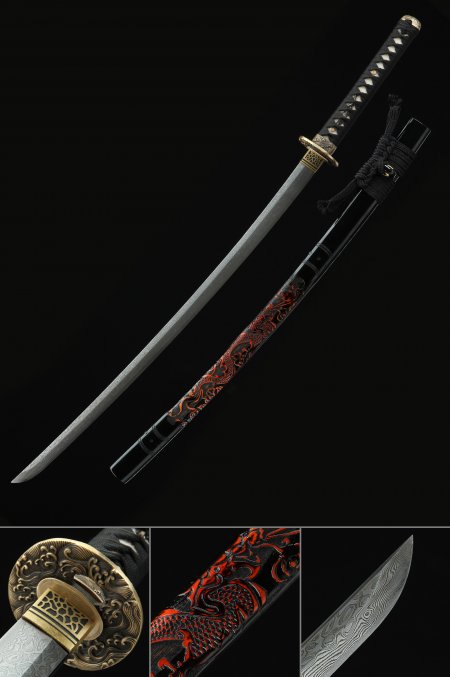
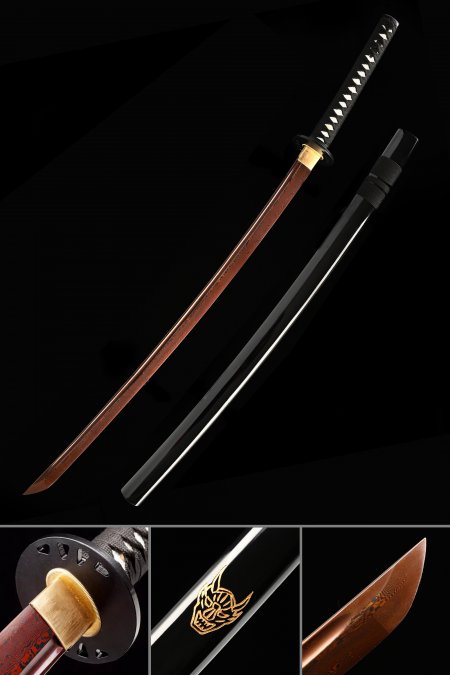
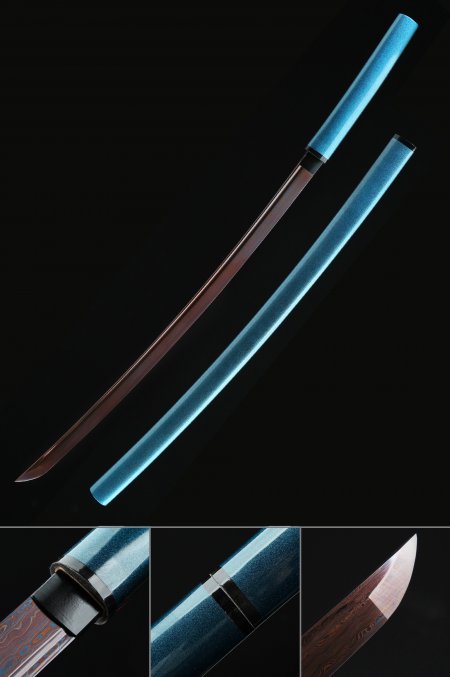
The collection features two primary steel traditions. T10 high-carbon steel is prized for its tight grain structure and its ability to develop a genuine hamon — the visible temper line produced through clay tempering and differential quenching. This process hardens the edge while leaving the spine relatively flexible, and the resulting hamon pattern is a direct byproduct of the forging method, not a cosmetic addition. Damascus pattern steel, by contrast, is produced by forge-welding multiple steel layers and manipulating them through twisting, folding, and drawing to create flowing surface grain patterns. Because every Damascus billet behaves slightly differently under the hammer, no two blades share an identical pattern — a quality that appeals strongly to collectors seeking a display piece with individual character. Both steel types are finished to a hand-polished surface that showcases the material's natural qualities.