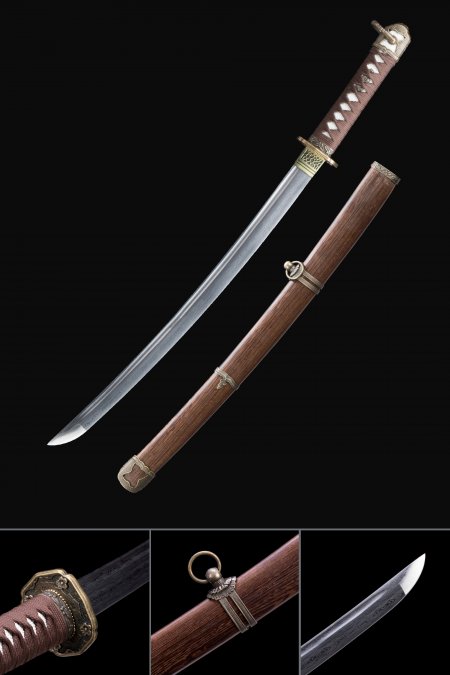
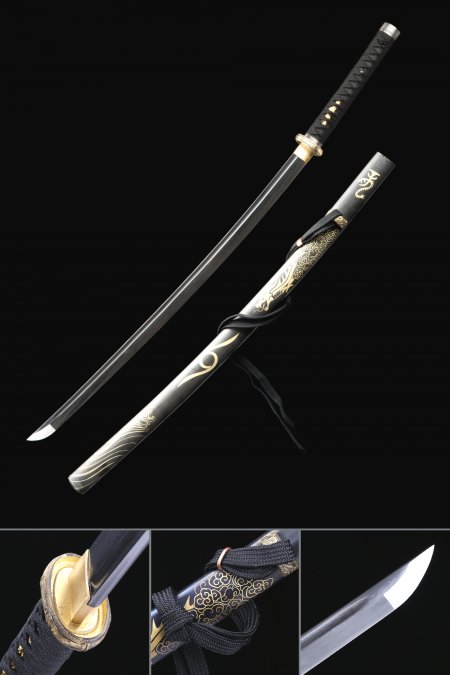
How does Damascus steel differ from T10 steel in a nodachi?
Updated Feb 2026
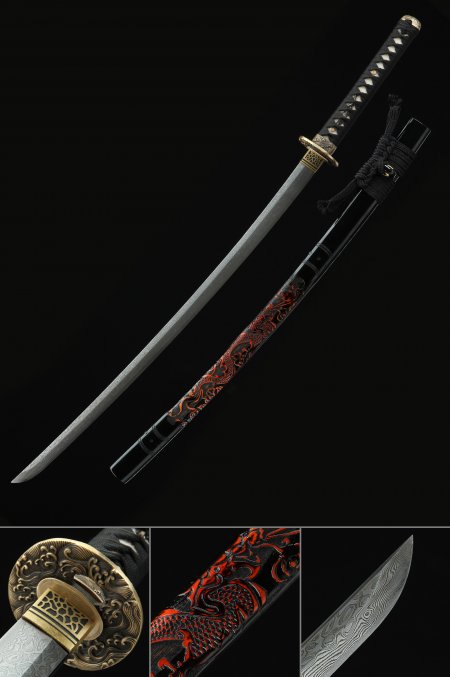
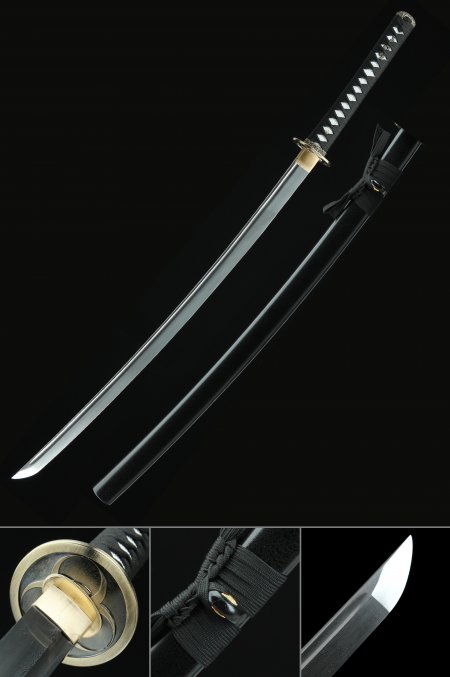
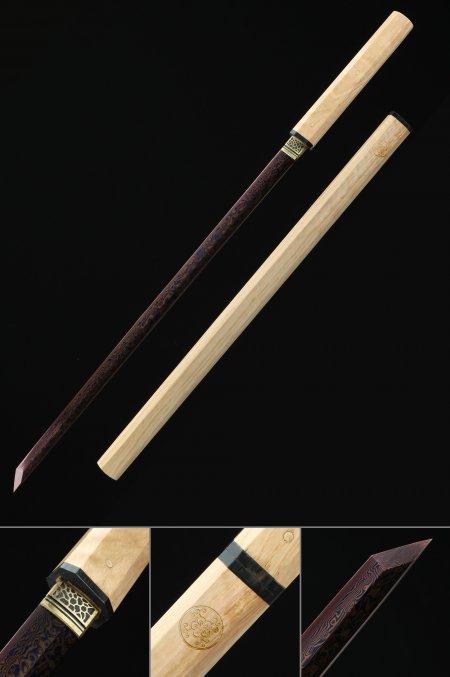
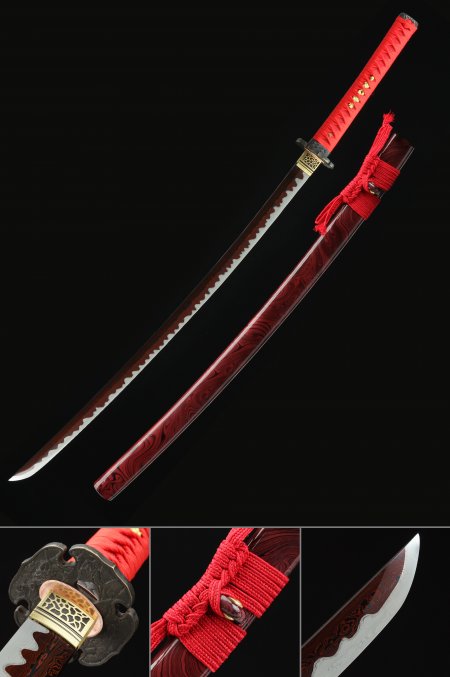
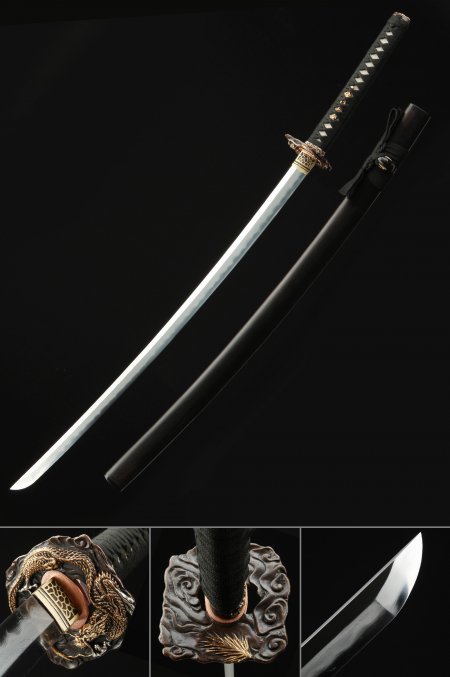
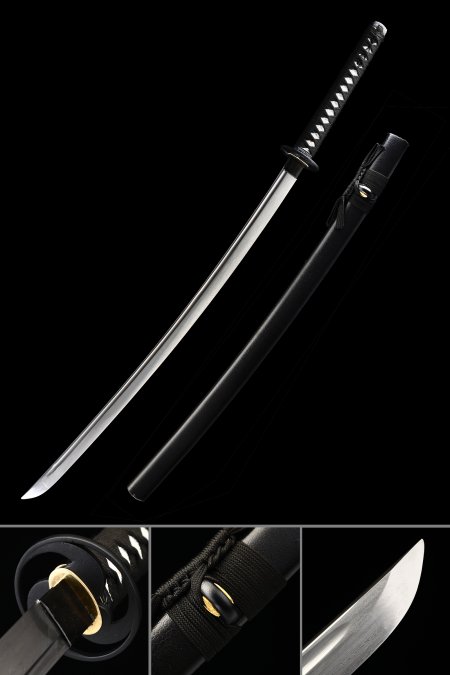
Damascus steel, produced by folding and forge-welding multiple steel layers, creates the flowing surface pattern - often called "woodgrain" or "water" - that is immediately recognizable on the blade's surface. Each Damascus nodachi is visually unique because the pattern shifts with every fold and grind. T10 tool steel, by contrast, is a single-composition high-carbon steel prized for its fine grain structure and consistent performance under clay tempering. T10 nodachi tend to show a more defined, crisp hamon line because the steel's response to differential quenching is highly predictable. Both are excellent choices for a serious collectible; Damascus appeals to collectors who prioritize surface aesthetics, while T10 appeals to those who prioritize the technical quality of the temper line itself.