How is a real hamon formed on a black nodachi blade?
Updated Feb 2026
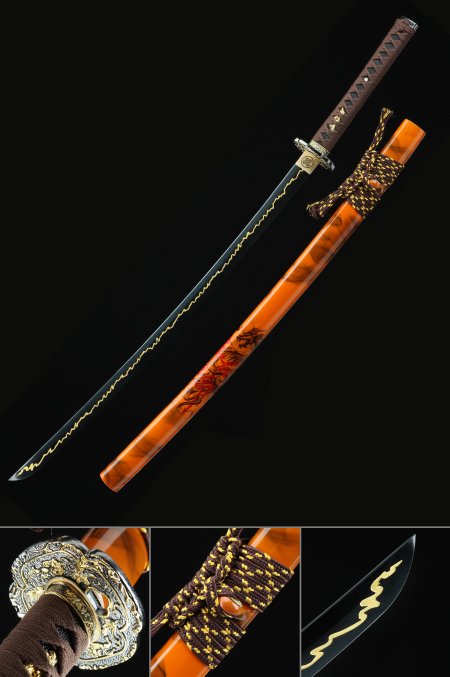
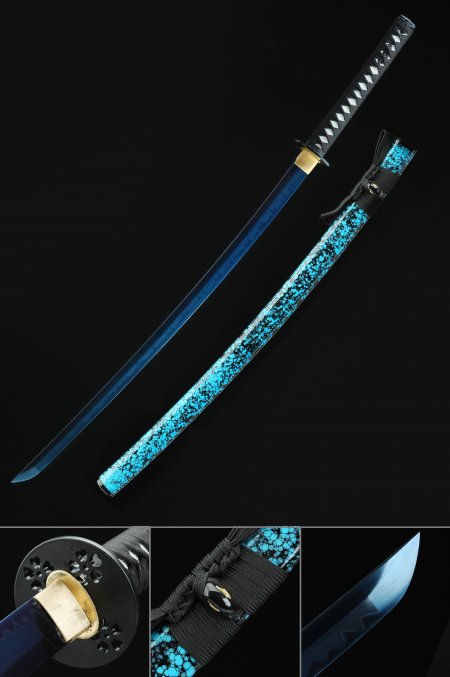
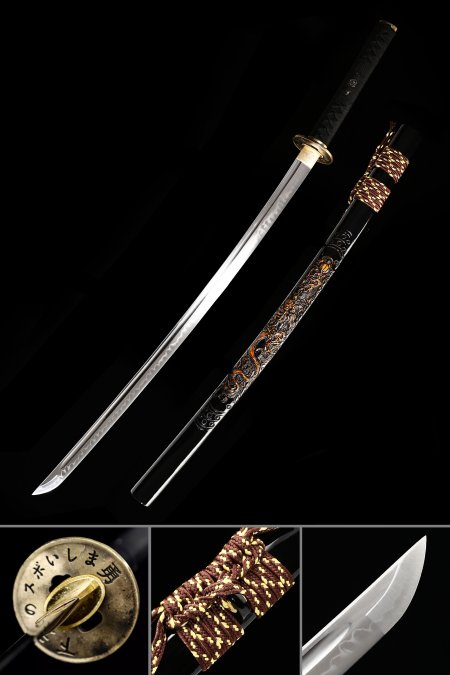
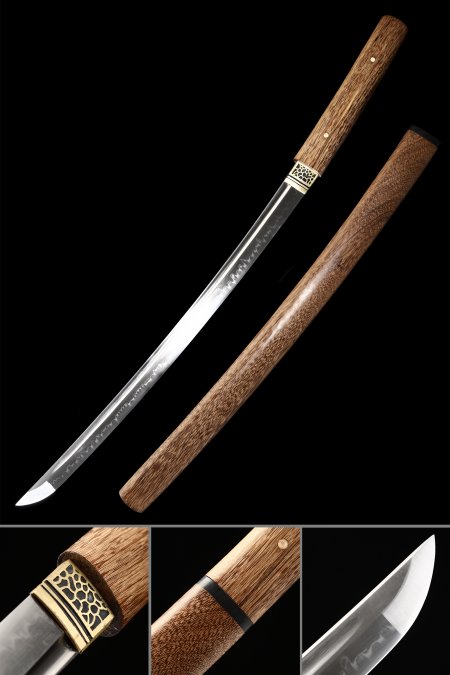
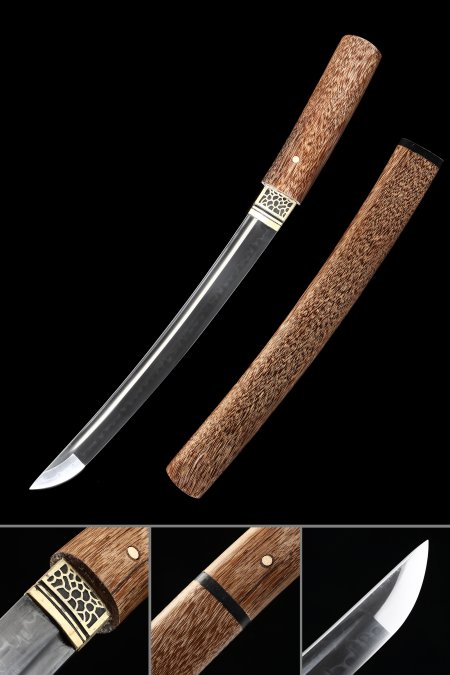
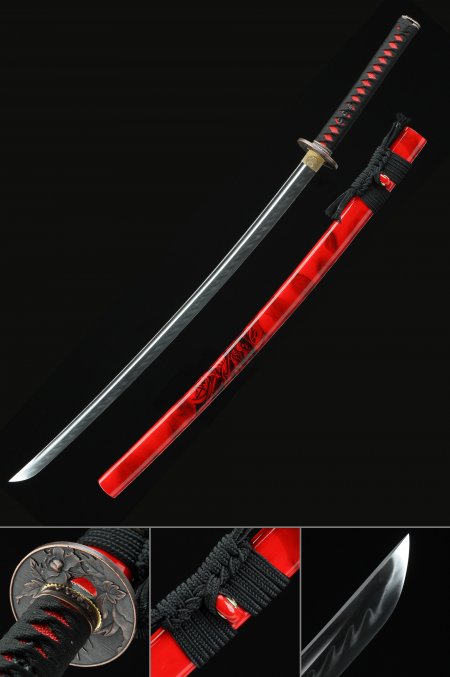
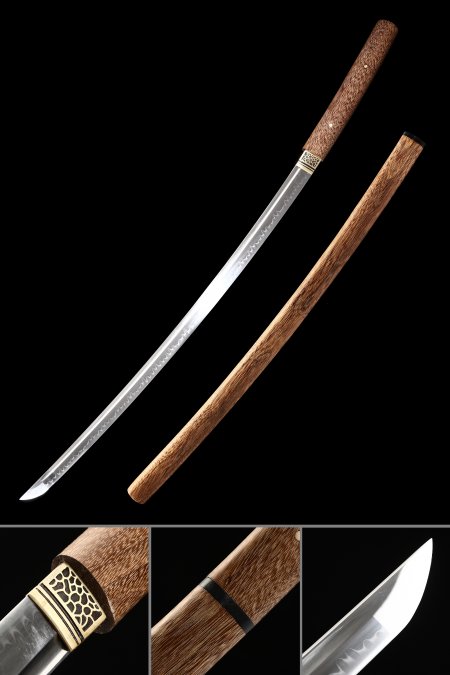
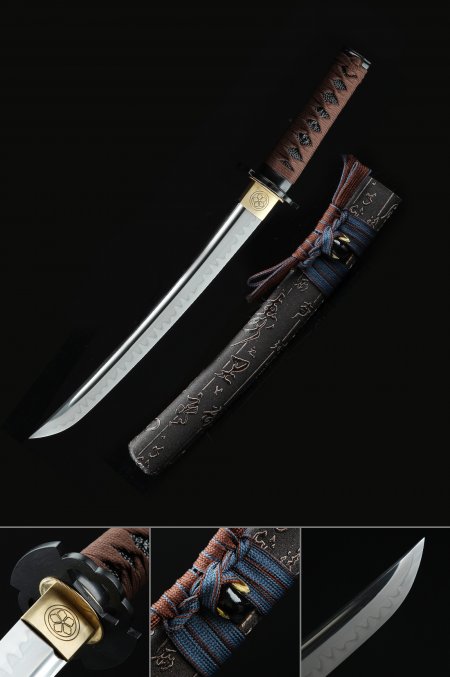
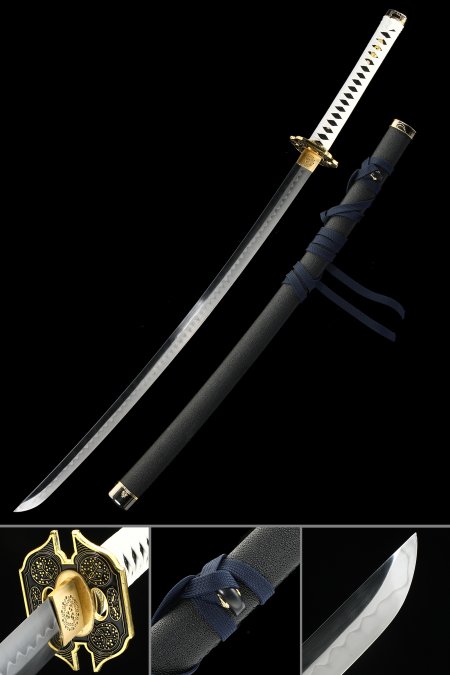
A real hamon - the wavy or undulating temper line visible along a blade's edge - is the result of differential heat treatment called tsuchioki, or clay tempering. Before the final quench, a smith applies a mixture of clay, ash, and sometimes iron powder along the spine of the blade, leaving the edge exposed or coated in a thin layer. When the blade is rapidly quenched in water or oil, the exposed edge cools faster and transforms into hard martensite, while the clay-insulated spine cools slowly and remains comparatively tough. The boundary between these two zones appears as the hamon. On a black-finished nodachi, the hamon often provides the only visible bright contrast against the darkened blade surface, making it both an aesthetic focal point and direct evidence of traditional craft process. T10 and high-manganese steels respond particularly well to clay tempering and produce clear, well-defined hamon patterns.