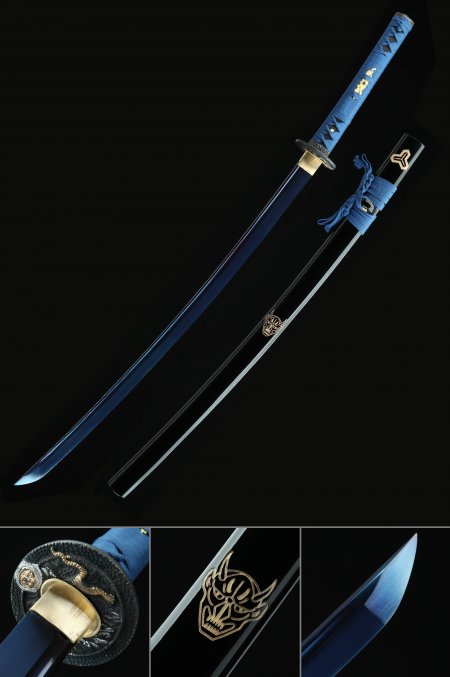
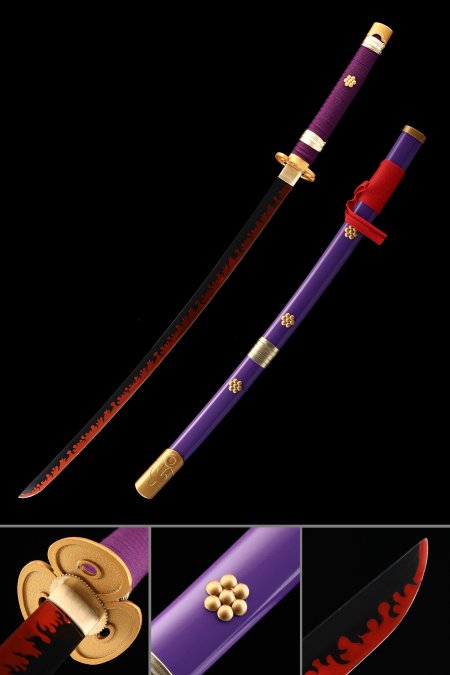
How does clay tempering create a real hamon on these blades?

 Updated Feb 2026

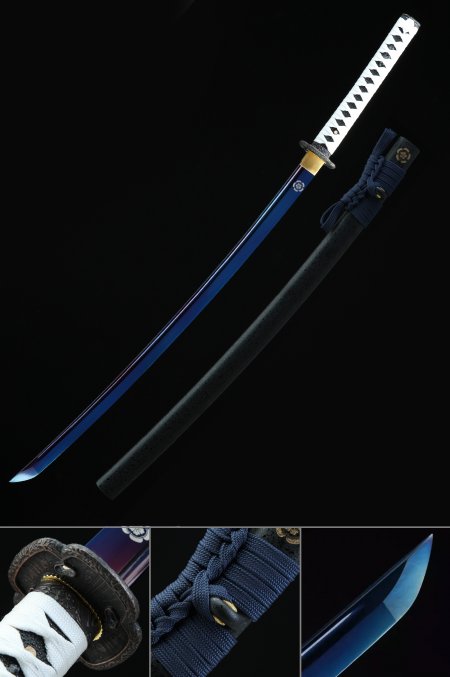
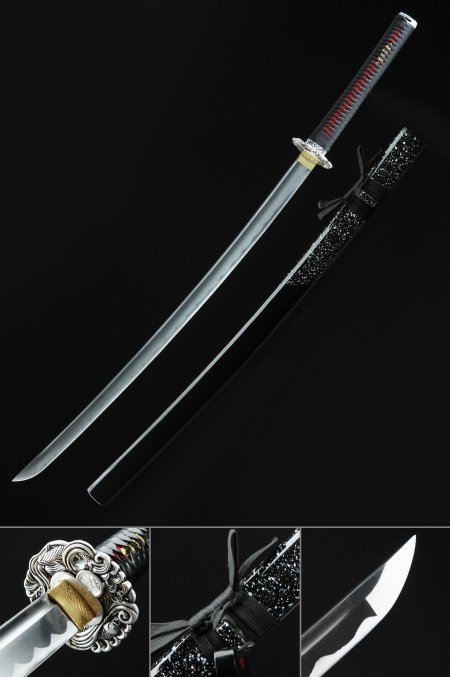
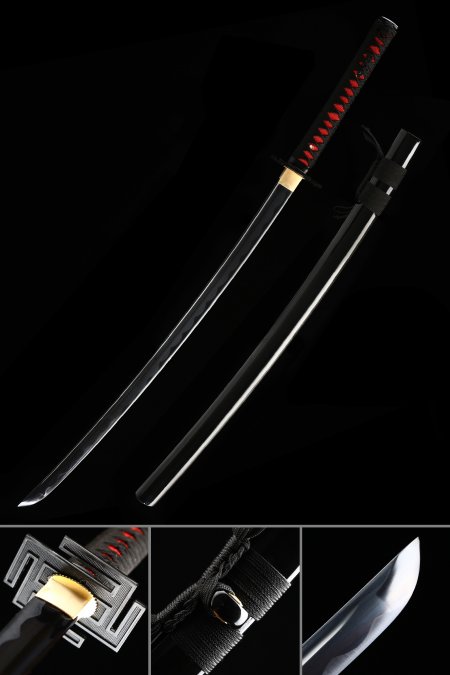
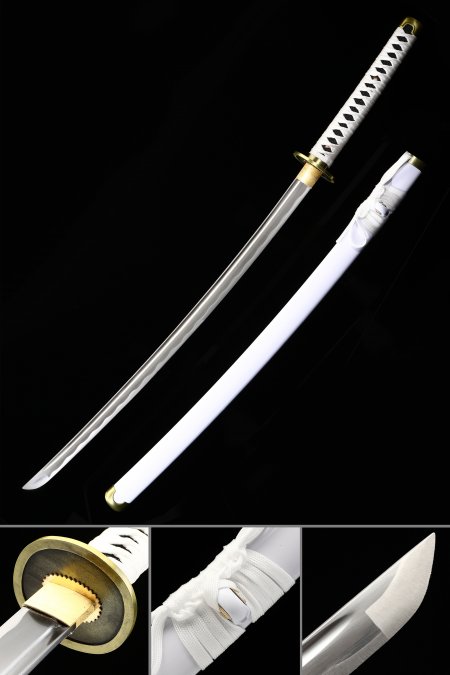
Clay tempering, or tsuchioki, involves applying a mixture of clay, ash, and charite in varying thicknesses along the blade before quenching. The thinner clay near the edge cools faster during the water or oil quench, producing harder martensite steel, while the thicker clay along the spine cools slowly, leaving softer pearlite. The visible boundary between these two crystalline structures is the hamon — a natural, non-etched temper line unique to each individual blade. Collectors prize real hamon because it confirms authentic differential hardening rather than a cosmetic acid etch, and patterns can range from straight suguha lines to dramatic choji or midare waves.
Popular Products

15% OFFkatana sword
179.00 USD
209.00 USD
15% OFFblack katana
179.00 USD
209.00 USD
15% OFFghost of tsushima sword
169.00 USD
199.00 USD
20% OFFkatana sword
139.00 USD
179.00 USD
15% OFFichigo bankai sword
139.00 USD
159.00 USD
15% OFFzoro katana
139.00 USD
169.00 USD
15% OFFshusui sword
139.00 USD
169.00 USD
20% OFFrengoku sword
169.00 USD
209.00 USD
20% OFFghost of tsushima sword
299.00 USD
369.00 USD
20% OFFzoro swords
349.00 USD
439.00 USD
20% OFFkatana sword
159.00 USD
199.00 USD
20% OFFenma sword
179.00 USD
219.00 USD
15% OFFkatana sword
179.00 USD
209.00 USD
15% OFFblack katana
179.00 USD
209.00 USD
15% OFFghost of tsushima sword
169.00 USD
199.00 USD
20% OFFkatana sword
139.00 USD
179.00 USD
15% OFFichigo bankai sword
139.00 USD
159.00 USD
15% OFFzoro katana
139.00 USD
169.00 USD
15% OFFshusui sword
139.00 USD
169.00 USD
20% OFFrengoku sword
169.00 USD
209.00 USD
20% OFFghost of tsushima sword
299.00 USD
369.00 USD
20% OFFzoro swords
349.00 USD
439.00 USD
20% OFFkatana sword
159.00 USD
199.00 USD
20% OFFenma sword
179.00 USD
219.00 USD

Explore Our Collections