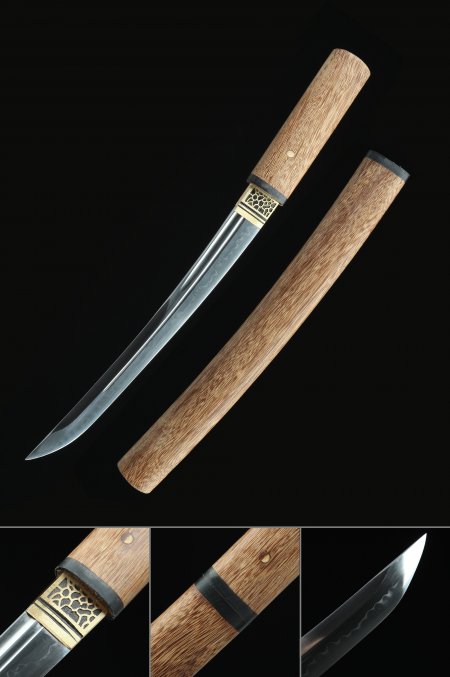
How is the hamon on a clay tempered T10 ninjato formed?

 Updated Feb 2026

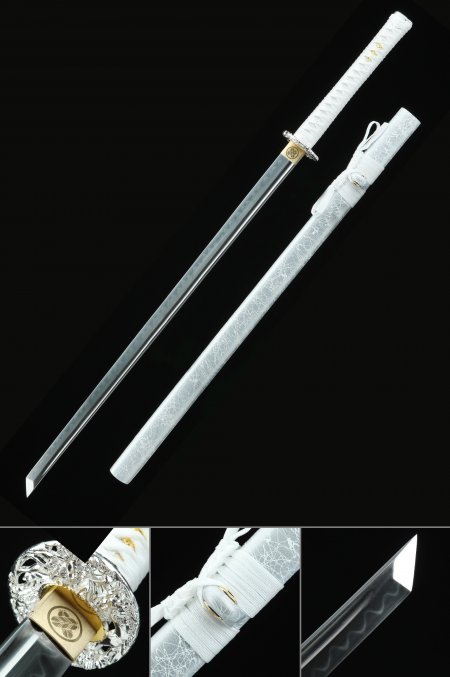
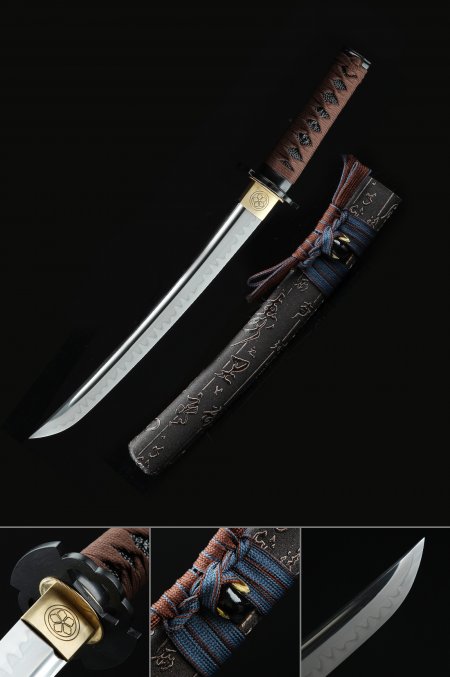
The hamon is created through differential hardening, a centuries-old Japanese technique. Before quenching, the smith applies a clay mixture — thicker along the spine and thinner along the edge. When the heated blade is plunged into water, the thinly coated edge cools rapidly and becomes extremely hard martensite, while the thickly coated spine cools slowly into softer pearlite. The visible boundary between these two crystalline structures is the hamon. Because variables like clay thickness, water temperature, and blade angle during quenching are never perfectly identical, every hamon pattern is unique. On T10 steel specifically, the tungsten content encourages a tight, well-defined transition zone that polishing reveals with particular clarity.
Popular Products

20% OFFshirasaya katana
209.00 USD
259.00 USD
20% OFFfull tang katana
319.00 USD
399.00 USD
15% OFFtanto sword
149.00 USD
179.00 USD
15% OFFpink katana
189.00 USD
219.00 USD
20% OFFchokuto sword
159.00 USD
199.00 USD
20% OFFshirasaya wakizashi
219.00 USD
269.00 USD
20% OFFjapanese katana
209.00 USD
259.00 USD
20% OFFjapanese katana
169.00 USD
209.00 USD
15% OFFblack katana
199.00 USD
229.00 USD
15% OFFtanto sword
179.00 USD
209.00 USD
15% OFFshirasaya tanto
149.00 USD
179.00 USD
15% OFFjapanese katana
199.00 USD
239.00 USD
20% OFFshirasaya katana
209.00 USD
259.00 USD
20% OFFfull tang katana
319.00 USD
399.00 USD
15% OFFtanto sword
149.00 USD
179.00 USD
15% OFFpink katana
189.00 USD
219.00 USD
20% OFFchokuto sword
159.00 USD
199.00 USD
20% OFFshirasaya wakizashi
219.00 USD
269.00 USD
20% OFFjapanese katana
209.00 USD
259.00 USD
20% OFFjapanese katana
169.00 USD
209.00 USD
15% OFFblack katana
199.00 USD
229.00 USD
15% OFFtanto sword
179.00 USD
209.00 USD
15% OFFshirasaya tanto
149.00 USD
179.00 USD
15% OFFjapanese katana
199.00 USD
239.00 USD

Explore Our Collections