What does a real hamon indicate on a shirasaya katana blade?
Updated Feb 2026
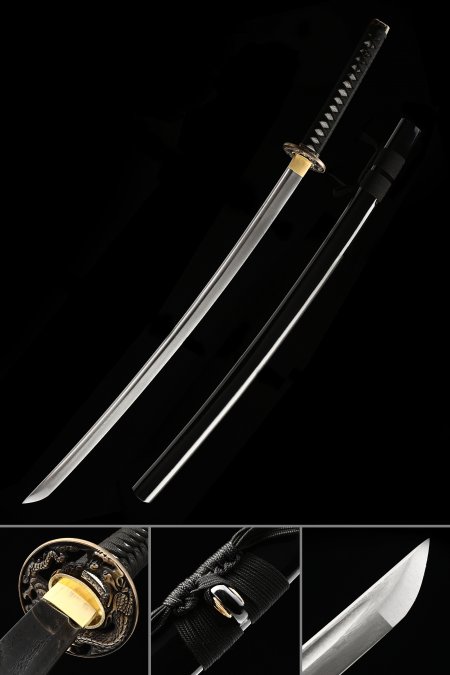
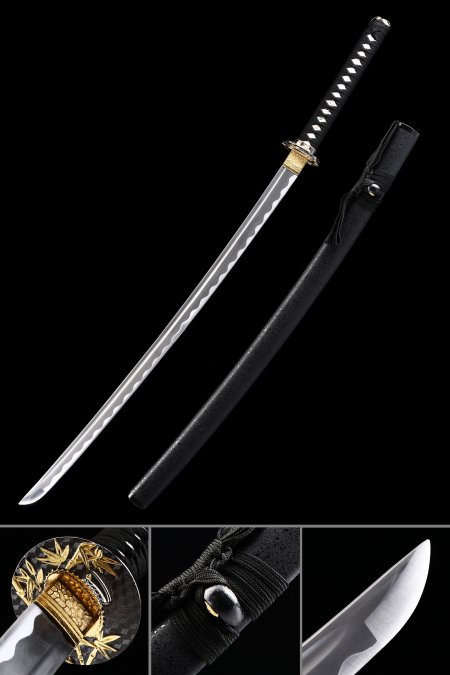
A real hamon is the visible temper line created through clay tempering, a traditional Japanese heat-treatment process. The smith applies a clay mixture of varying thickness along the blade before quenching it in water. Thicker clay insulates the spine, allowing it to cool slowly and remain relatively soft and flexible, while the thinly coated edge cools rapidly and hardens. The boundary between these two zones produces the hamon — a milky, undulating line that becomes visible after careful polishing. Unlike etched or acid-applied decorative lines, a genuine hamon reflects an actual difference in the steel's crystalline structure (martensite at the edge, pearlite at the spine), making it both a visual hallmark and a sign of traditional metallurgical craftsmanship.